Siege of Kawagoe Castle: The Night Attack That Decided the Kanto
The samurai were told to leave their armor behind. Heavy iron plates, shoulder guards, face masks -- all of it, left in piles inside the castle walls. They were told something else that went against every instinct drilled into a warrior from birth: do not take the heads of your enemies. In samurai warfare, severed heads were proof of valor, the currency of honor and promotion. But on this night in April 1546, speed mattered more than glory. The 8,000 men of Hojo Ujiyasu's relief force crept toward Kawagoe Castle unarmored and unencumbered, coordinating with the 3,000 defenders trapped inside. The army surrounding them numbered 80,000. What followed became one of the most celebrated night attacks in Japanese military history.
A Castle Between Clans
Kawagoe Castle sat at the center of a power struggle that had consumed the Kanto region for decades. The Uesugi clan -- once the unchallenged rulers of eastern Japan -- had been losing ground to the aggressive Later Hojo clan since the early sixteenth century. When Uesugi Tomooki of the Ogigayatsu branch died in 1537, his young son Tomosada inherited a weakening position. Hojo Ujitsuna seized Kawagoe Castle from Tomosada's uncle, Uesugi Tomonari, not long after. By 1545, Tomosada was desperate to reclaim the family's lost stronghold. He assembled a coalition that read like a roll call of Kanto power: Uesugi Norimasa of the Yamanouchi branch, who held the title of Kanto Kanrei -- the shogun's deputy in the east -- along with Ashikaga Haruuji, the Kanto Kubo, and a host of anti-Hojo lords from across the region. It was one of the largest military alliances assembled in the Sengoku period. Against the Hojo garrison at Kawagoe, it seemed more than enough.
Eighty Thousand Against Three
The siege began with overwhelming numbers. Roughly 80,000 troops encircled Kawagoe Castle, where a garrison of just 3,000 men under Hojo Tsunashige dug in and held on. Tsunashige's brother, Hojo Ujiyasu, gathered a relief force -- but he could muster only 8,000 warriors. Against a besieging army ten times that size, conventional tactics offered little hope. Ujiyasu sent scouts and ninja spies to infiltrate the siege lines, and what they reported back changed everything. The besiegers had grown complacent. Ashikaga Haruuji in particular had relaxed his guard, confident that the castle's fall was only a matter of time. The massive coalition, bloated with troops from rival lords who barely cooperated, had settled into the lazy rhythms of a siege they assumed was already won.
Armor Off, Heads Stay On
Ujiyasu devised a plan that demanded something extraordinary from his samurai: absolute discipline and the willingness to sacrifice personal honor. He sent warriors through the Uesugi lines to reach the garrison inside Kawagoe Castle and coordinate a simultaneous attack. Then he ordered his relief force to strip off their heavy armor. The iron and leather plates that protected a samurai in battle also slowed him down and rattled with every step. In a night attack, stealth was survival. The second order was even harder to accept. The samurai were forbidden from taking the severed heads of their enemies -- the traditional proof of battlefield valor that determined a warrior's rank, reward, and reputation. Without heads to present, their victories would go unrecorded. Their sacrifices would be anonymous. It was a demand that cut against every code these men had been raised to follow. But the Hojo samurai obeyed.
The Kanto Decided in Darkness
The attack came at night. The garrison burst outward from the castle walls while Ujiyasu's relief force struck from without, catching the overconfident besiegers in a coordinated assault from two directions. The chaos was devastating. Uesugi Tomosada was killed in the fighting, and with his death, the Ogigayatsu branch of the Uesugi clan came to an end entirely. The massive coalition shattered. Historians have called this engagement one of the most notable examples of night fighting in samurai history. The Hojo victory at Kawagoe marked the decisive turning point in the struggle for control of the Kanto region. The Uesugi clan never recovered. Their once-dominant position in eastern Japan collapsed, and the family was driven to the brink of extinction. The Later Hojo clan consolidated their power across the Kanto Plain, ruling from Odawara until Toyotomi Hideyoshi finally brought them to heel in 1590. It all turned on a single night at Kawagoe -- and on samurai willing to fight without armor and without glory.
From the Air
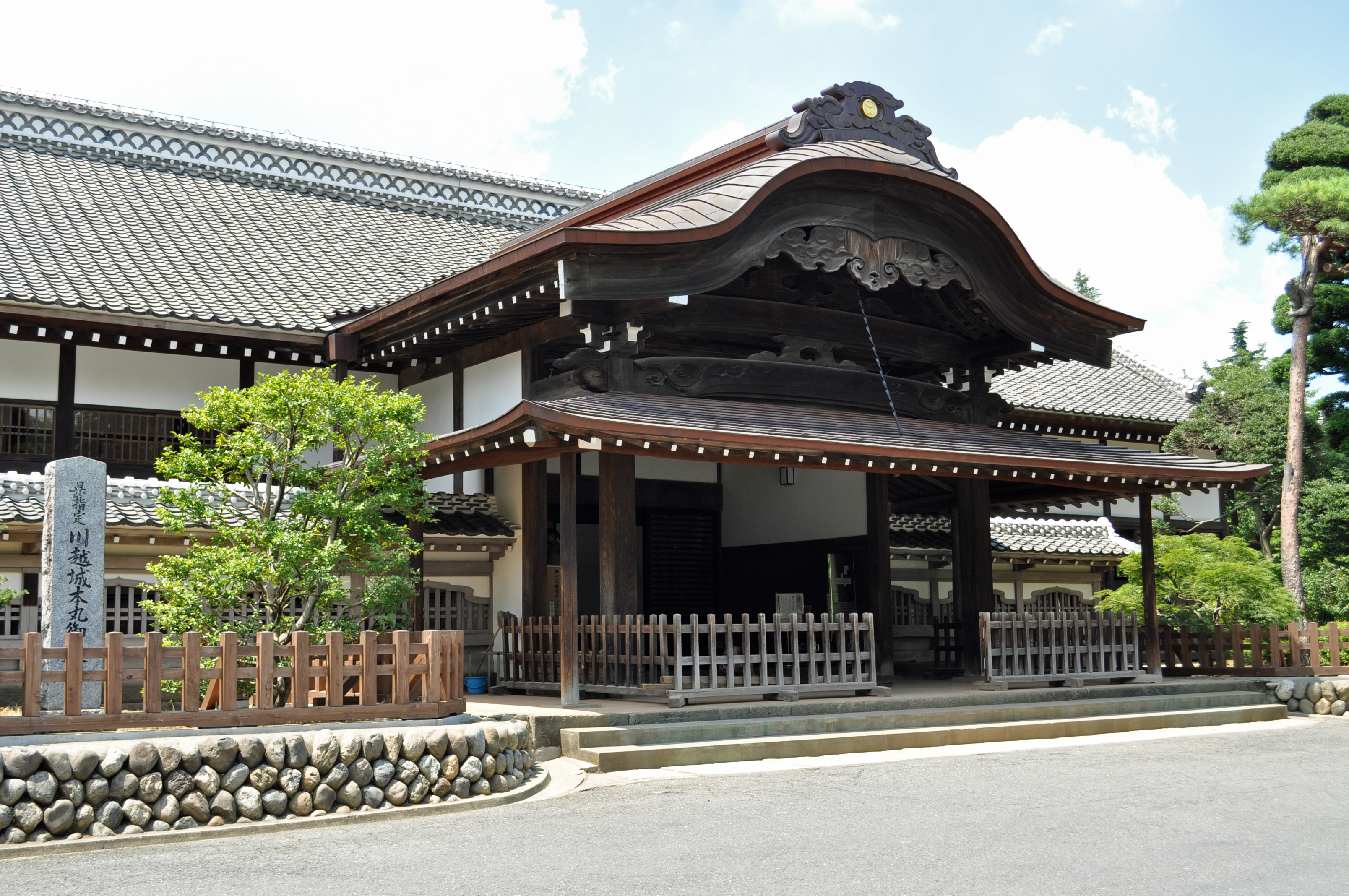
Located at 35.92°N, 139.49°E in Kawagoe, Saitama Prefecture, on the broad Kanto Plain northwest of Tokyo. The castle site is now Kawagoe Castle Honmaru Goten, visible from the air as a park-like clearing within the dense urban fabric of Kawagoe city. The nearby Shingashi and Iruma rivers would have defined the defensive terrain. Best viewed at 2,000-4,000 feet AGL. Yokota Air Base (RJTY) lies approximately 15 nautical miles to the southwest. Tokyo Haneda Airport (RJTT) is roughly 25 nautical miles to the south-southeast. The Kanto Plain stretches flat in all directions, giving a clear sense of the terrain that made Kawagoe a strategic prize.