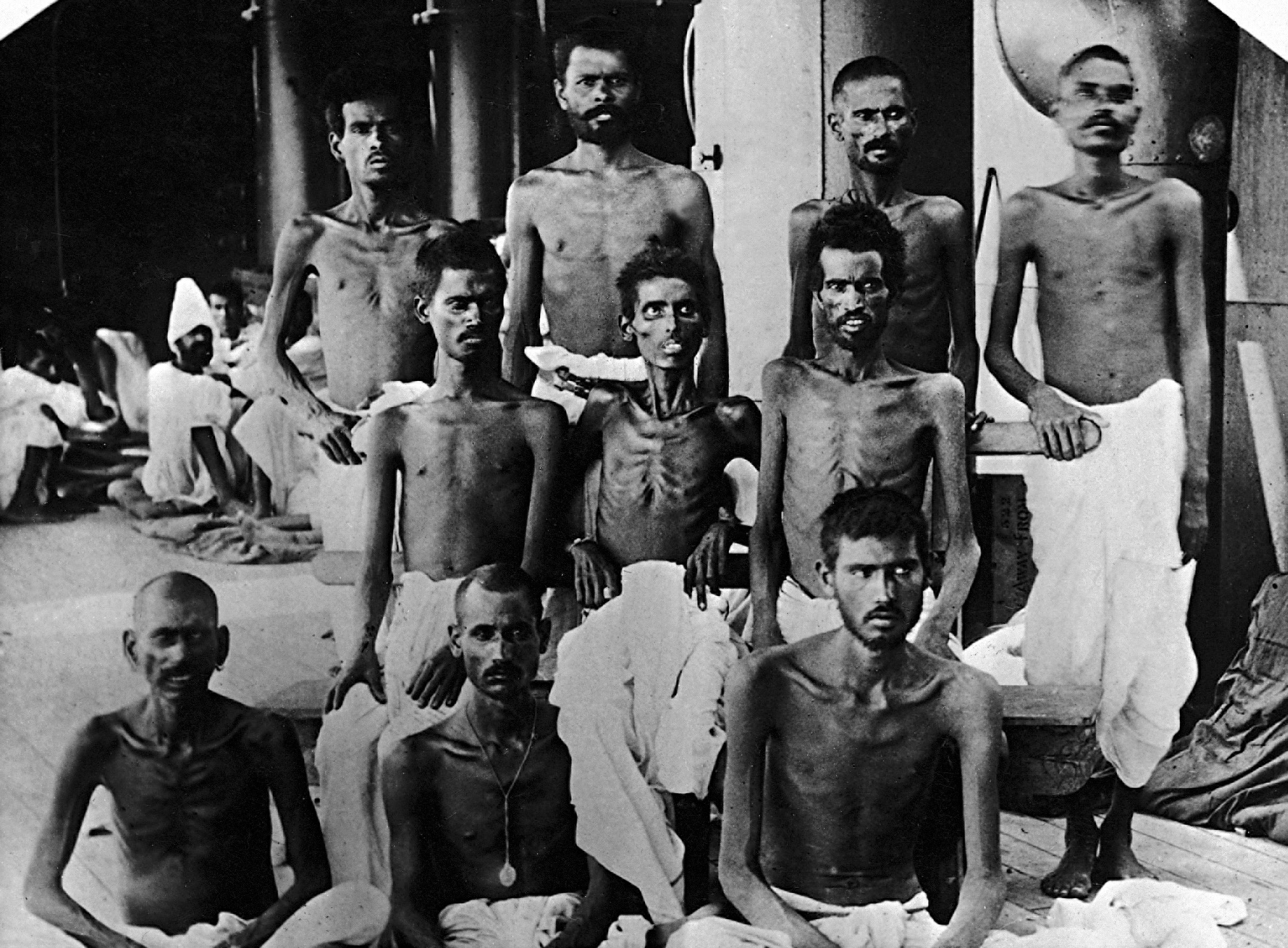
Siege of Kut
Halfway through February 1916, Sergeant Munn and his comrades inside the besieged town of Kut began smoking sawdust mixed with dried leaves. The tobacco had run out first, then the tea, then the milk and sugar, and eventually the meat. For 147 days, an 8,000-strong British Indian garrison held this dusty river-loop town south of Baghdad while Ottoman forces tightened their grip from every direction. When it ended on 29 April 1916, the Siege of Kut became what historian Christopher Catherwood called "the worst defeat of the Allies in World War I" -- a catastrophe born of overreach, miscommunication, and one general's baffling vanity.
Trapped in the River Loop
The trouble began at Ctesiphon. Major-General Charles Townshend's 6th (Poona) Division had pushed aggressively up the Tigris River toward Baghdad in late 1915, part of Britain's Mesopotamian campaign to secure oil supplies and challenge Ottoman control. But the advance stalled at Ctesiphon, and Townshend's battered force -- reduced to roughly 11,000 soldiers -- fell back to Kut, arriving around 3 December 1915. The town sat inside a long bend of the Tigris, a natural defensive position. Townshend chose to dig in rather than continue the retreat toward Basra, some 300 kilometers downstream. It was a fateful decision. When Ottoman forces under Halil Pasha arrived on 7 December, the trap closed. The German military historian Baron von der Goltz, who had spent twelve years modernizing the Ottoman army, directed siege fortifications around Kut and positioned blocking forces downstream to cut off any river-borne rescue.
The Lies That Sealed a Garrison
What followed was a grinding standoff worsened by confusion up the chain of command. Townshend reported he had only one month of food remaining -- a claim that was false. The garrison actually had supplies for more than four months at reduced rations. Why he misrepresented the situation remains unclear, though he refused to attempt an overland retreat without river transport. His superior, General Sir John Nixon, saw strategic value in tying down Ottoman forces at Kut and delayed organizing a breakout. The War Office in London was reorganizing military command structures, creating further delays. Meanwhile, a hastily assembled relief force of 19,000 men under Lieutenant-General Aylmer fought its way upriver from January 1916, suffering heavy casualties at Sheikh Sa'ad and the Dujaila redoubt. Three separate relief expeditions were launched. All three failed, at a combined cost of roughly 30,000 Allied killed or wounded.
Starvation and Bombardment
Inside Kut, conditions deteriorated steadily. By March, Ottoman Krupp artillery had opened a sustained bombardment that destroyed much of the town. German aircraft added their bombs. Dysentery and scurvy spread through the garrison. Indian soldiers, facing starvation, were forced to abandon the vegetarian diets their religions prescribed and eat horse meat -- a profound violation of their faith. In April, No. 30 Squadron of the Royal Flying Corps attempted the first air supply operation in history, dropping food and ammunition to the defenders. But as one account noted, parcels fell "as often as not into the Tigris or into the Turkish trenches." The drops between 11 and 29 April provided enough rations for only three days. Through all of this, Townshend found time to radio requests for a personal promotion to lieutenant-general, citing his earlier advances up the Tigris. The requests reflected badly on a commander whose men were starving.
The Long March
Townshend surrendered on 29 April 1916 after 147 days. Around 13,000 Allied soldiers became prisoners. Their commander was taken to the island of Heybeliada in the Sea of Marmara, where he spent the remainder of the war in comfort. Author Norman Dixon described Townshend as "amused" by his men's fate, as though he had pulled off a clever trick. His soldiers faced a different reality. The POWs were marched toward camps in Anatolia under scorching sun, whipped by guards to move faster. Sergeant Long described the scene: men who had endured months of siege, already starved and unfit to march, "being driven across the pitiless waste." Indian Muslim prisoners could sometimes gain small mercies by calling out "Islami, Islami," but Gurkha and Sikh soldiers were specifically abused for their religions. Contaminated biscuits distributed at surrender caused an outbreak of enteritis that killed many. Historian Paul Knight compared the treatment of these prisoners to the conditions suffered by Allied POWs under Japanese captivity in the next world war.
A Defeat Reversed, a Lesson Unlearned
Jan Morris called Kut "the most abject capitulation in Britain's military history." The generals responsible were removed from command. General Maude took over, trained and reorganized his forces, and ten months after the surrender, the British Indian Army conquered the entire region from Kut to Baghdad on 11 March 1917. Kut was rebuilt. But the human cost lingered. The town itself, population 6,500 in 1915, had been shelled into rubble. Thousands of prisoners never returned from Ottoman captivity. Today, the flat alluvial plain around Kut shows little trace of the siege. The Tigris still bends in its long loop around the town. From the air, the geography that made Kut defensible -- and ultimately a prison -- remains legible: the river curving protectively around three sides, the open desert stretching beyond. It is a landscape that explains both why Townshend stayed and why he should not have.
From the Air
Located at 32.51°N, 45.82°E on a distinctive bend of the Tigris River south of Baghdad, Iraq. The town of Kut (modern Al-Kut) sits in a flat alluvial plain, and the river loop that formed the defensive perimeter of the siege is visible from medium altitude. Nearest major airport is Baghdad International (ORBI), approximately 170 km to the northwest. Ali Air Base (ORTL) near Nasiriyah lies to the southeast. The terrain is extremely flat Mesopotamian floodplain, with the Tigris providing the primary visual reference. Best viewed at 5,000-10,000 ft AGL for the river loop geography.