Siege of Lal Masjid
The mosque's walls were once red, and its name still says so. Lal Masjid -- the Red Mosque -- sits in the heart of Islamabad's G-6 sector, a short walk from Pakistan's Inter-Services Intelligence headquarters, the National Library, and the ministries that run a nuclear state. For decades, it was a place where generals and presidents came to pray. By the summer of 2007, it had become a fortress, and the Pakistani army was preparing to storm it.
A Mosque Between Two Worlds
Founded in 1965 by Muhammad Abdullah Ghazi, Lal Masjid occupied an unusual position in Pakistan's capital. President Ayub Khan himself laid the foundation stone. Saudi Kings Faisal and Khalid prayed there, as did Pakistani presidents Ghulam Ishaq Khan and Farooq Leghari. General Zia-ul-Haq, who would seize power in a 1977 coup, was a close associate of the imam. The adjacent Jamia Hafsa madrasah grew into what was considered the largest Islamic institution for women in the world, enrolling more than 6,000 students. The mosque stood at the intersection of religion and state power -- until its leaders decided the state was the enemy. After the September 11 attacks, when President Pervez Musharraf declared support for the American-led war on terror, the mosque's leadership -- brothers Abdul Aziz and Abdul Rashid Ghazi -- openly sided with the Taliban and called for Sharia law and the overthrow of the government.
Eighteen Months of Confrontation
Throughout the first half of 2007, the conflict between Lal Masjid and the Pakistani state escalated from rhetoric to violence. Students from the madrasah occupied a nearby children's library. Vigilante squads raided DVD vendors, barber shops, and a Chinese-run massage parlor they accused of being a brothel, kidnapping workers in the process. When the Capital Development Authority demolished an illegally constructed mosque elsewhere in Islamabad, the seminary students launched an all-out campaign of resistance. They set fire to the Ministry of Environment building and attacked the Army Rangers who guarded it. The Chinese kidnappings brought diplomatic pressure from Beijing; the United States added its own. After eighteen months of standoffs, arson, and hostage-taking, the military moved. On July 3, riot police fired tear gas to disperse students at the mosque perimeter. Nine people died in the clashes that followed, including four students and a television cameraman.
The Week That Shook Islamabad
What followed was a week of curfews, ultimatums, and failed negotiations. The government offered 5,000 rupees, roughly fifty dollars, and free schooling to anyone who left the mosque unarmed. Paramilitary troops set off explosions around the perimeter. Imam Abdul Aziz was captured trying to flee disguised in a burqa. His brother Abdul Rashid Ghazi remained inside, negotiating by phone with government mediators and television journalists. On the night of July 9, a delegation of politicians and religious scholars arrived and reportedly brokered an agreement -- Ghazi had agreed to surrender. But according to multiple mediators, President Musharraf cancelled the deal at the last moment and ordered the Special Service Group to assault. At four in the morning on July 10, commandos breached the complex from three directions under covering fire from tanks and Cobra helicopters. The fiercest resistance came inside Jamia Hafsa, and the fighting lasted thirty-six hours before the complex was fully secured.
The Cost of Operation Sunrise
Abdul Rashid Ghazi died in the basement of the madrasah. In a final interview with Geo TV, broadcasting live as bullets struck around him, he said: "The government is using full force. This is naked aggression... my murder is certain now." His mother and young nephew were also killed. The government reported 102 dead: 91 militants, 10 SSG commandos, and one paramilitary ranger. Opposition parties claimed the real toll was far higher -- between 400 and 1,000 -- and international media estimated at least 286 fatalities. The seventy bodies recovered from the complex were buried in a graveyard near Islamabad after officials took photographs, fingerprints, and DNA samples, many of which remained unmatched years later. The seized weapons cache -- gasoline bombs in soft drink bottles, recoilless rifles, homemade explosives -- later vanished from a police station, leading to the suspension of multiple officers.
The Aftershock
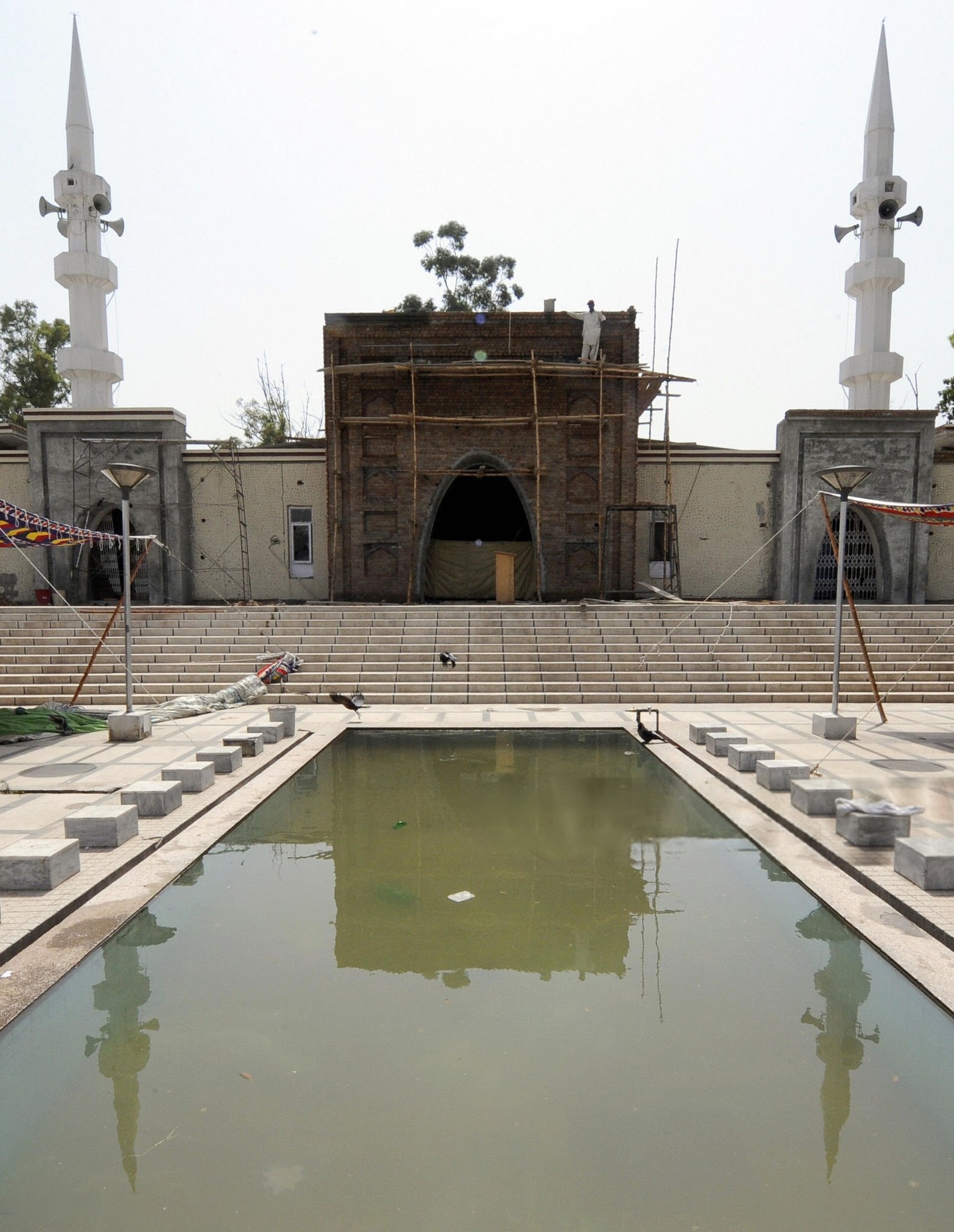
The siege of Lal Masjid did not end Pakistan's militant crisis. It accelerated it. Within weeks, the Taliban and affiliated tribal groups in the Federally Administered Tribal Areas renounced the Waziristan Accord, a ten-month-old peace agreement with the government. A wave of retaliatory violence swept the country -- the July bombings came first, and by 2008 more than 4,000 people had been killed or wounded in militant attacks across Pakistan. Historians now cite the siege as the catalyst that intensified Pakistan's internal war on terror. The mosque itself was repaired by the Capital Development Authority and reopened for prayers in October 2007, its red walls replaced with beige and white. Musharraf was later arrested for ordering the operation. Abdul Aziz, released by the Supreme Court in 2009, returned to preach at the very mosque from which he had tried to flee in disguise. A judicial commission was established to investigate civilian casualties, and the legal proceedings continued for years, leaving the full accounting of those days in July still unresolved.
From the Air
Located at 33.71°N, 73.09°E in Islamabad's G-6 sector, Pakistan. The Lal Masjid complex sits in the dense urban grid of central Islamabad, near the ISI headquarters and government ministries. Nearest major airport is Islamabad International Airport (OPIS), approximately 30 km to the northwest. The Margalla Hills form a visible ridge to the north of the city. Best viewed at 3,000-5,000 feet AGL to see the urban context of the site within the planned capital.