Siege of Maastricht (1673)
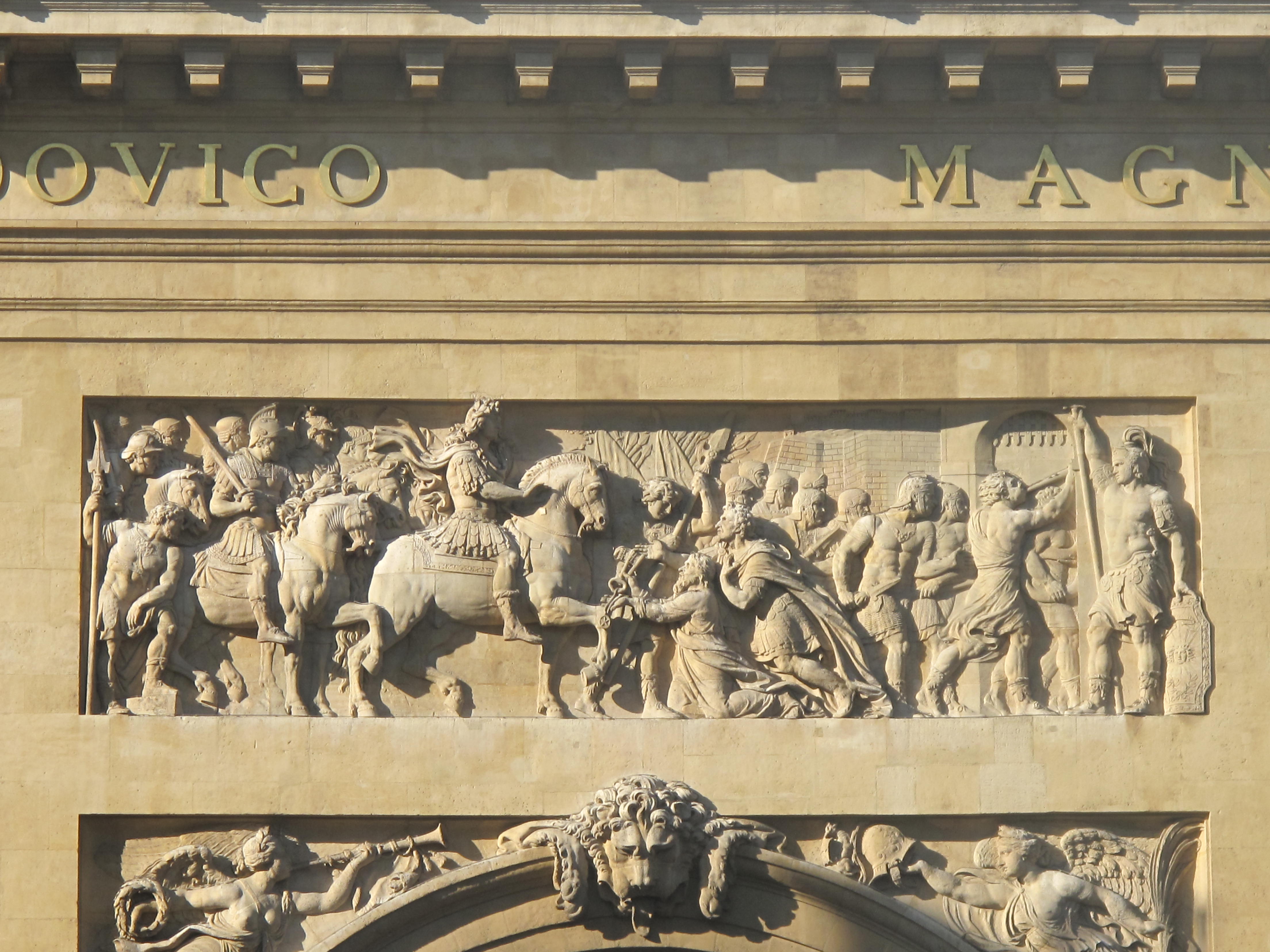
On 25 June 1673, in the muddy slope below a Maastricht ravelin called the demilune des mousquetaires, the real Charles de Batz-Castelmore, the man Alexandre Dumas would later turn into D'Artagnan, was killed leading three hundred of Louis XIV's musketeers in a desperate assault. Eighty of his men died with him. Fifty more were severely wounded. The ravelin had been taken, lost to a Dutch counterattack, and taken again — and now the engineer running the whole siege, a forty-year-old captain named Sébastien Le Prestre de Vauban, was writing in panic to the French Minister of War that if the Dutch retook the position a third time, the entire siege might have to be lifted. They did not retake it. Five days later, Maastricht surrendered. Louis had a triumphal arch built in Paris, the Porte Saint-Denis, with a Latin inscription boasting that he had taken the city in thirteen days.
Why It Mattered
In May 1672, Louis XIV had launched the Franco-Dutch War with an overwhelming invasion that nearly destroyed the Dutch Republic before it stabilised behind the flooded Holland Water Line. Maastricht had been bypassed on Turenne's advice, and the Dutch had held it through the dark months of summer. From the fortress on the Meuse, William III of Orange led raids that struck at the French supply lines back to Charleroi. The city had become a knife at the king's back. For the 1673 campaign, Louis made it the sole objective. He assembled forty thousand men, built a six-hundred-by-three-hundred-and-eighty-metre replica of the Maastricht fortifications at Fort Saint Denis to train twenty thousand assault troops on it — a training mock-up rediscovered by archaeologists in 2010 — and forbade his star marshals Condé and Turenne to attend the siege, lest they share in the glory.
Vauban's Geometry
Maastricht was the first siege Vauban directed in person rather than serving as technical advisor. He was a captain of engineers and, by the etiquette of the age, subordinate to the senior officer present — in this case the king himself. The technique he applied here, the siege parallel, had been developing for over a century, but Vauban brought it to practical perfection. Three trenches were dug parallel to the city walls and connected by perpendicular assault trenches. The first parallel sat beyond the range of defensive fire; each subsequent parallel crept closer until the third was at the lip of the moat. The earth piled from the trenches screened the attackers. Artillery could be wheeled into the forward trenches to batter the walls' base from below. A breach could then be stormed from across a broad front rather than a single choke point. The method became the European standard until the early twentieth century. Twenty thousand local farmers were conscripted to dig at Maastricht.
The Musketeers' Crescent
Charles de Batz-Castelmore had been Captain-Lieutenant of the First Company of the King's Musketeers for the better part of a decade by 1673 — the real position that would inspire Dumas's fiction a century and a half later. He led from the front, as the etiquette of his office required. On the night of 24-25 June, the French took the lunette in front of the Tongeren gate; the Dutch immediately counterattacked and recaptured it. The French took it again. In the late evening, French engineers worked to connect the lunette to the third parallel via a communication trench, threading through a breach in the contre-escarpe palisade. Three hundred musketeers had been deployed to hold the position. By the time the trench was secured, eighty were dead and over fifty severely wounded. D'Artagnan was among the dead. In their honour, the half-moon ravelin later erected on this ground was named the demilune des mousquetaires — the Musketeers' Crescent. Vauban, watching his musketeers fall in numbers he had not expected, briefly lost his nerve.
The Future Duke of Marlborough
Among the English volunteers Louis had insisted be given prominent positions to gratify his ally Charles II was a young John Churchill, twenty-three years old, future Duke of Marlborough and great-great-great-great-great-grandfather of Winston Churchill. He learned siege warfare in the Maastricht trenches alongside the Duke of Monmouth, Charles II's eldest illegitimate son. Monmouth, against Vauban's explicit orders that his attack be only a feint, attempted to scale the hornwork in person and was driven off with over a hundred casualties. Louis had given him a bulletproof breastplate which probably saved his life. Churchill, less hot-headed, would take what he learned at Maastricht into a career that produced Blenheim and Ramillies thirty years later. The siege was, among everything else, a training ground for the next generation of European generals.
How a City Survives
The fighting at the demilune was the critical phase. With the musketeers dead and the French clinging to the lunette, the question was whether Maastricht's defenders could mount another sortie. A few thousand Dutch soldiers and perhaps as many burghers held the walls. They did not sortie. Instead, the population began filling the gateway with manure to slow any breakthrough — the slow, undignified work of survival. There would be no general assault on the city this time. Unlike Farnese's sack in 1579, the surrender on 30 June was negotiated. There was no plundering. Maastricht was, in the legal fiction of the age, a condominium held jointly by the Duchy of Brabant and the Bishop of Liège, both of whom Louis claimed as his allies or his inheritance. He intended to keep the city permanently. His war minister Louvois wrote on 16 September that the king would sooner give up Paris or Versailles than return Maastricht. Five years later, at the Treaty of Nijmegen, Louis returned Maastricht to the Dutch anyway as a bargaining chip.
Painted into the Hall of Mirrors
Louis treated sieges as theatre. He brought painters and poets to the trenches. The court historian Paul Pellisson recorded his exploits in prose. The king regularly walked under enemy musket fire, exposing himself to make a point about kingship and courage. After Maastricht, Charles Le Brun painted the siege into the ceiling of the Hall of Mirrors at Versailles, where it remains. Adam Frans van der Meulen produced a series of canvases. The Porte Saint-Denis in Paris, redesigned to mark the victory, carries a plaque dedicated LUDOVICO MAGNO, QUOD TRAJECTUM AD MOSAM XIII DIEBUS CEPIT — 'to Louis the Great, for capturing Maastricht in thirteen days.' The reliefs are by Michel Anguier. Three years later, William III tried to retake the city and failed; the fortifications Vauban had drawn up by then were too good. The shape of his trenches and the geometry of his parallels would govern siege warfare across two continents and two and a half centuries — every soldier digging in toward a fortified position from 1673 to roughly the Somme was repeating, in some way, the lesson Vauban set down in the mud below the demilune des mousquetaires.
From the Air
Located at 50.85°N, 5.68°E along the Meuse at Maastricht, with the old fortifications now traceable in the city's street pattern around the Helpoort and the Tongeren gate area. Recommended viewing altitude: 3,000-5,000 feet to see the bend of the Meuse and the Sint-Pietersberg ridge southwest of the centre. Nearest airport: Maastricht-Aachen (EHBK, 8 km north). The Porte Saint-Denis in Paris — the arch Louis built to mark this victory — is the visible monument; the demilune des mousquetaires marker is in the modern Volkspark area.