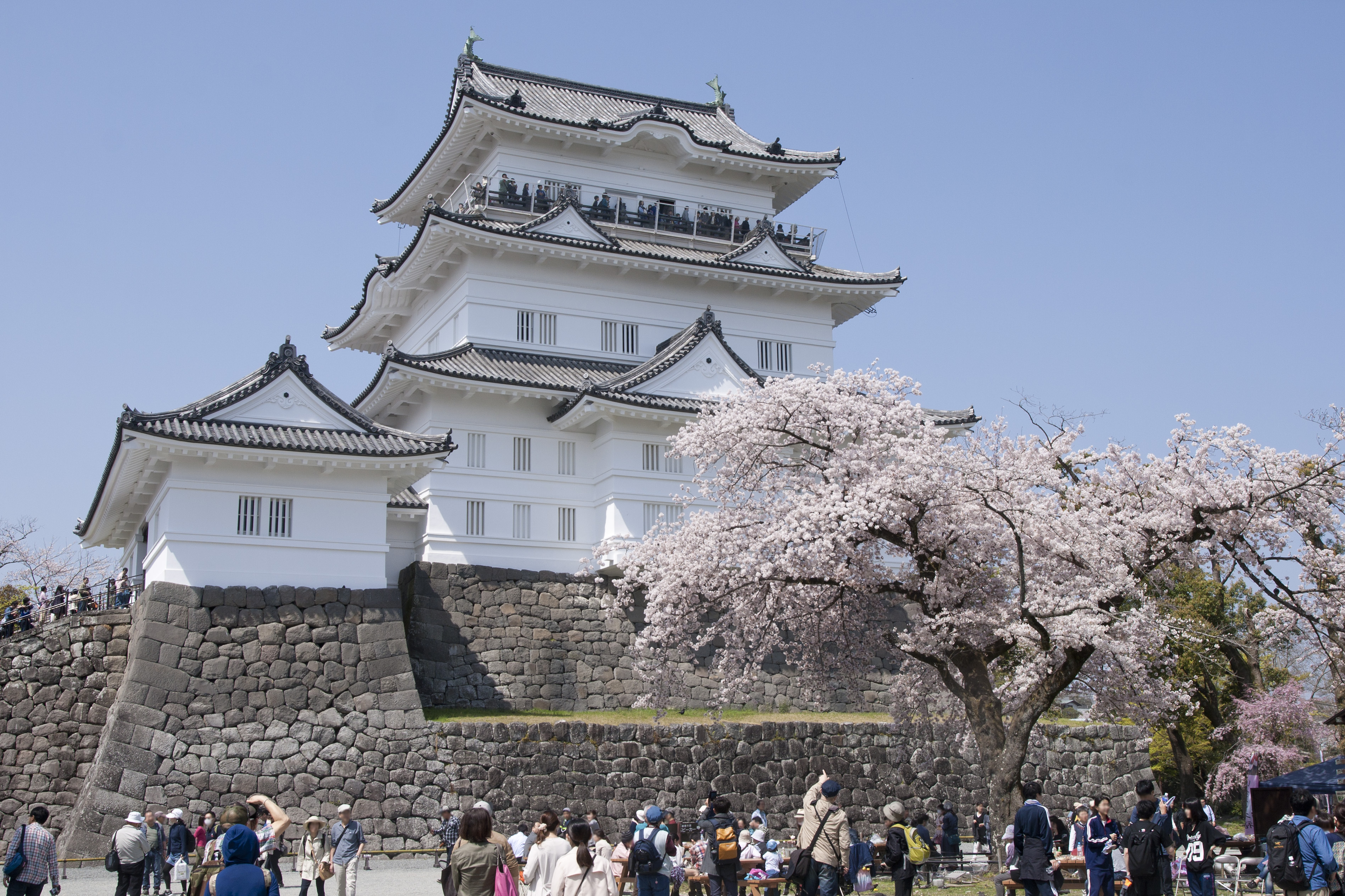
Siege of Odawara (1590)
The samurai besieging Odawara Castle in the summer of 1590 were watching acrobats. Inside the siege lines of Toyotomi Hideyoshi's army -- the largest Japan had ever assembled -- soldiers lounged with concubines, applauded fire-eaters, and tossed coins to traveling musicians. Historians would later call it "the most unconventional siege lines in samurai history." While the entertainment continued outside, the Hojo defenders stood watch on the ramparts in full armor, arquebuses loaded, staring out at an enemy that seemed more interested in carnival than combat. That was precisely the point. Hideyoshi had not come to storm Odawara. He had come to break its spirit.
A Snub That Launched an Army
The siege began with a social insult. After reunifying most of Japan following Oda Nobunaga's assassination in 1582, Hideyoshi summoned the great lords to pay homage at his Jurakudai residence in Kyoto. Hojo Ujimasa, lord of the most powerful clan in eastern Japan, refused. The Hojo controlled a vast network of castles across the Kanto region, and Ujimasa calculated that his fortress at Odawara -- which had repelled both Uesugi Kenshin in 1561 and Takeda Shingen in 1569 -- made him untouchable. Ujimasa proposed rescheduling the visit to the spring or summer of 1590, but Hideyoshi rejected the counteroffer. By May 1590, the campaign was underway. Ujimasa gambled that Date Masamune, the powerful lord of the north, might come to his aid, and that Tokugawa Ieyasu might defect from Hideyoshi's coalition. Neither hope materialized.
The Carnival Outside the Walls
Hideyoshi's approach to Odawara was psychological warfare refined to an art. His massive army surrounded the castle, but rather than launching costly assaults against its layered defenses, he settled in for a siege of attrition. The camp took on the atmosphere of a festival. Merchants set up shops. Tea ceremonies were held. Hideyoshi himself hosted parties in view of the castle walls. Meanwhile, his generals picked off Hojo outposts across the Kanto. Maeda Toshiie and Uesugi Kagekatsu led a secondary force that systematically captured Hojo strongholds one by one -- Matsuida, Minowa, Maebashi, Matsuyama, and Hachigata castles all fell. The noose tightened with each fortress taken. Inside Odawara, supplies dwindled and morale cracked as word arrived of each allied castle's fall.
The Castle That Appeared Overnight
Hideyoshi's masterstroke was Ishigakiyama Ichiya Castle -- the "One Night Castle." In secret, he deployed 40,000 workers and stonemasons, many brought from Kyushu and previously employed at the great castles of Azuchi and Osaka, to construct a full stone fortress on a wooded hilltop overlooking Odawara. The work took 80 days, hidden behind the treeline. When construction was complete, the surrounding forest was felled in a single night, revealing an entire castle where none had existed the day before. The psychological impact on the Hojo garrison was devastating. If their enemy could conjure fortresses from thin air, what chance did resistance have? After three months of siege, the defenders' will collapsed. The Hojo surrendered without Odawara's walls ever being breached.
The End of the Hojo and the Rise of Tokugawa
The aftermath was swift and merciless. Hojo Ujimasa was forced to commit suicide, along with his brother Ujiteru. The Hojo clan, which had dominated eastern Japan for five generations, was extinguished as a political force. Hideyoshi then made a decision whose consequences he could not have foreseen: he awarded the conquered Hojo lands to his general Tokugawa Ieyasu. The vast Kanto territory -- including the small fishing village of Edo -- became Ieyasu's new domain. Within thirteen years, Ieyasu would establish the Tokugawa shogunate at Edo, transforming it into the greatest city in Japan and the seat of power for 250 years. The fall of Odawara did not just end the Sengoku period's last great holdout. It planted the seed for the Tokugawa dynasty that would reshape the entire nation.
A Tea Master's Fate
Among the lesser-known casualties of the siege was Yamanoue Soji, one of the great tea masters of the age. Soji had served the Hojo lords of Odawara and was a student of the legendary Sen no Rikyu. When the castle fell, Soji was captured and sentenced to death by torture. His fate reflected the brutal reality behind the siege's festive veneer -- Hideyoshi wielded entertainment and execution with equal ease. The fall of Odawara was not merely a military event but the collapse of an entire world: the Hojo court, its retainers, its artisans, and its culture were all swept away in a single season.
From the Air
Odawara Castle sits at 35.251N, 139.154E on the coastal plain of Sagami Bay in Kanagawa Prefecture. From the air, the castle grounds appear as a wooded park area in central Odawara, with the reconstructed white keep visible at lower altitudes. To the southwest, the forested hilltop where Ishigakiyama Ichiya Castle was built is visible about 3km from the main fortress. The Hakone volcanic mountains form a dramatic backdrop to the west. Nearest airports: Haneda (RJTT) approximately 40nm northeast, Atsugi (RJTA) approximately 20nm north. The Tokaido rail line and expressway corridor run along the coast, tracing the same route Hideyoshi's army followed from Kyoto.