Siege of Oshi
Ishida Mitsunari had every advantage: 23,000 soldiers, the backing of the most powerful warlord in Japan, and a castle defended by a skeleton garrison of farmers and second-string samurai. What he did not have was a plan for the mud. In the summer of 1590, Mitsunari arrived at Oshi Castle in Musashi Province expecting a quick surrender that would burnish his reputation as Toyotomi Hideyoshi's rising star. Instead he found a fortress threaded through marshes so deep and tangled that his superior numbers meant nothing. The infantry attacks failed. The flooding scheme -- 28 kilometers of dikes designed to turn the castle into a lake -- backfired when the waters protected the defenders as much as they threatened them. When the garrison finally opened its gates after more than a month, it was only because their lord had already lost at Odawara. Mitsunari won the siege on paper. In practice, it ruined him.
A Castle Left to the B-Team
The siege of Oshi was a sideshow to the main event. In 1590, Toyotomi Hideyoshi launched a massive campaign to crush the Odawara Hojo clan, the last major rival to his unification of Japan. While Hideyoshi invested Odawara Castle itself with an enormous host, he dispatched subordinates to mop up the Hojo's outlying strongholds across Musashi Province. Ishida Mitsunari drew Oshi. The castle's lord, Narita Ujinaga, was already at Odawara with his best troops, having answered the Hojo's summons. He left his home fortress in the hands of his daughter Kaihime and his younger brother Narita Nagachika, supported by just 619 samurai and roughly 2,000 conscripted locals. Three days after taking Tatebayashi Castle with ease, Mitsunari's army of 23,000 arrived before Oshi's walls and demanded the garrison's surrender. They refused.
Water as Weapon, Water as Shield
Mitsunari's first instinct was brute force: repeated infantry assaults against the castle walls. But Oshi had been built to exploit its terrain. The fortress sat on a slight elevation near the Tone River, surrounded by marshes, bogs, and flooded paddies that channeled any attacking force into narrow, exposed approaches. The direct assaults failed with heavy casualties. Mitsunari then turned to a more dramatic strategy, one borrowed from his master's own playbook. In 1582, Hideyoshi had defeated the besieged garrison of Takamatsu Castle by damming a river and flooding the lowlands around it. Mitsunari ordered his troops to replicate the feat. They labored for days, piling up an astonishing 28 kilometers of continuous earthen dikes around Oshi, then breached the river channels. Torrential summer rains swelled the waters further. The lowlands flooded. But the castle's elevated core stayed above the waterline, turning Oshi into a defiant island -- a floating castle ringed by its own moat of floodwater.
Surrender Without Defeat
For over a month the garrison held. The floodwaters made further infantry attacks impossible, and Mitsunari's army could only watch from the dike lines as the defenders waited behind walls that refused to fall. The stalemate broke not through military action but through politics. In late July, Odawara Castle fell to Hideyoshi's main army. Narita Ujinaga surrendered. When messengers carried this news to Oshi, the garrison's reason for fighting evaporated -- their feudal obligation was to their lord, and their lord had yielded. Kaihime and Nagachika opened the gates. The castle was unbreached. Not a wall had been scaled. Mitsunari had his prize, but the manner of its acquisition satisfied no one, least of all his rivals in Hideyoshi's inner circle.
A Career Drowned in the Marshes
The consequences of Oshi's stubborn resistance echoed across the next decade of Japanese history. Ishida Mitsunari had been one of Hideyoshi's most capable bureaucrats -- a brilliant administrator of logistics and taxation. But his fumbling month-long siege of a castle defended by conscripts and a woman branded him as a man who could plan a budget but not a battle. That reputation festered. When Hideyoshi died in 1598 and the fragile coalition he had built began to fracture, Mitsunari needed Japan's powerful daimyo to rally behind him against the ambitions of Tokugawa Ieyasu. Many refused, citing his proven incompetence in the field. The result was the Battle of Sekigahara on October 21, 1600 -- the largest and most decisive battle in Japanese history. Mitsunari's Western Army, weakened by defections he could not prevent, was crushed. He was captured and executed. Tokugawa Ieyasu became shogun, and the Sengoku period ended. The marshes of Oshi had claimed one more victim.
From the Air
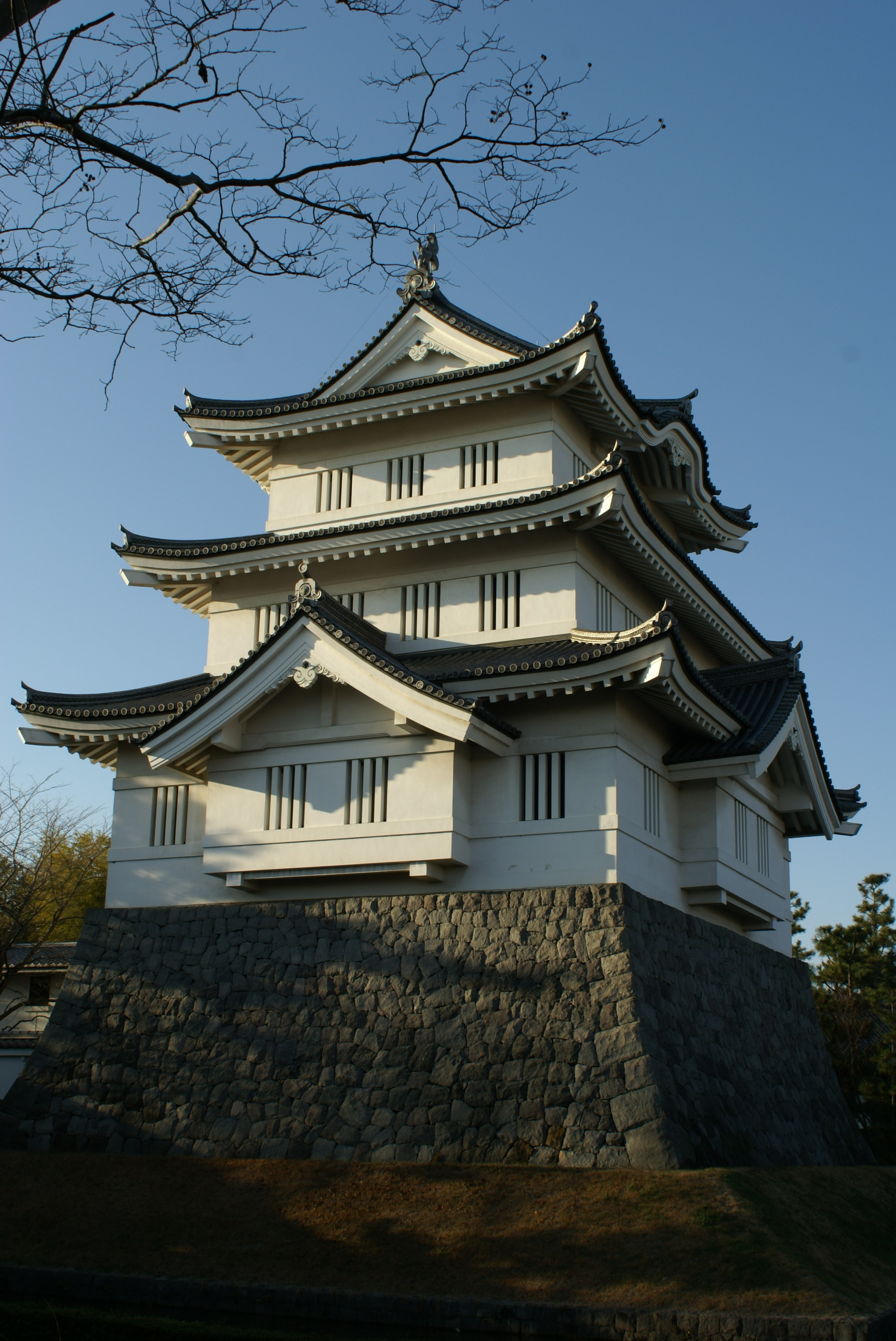
The siege took place at Oshi Castle, located at 36.137N, 139.453E in the city of Gyoda, Saitama Prefecture, on the Kanto Plain. The flat terrain and network of rivers and waterways visible from the air give a sense of why the marshlands made the castle so difficult to assault. The Tone River runs nearby. The castle site is now a public park with a reconstructed tower. Nearest major airports: Tokyo Narita International (RJAA) approximately 55nm east, Haneda Airport (RJTT) approximately 40nm south. Honda Airport (RJTS) lies approximately 5nm southwest. The agricultural flatlands of the northern Kanto Plain dominate the view in every direction.