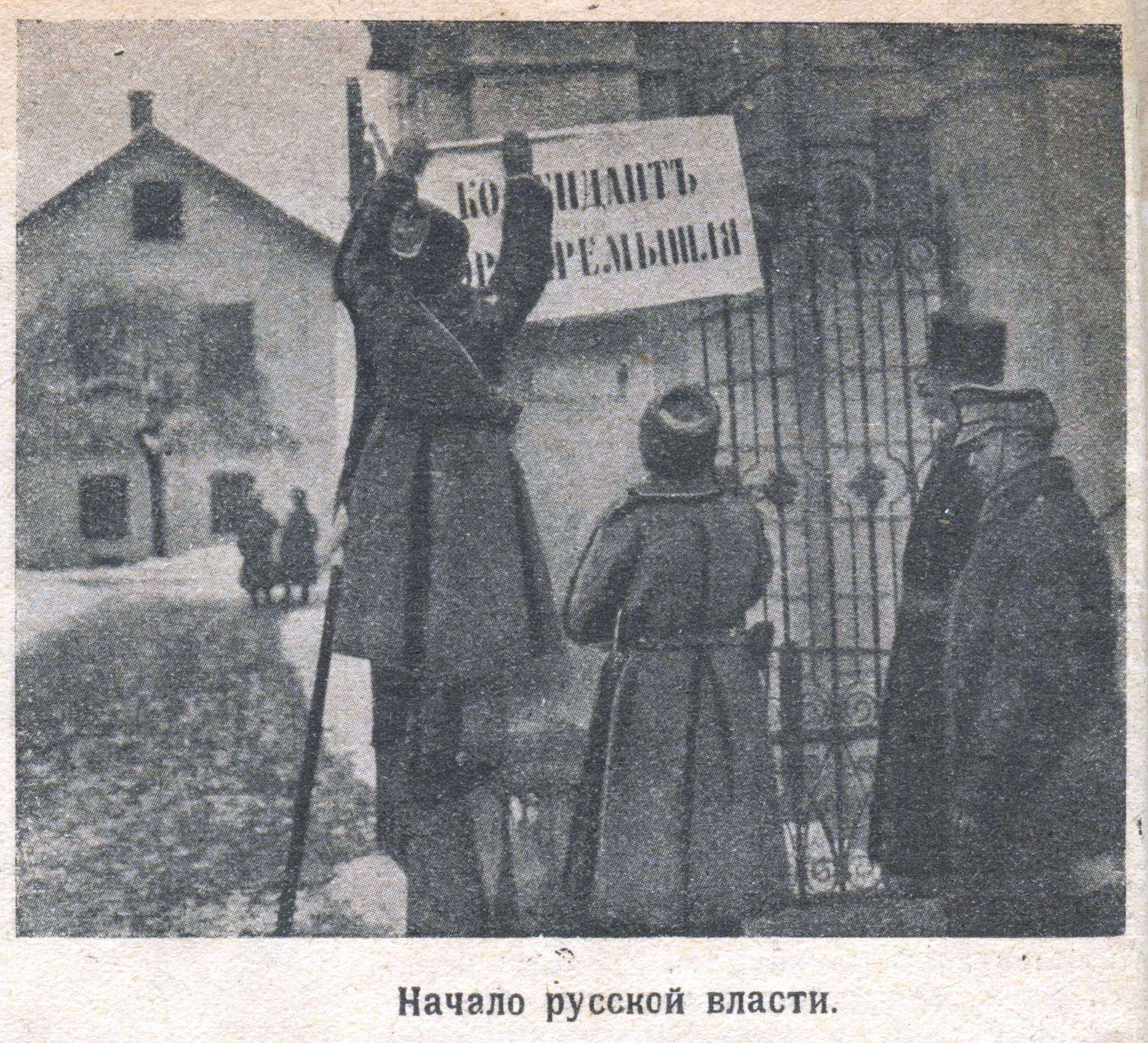
Siege of Przemyśl
Orders of the day had to be issued in fifteen languages. That detail alone captures the fortress at Przemysl -- a stronghold on the River San in what is now southeastern Poland, where the Austro-Hungarian Empire's patchwork of nationalities was compressed into a single besieged town. Austrians, Poles, Jews, and Ruthenians shared the same shrinking rations, the same artillery barrages, the same rising count of dead and wounded. Outside the walls, six Russian divisions waited. Inside, 127,000 soldiers and 18,000 civilians endured 133 days of siege between September 1914 and March 1915, in what historians have called Austria-Hungary's Stalingrad.
A Fortress Left Behind
The siege grew from catastrophe. In August 1914, Russian General Nikolai Ivanov overwhelmed the Austro-Hungarian forces under Conrad von Hotzendorf during the Battle of Galicia, and the entire Austrian front collapsed westward over a hundred miles to the Carpathian Mountains. The fortress at Przemysl was the only Austrian position that held. By late September, it sat completely behind Russian lines -- an island of Habsburg resistance in a sea of Russian-occupied territory. Its strategic value extended beyond Austria-Hungary: the Russians were now positioned to threaten the German industrial region of Silesia, making Przemysl's defense a German concern as well. Thirty miles of new trenches were dug. Six hundred fifty miles of barbed wire formed seven defensive lines around the town's perimeter. The garrison prepared to hold.
Assault, Relief, and Assault Again
On 24 September, General Radko Dimitriev of the Russian Third Army ordered a full-scale assault on the fortress with six divisions. For three days the Russians attacked. They accomplished nothing except 40,000 casualties. In October, during the Battle of the Vistula River, the Austro-Hungarian Third Army under Svetozar Boroevic von Bojna advanced toward Przemysl, and on 9 October, a cavalry unit broke through to the garrison. The siege was briefly lifted. It resumed on 9 November, and this time there would be no relief. Through the winter of 1914-1915, Austria-Hungary launched offensive after offensive through the Carpathian Mountains to reach the fortress. The attempts ended catastrophically. Casualties from January to April 1915 were officially reported at 800,000 -- most lost not to combat but to weather and disease in the frozen mountain passes.
Starvation, Disease, and Distrust
Inside the fortress, the diary of Josef Tomann, an Austrian junior military doctor, recorded a garrison rotting from within. Hospitals recruited teenage girls as nurses at 120 crowns a month; Tomann noted bitterly that their main purpose was to serve the officers' appetites, while venereal disease spread through the ranks. Cholera stalked the crowded quarters. As food dwindled, ethnic tensions sharpened. Helena Jablonska, a middle-aged Polish woman of means, kept a diary that revealed deep antisemitic resentment toward the Jewish population -- resentment that turned to violence when the Russians finally took the city. Cossack soldiers attacked Jewish residents heading to synagogue, beating them with whips. Some Jews hid in cellars. The Cossacks found them there too. Communication with the outside world grew desperate and inventive: twenty-seven airmail flights carried postcards from the besieged city, and unmanned paper balloons drifted over Russian lines carrying messages. Pigeon mail was also used.
The Fall That Broke an Empire
On 22 March 1915, the garrison surrendered. Russian troops captured nine Austrian generals, including the fortress commandant, Hermann Kusmanek von Burgneustadten, who became the highest-ranking officer of the German bloc taken prisoner by Russia. The blow was worse than it appeared: Przemysl was only supposed to hold 50,000 troops, but over 110,000 surrendered -- more than double the planned garrison, a loss far greater than anyone had anticipated. All told, the siege and the failed relief attempts cost Austria-Hungary over a million casualties. The empire's army never recovered. From this point forward, the Habsburgs would depend on German assistance for every major operation on the Eastern Front and in the Balkans. The Russians held Przemysl until summer 1915, when the Gorlice-Tarnow offensive pushed them back. But the damage was done. The fortress that had held in fifteen languages had fallen, and the empire that spoke them all was already breaking apart.
From the Air
Located at 49.79N, 22.77E on the River San in southeastern Poland, near the Ukrainian border. The Przemysl Fortress consisted of a ring of outlying forts surrounding the town, some of which survive as ruins and museums. The fortress perimeter is visible from altitude as a ring of earthworks and fortification remnants in the hills around the modern city. Best viewed at 3,000-5,000 feet AGL. Nearest airport: Rzeszow-Jasionka Airport (EPRZ), approximately 80 km west-northwest. The Carpathian Mountain foothills rise to the south.