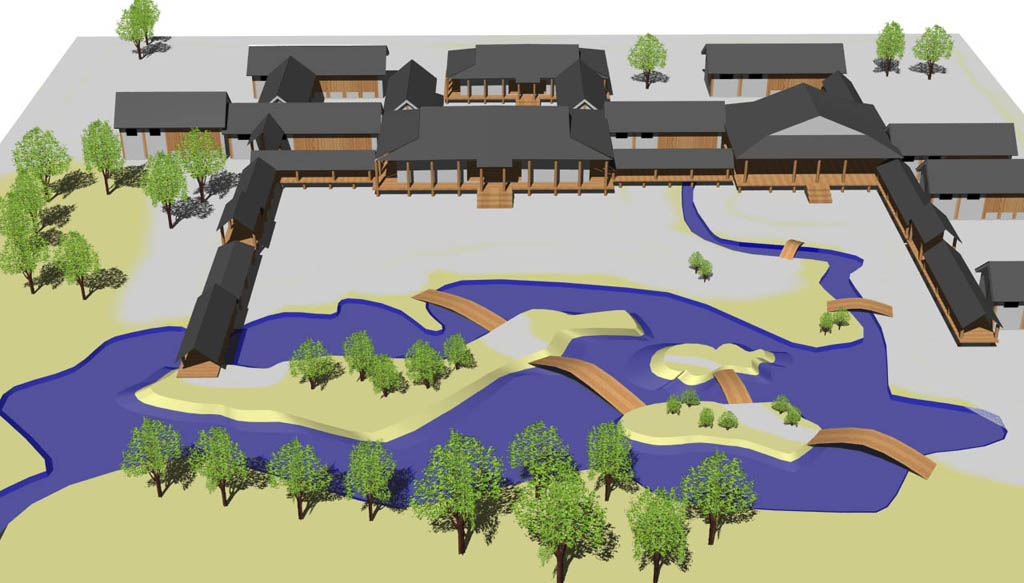
Siege of Sanjō Palace
At four o'clock in the morning on a winter night in 1160, roughly five hundred mounted warriors descended on the Sanjo Palace in Kyoto. They seized the retired Emperor Go-Shirakawa, cut down his guards, and set the palace ablaze. The attack lasted hours. It would reshape the Japanese political order for generations. And eight centuries later, a thirteen-century handscroll depicting that night, just over twenty-two feet long and sixteen inches tall, sits in a climate-controlled gallery at the Museum of Fine Arts in Boston, Massachusetts, still radiating the chaos of that pre-dawn assault.
Rival Courtiers, Rival Clans
The siege was the opening blow of the Heiji Rebellion, a brief but violent power struggle rooted in court intrigue. Two advisors from the mighty Fujiwara clan, Fujiwara no Nobuyori and Fujiwara no Michinori, had been competing for influence over the retired Emperor Go-Shirakawa. Each man allied himself with one of Japan's two great warrior clans: Nobuyori with the Minamoto, and Michinori with the Taira. When Taira no Kiyomori, the Taira clan's leader, left Kyoto on a pilgrimage in late 1159, Nobuyori saw his chance. He enlisted the Minamoto general Yoshitomo and struck while the city's most powerful military commander was absent.
Fire in the Hour of the Tiger
The raiders surrounded the Sanjo Palace under cover of darkness and attacked at the hour of the tiger, the traditional Japanese designation for four in the morning. They overwhelmed the palace guard, captured Go-Shirakawa, and set the wooden complex alight. An inscription on the famous handscroll describes the aftermath: the insurgents then burned the residence of Shinzei, Michinori's Buddhist name, at the intersection of Anegakoji and Nishi-no-toin streets. The capital filled with terrified citizens, high and low alike, uncertain of what would befall them next. Nobuyori imprisoned Go-Shirakawa alongside the reigning Emperor Nijo, Go-Shirakawa's own son and a puppet ruler, consolidating both symbols of imperial authority under Minamoto control.
The Taira Counterstrike
The Minamoto triumph lasted barely two weeks. When Taira no Kiyomori returned to Kyoto, the Taira engineered a daring extraction. They smuggled Emperor Nijo and his empress out of the Sanjo Palace, disguising the emperor as a lady-in-waiting to slip past Minamoto guards. Go-Shirakawa escaped separately. With both emperors freed, the Taira had legitimacy on their side. A portion of the Taira force feigned retreat, luring Minamoto warriors out of the palace, while the main body stormed the gates. The Minamoto were driven out, Nobuyori was captured and executed, and Yoshitomo fled only to be betrayed and killed. The Heiji Rebellion ended on February 5, 1160, and the Taira clan's dominance over Japanese politics was cemented for the next two decades.
Flames Preserved in Ink and Gold
The siege's afterlife may be more famous than the battle itself. The Night Attack on Sanjo Palace handscroll, painted during the Kamakura period in the second half of the thirteenth century, is considered a masterpiece of the Yamato-e style, the tradition of distinctly Japanese pictorial art. Measuring 41.3 by 699.7 centimeters, it unfolds right to left, progressing from the chaos of the initial assault through the burning palace to the triumphant procession of the conspirators. Art historians prize it not only for its dramatic composition but as a rare and accurate depiction of Japanese armor as it was actually worn during the early Kamakura era, a period from which few warrior scrolls survive. One of the three extant scrolls resides at the Tokyo National Museum, designated a National Treasure in 1955. The Boston scroll arrived there as part of the Fenollosa-Weld Collection, a reminder that Japanese art history was partly written in New England galleries.
From the Air
The Sanjo Palace site lies at approximately 35.012N, 135.768E in central Kyoto, near the intersection of Sanjo-dori and the old imperial district. From the air, the area is part of Kyoto's dense urban grid, with the Kyoto Imperial Palace grounds visible as a large green rectangle to the north. The nearest major airport is Osaka Itami (RJOO), about 40 km southwest. Kansai International (RJBB) lies further south. At 2,000-3,000 feet AGL, the grid pattern of old Kyoto is clearly visible, with the Kamo River running north-south as a navigation reference.