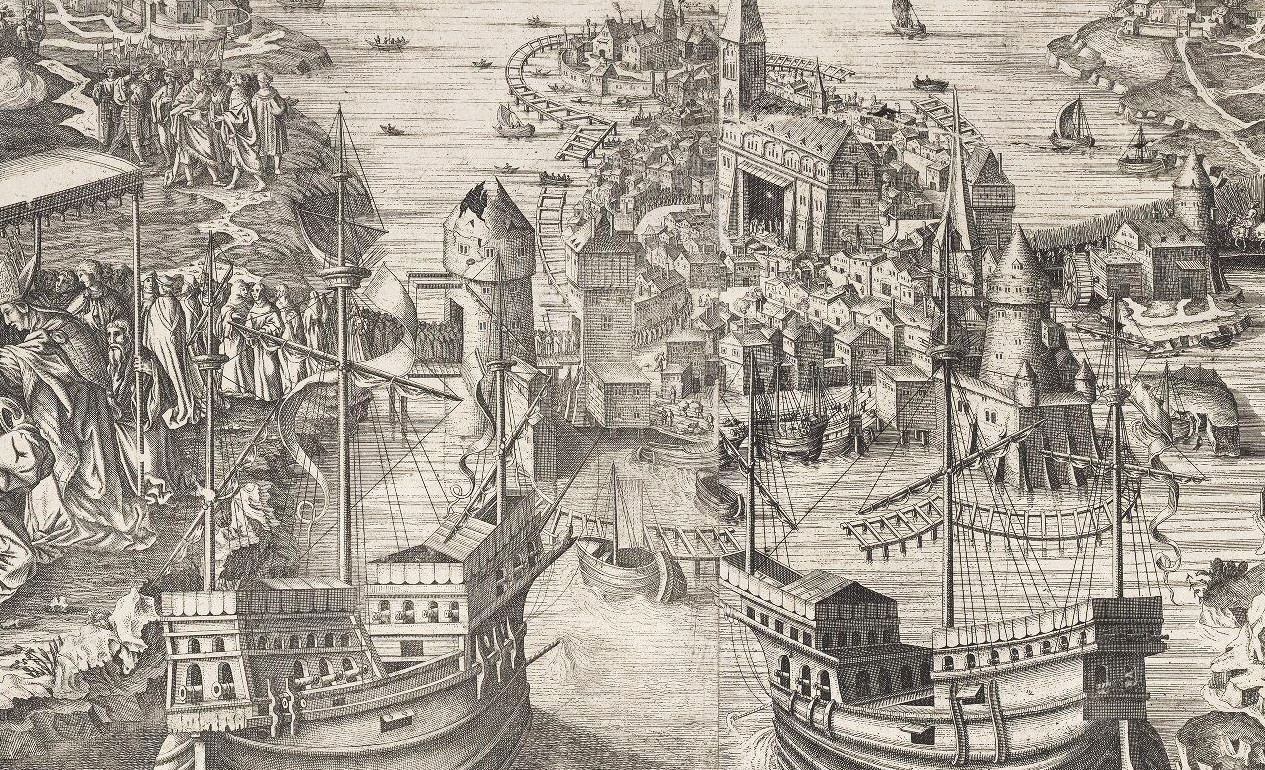
Siege of Stockholm (1520)
Christian II of Denmark tried everything to take Stockholm. He offered salt and herring as bribes. He blockaded the harbor with his fleet. He positioned armies at both suburbs. For four long months in the summer of 1520, the Swedish capital held firm behind its walls, its defenders commanded by a remarkable woman: Christina Gyllenstierna, widow of the fallen Swedish regent Sten Sture. She had good cannons in Tre Kronor castle, and she used them well. But sieges are wars of attrition, and by September, with supplies dwindling and Swedish commanders surrendering across the countryside, Christina finally negotiated terms. What happened next would shock Europe and ultimately cost Christian his throne - the event known to history as the Stockholm Bloodbath.
The Road to Stockholm's Gates
The Dano-Swedish War had raged since 1512, a grinding conflict over the future of the Kalmar Union that had theoretically united Denmark, Norway, and Sweden under one crown. By early 1520, the tide had turned decisively in Denmark's favor. Swedish regent Sten Sture the Younger fell in battle at Bogesund, mortally wounded. His death removed the one leader capable of unifying Swedish resistance. The fortress city of Kalmar, key to controlling Sweden's southeastern coast, surrendered after a long siege to the Danish admiral Soren Norby. With Kalmar secured, Norby sailed north with his fleet toward the ultimate prize: Stockholm itself. The Swedish capital remained the last major stronghold of resistance, defended by Christina Gyllenstierna, who refused to accept that her husband's death meant Sweden's defeat.
A Woman's Defiance
Christina Gyllenstierna was no ordinary defender. As the widow of Sten Sture, she commanded both the loyalty of Stockholm's garrison and the formidable artillery of Tre Kronor castle, the royal fortress that dominated the city's harbor. When Soren Norby's fleet arrived in early May 1520 and Danish armies encamped at Stockholm's suburbs, Christina prepared for a long siege. King Christian II tried diplomacy alongside force, offering salt and herring to entice the starving city to surrender. Some citizens accepted his bribes, but most held firm. The Danes never attempted to storm the walls - the castle's cannons made such an assault too costly. Through the long summer, the siege ground on at a standstill. Christian returned to Copenhagen in June and July, gathering reinforcements including six ships from the Habsburg Netherlands. Still Stockholm held.
The September Surrender
By September, the calculus had changed. Swedish commanders across the country had surrendered, leaving Stockholm isolated. Christian II had used the summer months to spread propaganda and wear down resistance. On September 7, 1520, Christina Gyllenstierna finally capitulated. The terms seemed reasonable: Christina and her supporters would recognize Christian as King of Sweden, and in return, Christina would retain her late husband's estates. Christian confirmed these promises with his hand and seal. The following day, the Danish king marched into Stockholm with an army of 3,000 men. On November 4, Gustav Trolle, the Archbishop of Uppsala, crowned Christian II as King of Sweden. That same day, Soren Norby and other commanders were knighted for their service. The war appeared to be over, and Christian seemed magnanimous in victory.
Blood in the Square
The coronation celebrations masked Christian's true intentions. Over the next few days, the king transformed from conqueror to executioner. What followed became known as the Stockholm Bloodbath: between 82 and 94 people were killed, representing roughly 1.5 percent of Stockholm's entire population. The executions followed a grim hierarchy. First, two bishops who had opposed Danish rule fell to the sword. Then fourteen nobles met the same fate. The killing continued with three mayors and fourteen members of the town council. Noble blood demanded noble death - beheading by sword - while commoners received the axe, and those of lowest station were hanged. Christian's vengeance extended even beyond the living: the corpse of Sten Sture himself was dug up and burned along with other bodies from the recent war.
Seeds of Swedish Independence
Christian II intended the bloodbath to crush Swedish resistance forever by eliminating its leadership class. Instead, he guaranteed his own downfall. The massacre horrified Europe and turned Swedish opinion irrevocably against Danish rule. Among those who escaped was a young nobleman named Gustav Eriksson, whose father had been among the executed. He fled into the forests of Dalarna, rallied the peasants, and within three years had driven the Danes from Sweden entirely. In 1523, he was crowned Gustav I, founding the Vasa dynasty that would rule Sweden for generations. Christian II, meanwhile, was deposed by his own Danish nobles in 1523 and spent much of his remaining life in prison. The bloodbath he thought would secure his power instead became the foundational myth of Swedish independence - a cautionary tale about the price of tyranny and the resilience of a people who refused to be subjugated.
From the Air
Located at 59.33N, 18.07E in central Stockholm on the island of Stadsholmen (Gamla Stan). The siege centered on Tre Kronor castle, which stood where the current Royal Palace now stands - the original castle burned down in 1697. The old city walls and harbor approaches are no longer visible, but Gamla Stan's medieval street pattern survives. Stockholm Bromma Airport (ESSB) lies 7km northwest; Arlanda International (ESSA) is 37km north. The site is best viewed from low altitude approaches over Lake Malaren to the west or the Baltic approaches from the east, with the Royal Palace and Stockholm Cathedral marking the historic center.