Siege of Takatenjin (1581)
On the night of March 22, 1581, a garrison commander named Okabe Motonobu gathered his remaining soldiers for a feast. There was almost nothing left to eat. For months the men inside Takatenjin Castle had been reduced to foraging wild plants on the mountainside, trapped behind a ring of six Tokugawa blockade fortresses that cut them off from any hope of resupply or rescue. Motonobu knew that Takeda Katsuyori, the warlord who had placed them here, would not be coming. He had begged Oda Nobunaga for terms. Nobunaga refused. So Motonobu and his men shared what little they had, and shortly after ten o'clock that night, they charged out into the darkness.
The Noose Tightens
The siege of Takatenjin was not a battle of dramatic assaults or crashing cavalry. It was a slow strangulation. By 1580, Tokugawa Ieyasu had abandoned frontal attacks against the mountain fortress, which had already repelled one of the greatest warlords in Japanese history -- Takeda Shingen himself. Instead, Ieyasu chose patience. He ordered the construction of six fortresses in a ring around Takatenjin, including positions at Nakamura, Mitsuiyama, and Ogasayama, each positioned to seal off roads and mountain paths. No food would enter. No messengers would leave. The castle that had once been the pride of the Takeda clan became its prison. Inside, the garrison watched the ring close and waited for relief that would never arrive.
Abandoned by Their Lord
The cruelest element of the siege was not hunger but betrayal. Okabe Motonobu, the castellan, sent repeated appeals to Takeda Katsuyori for reinforcements. Katsuyori had once been the hero who captured Takatenjin in 1574, succeeding where his legendary father Shingen had failed. That triumph had been the pinnacle of Takeda prestige. But by 1580, the Takeda clan was reeling from catastrophic losses at the Battle of Nagashino in 1575 and could no longer project power across its crumbling domain. In January 1581, Ieyasu received intelligence that Katsuyori was assembling a relief force, and Oda Nobunaga dispatched reinforcements under Mizuno Tadashige to bolster the blockade. But Katsuyori's force never materialized into a credible threat. The garrison was on its own.
The Last Charge
By March 1581, the castle's stores were completely exhausted. Motonobu made the only choice left to a samurai commander: he would die fighting. He identified Mitsuiyama Fort, defended by Ishikawa Yasumichi, as the weakest point in the Tokugawa ring. Shortly after ten at night, the entire garrison poured out of the castle gates and threw themselves at the blockade. The fighting was savage and close-quartered in the darkness. But Yasumichi was quickly reinforced by Okubo Tadayo and Osuga Yasutaka, and the breakout collapsed into a rout. Motonobu fell in the fighting. Okubo Tadataka led a pursuit force to hunt down any survivors. According to the Shincho Koki, the chronicle of Oda Nobunaga's campaigns written by Ota Gyuichi, 688 soldiers of various rank died in the desperate charge. The diary of Matsudaira Ietada records that the Tokugawa side lost roughly 130 men.
A Clan Undone
Oda Nobunaga had deliberately orchestrated this outcome. He refused Motonobu's surrender not out of cruelty for its own sake, but as political calculation. By forcing Katsuyori to abandon his own garrison, Nobunaga ensured that every Takeda retainer across Japan witnessed the clan's inability to protect its own warriors. The fall of Takatenjin shattered whatever loyalty the Takeda vassals still held. Within a year, Katsuyori would make his last stand at the Battle of Tenmokuzan in 1582, abandoned by most of his remaining allies. The distinguished Takeda clan of Kai Province, which had terrorized central Japan for generations under Shingen's banner, ceased to exist. The slow starvation of 688 men on a mountainside in Totomi Province had set the dominoes falling.
Echoes on the Mountain
Today the ruins of Takatenjin Castle stand silent on Mount Kakuo, surrounded by the forested hills of Kakegawa in Shizuoka Prefecture. The blockade forts that Ieyasu built have long since returned to earth, their positions marked only by subtle terracing in the landscape. Hikers who climb the narrow trail to the summit pass through the same steep terrain that made the castle almost impregnable -- and that made the final breakout so hopeless. The site was designated a National Historic Site in 1975. From the air, the twin peaks of the castle's Z-shaped layout are still visible, separated by a narrow saddle only ten meters wide. It is a landscape that rewards slow observation: the kind of place where, on a quiet morning, you can almost hear the echoes of that last desperate charge across four and a half centuries of silence.
From the Air
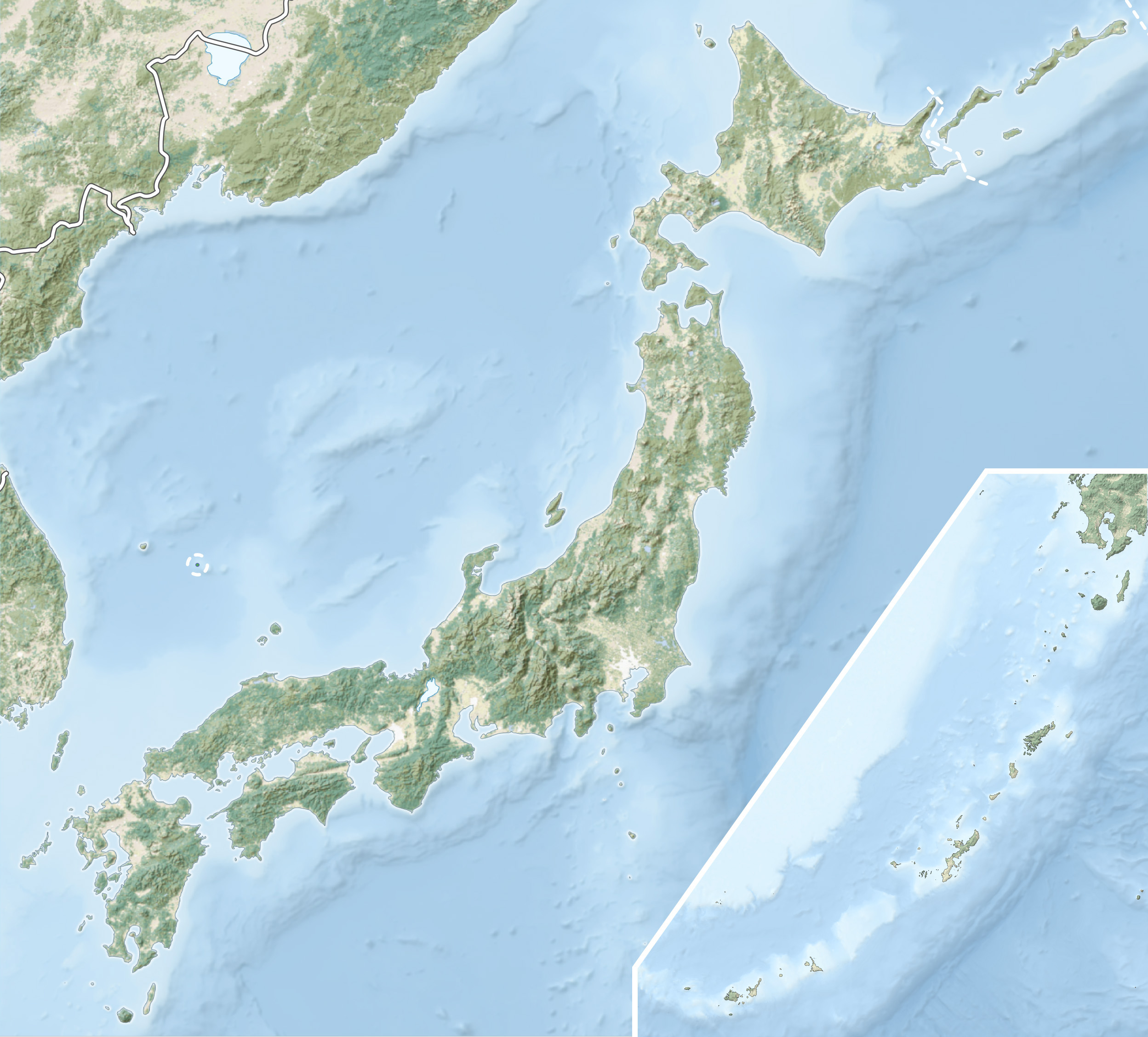
Located at 34.698N, 138.035E in the hills southeast of Kakegawa, Shizuoka Prefecture. The castle ruins sit atop Mount Kakuo at approximately 200 meters elevation. From the air, look for the distinctive twin-peaked ridgeline with a narrow saddle between the eastern and western baileys. The nearest major airport is Mt. Fuji Shizuoka Airport (RJNS), approximately 16 km to the northeast. Hamamatsu Air Base (RJNH) lies roughly 40 km to the west. Best viewed at 2,000-3,000 feet AGL in clear conditions. The Tokaido corridor and Pacific coastline are visible 11 km to the south.