Siege of the International Legations
On June 20, 1900, the German minister to China, Clemens von Ketteler, was shot dead while being carried in his sedan chair through the streets of Beijing. Within hours, the Legation Quarter -- the enclave where eleven nations maintained their diplomatic compounds -- was surrounded by Chinese Boxers and Qing imperial troops. For the next 55 days, roughly 900 foreign nationals and approximately 2,800 Chinese Christians defended a shrinking perimeter with improvised barricades, dwindling ammunition, and no certainty that help would arrive.
The Storm Gathers
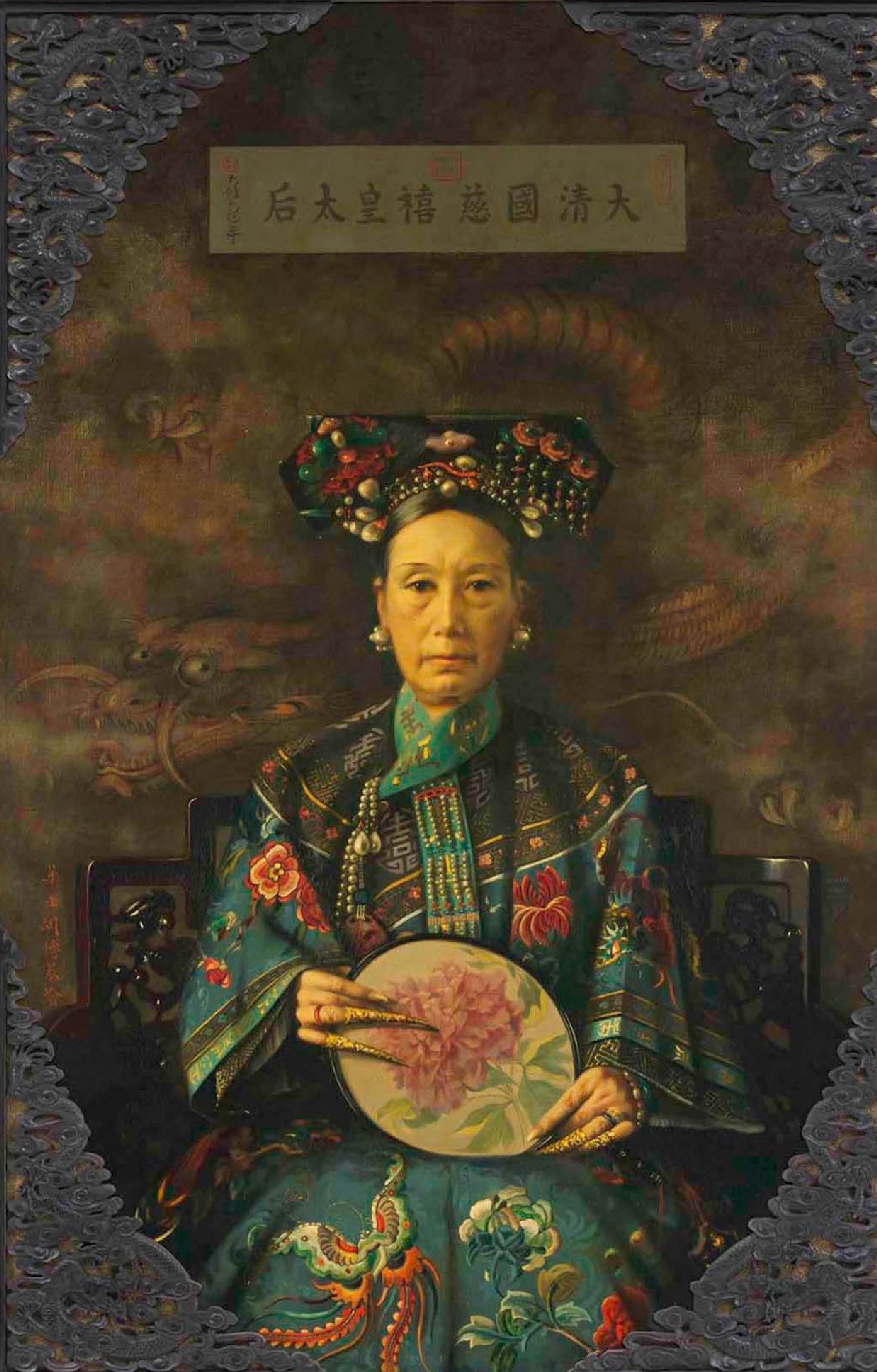
The Boxer movement -- known in Chinese as the Yihetuan, or "Righteous and Harmonious Fists" -- had been building for years, fueled by anti-foreign and anti-Christian rage in northern China. Droughts, floods, and the humiliations of unequal treaties imposed after China's defeats by Western powers created a volatile mixture of desperation and nationalism. The Boxers believed their martial arts rituals made them invulnerable to bullets. By June 1900, they were burning churches, killing Chinese Christians, and tearing up railroad tracks across the North China Plain. The Qing court under Empress Dowager Cixi, initially ambivalent, moved toward open support of the Boxers after a multinational naval force attacked the Dagu Forts on June 17. On June 21, the Qing government issued a declaration of war against the foreign powers.
Behind the Barricades
The defenders organized themselves into national contingents along the perimeter. The British held the northern boundary around their legation, the Americans took positions along the Tartar Wall -- the massive inner city wall, 13 meters high and 13 meters thick -- that formed the quarter's southern border. The Japanese and Italians defended the eastern approaches; the French and Germans held other sectors. Among the defenders were 75 marines and sailors under Captain John T. Myers of the U.S. Marine Corps, who was wounded five times during the siege but continued to command. Approximately 2,800 Chinese Christians had taken refuge in the adjacent Peitang Cathedral and within the legation compound itself, where they endured the same bombardment and starvation as the foreign defenders. The defenders' position narrowed steadily as buildings were lost to fire and assault.
The Longest Summer
Conditions inside the perimeter deteriorated daily. Food ran short, medical supplies dwindled, and the constant sound of rifle fire and artillery made sleep nearly impossible. The defenders ate horse meat and rationed what grain remained. Communication with the outside world was sporadic and unreliable -- a few messages smuggled in by Chinese runners, some of whose identities remain unknown. One brief truce in mid-July allowed some exchange of communications but resolved nothing. By early August, the situation was desperate. The attackers had set fire to buildings adjacent to the legation perimeter, and several positions had been overrun and recaptured at the cost of lives on both sides. Of the 900 foreign nationals inside the compound, 55 soldiers and 13 civilians were killed during the siege.
Relief from the Coast
The Eight-Nation Alliance -- Britain, France, Germany, Russia, the United States, Japan, Italy, and Austria-Hungary -- assembled a relief force that advanced from Tianjin toward Beijing, fighting through Chinese resistance in the sweltering August heat. On August 14, 1900, the international force reached Beijing and broke through the city gates. The siege was lifted. The occupying armies then engaged in widespread looting and reprisals that inflicted significant suffering on the civilian population of Beijing -- a chapter of the intervention that complicates any simple narrative of rescue. The Boxer Protocol of 1901 imposed massive indemnities on China and granted the foreign powers the right to station troops in the Legation Quarter, transforming it from a diplomatic enclave into a fortified zone that would endure until World War II.
The Weight of Fifty-Five Days
The siege left deep marks on every party involved. For China, the failure of the Boxer movement and the subsequent foreign occupation accelerated the decline of the Qing dynasty, which collapsed just eleven years later. For the foreign powers, the siege reinforced a narrative of Chinese xenophobia that justified further intervention and the expansion of extraterritorial privilege. For the Chinese Christians who sheltered in the Legation Quarter and at the Peitang Cathedral -- people caught between their faith and their nation -- the siege was a catastrophe from which their communities took generations to recover. The 55-day ordeal became one of the defining events of turn-of-the-century international politics, a collision of empire, nationalism, religion, and desperation that reshaped the balance of power in East Asia.
From the Air
The Legation Quarter was located at approximately 39.903N, 116.402E in central Beijing's Dongcheng District, directly east of Tiananmen Square. The Tartar Wall that formed the southern boundary has been demolished, but the area's street layout preserves the outline of the former quarter. The route of the Eight-Nation Alliance relief force ran from Tianjin (ZBTJ), roughly 120 km southeast, to Beijing. Nearby airports: Beijing Capital International (ZBAA) 25 km NE, Beijing Daxing International (ZBAD) 46 km S.