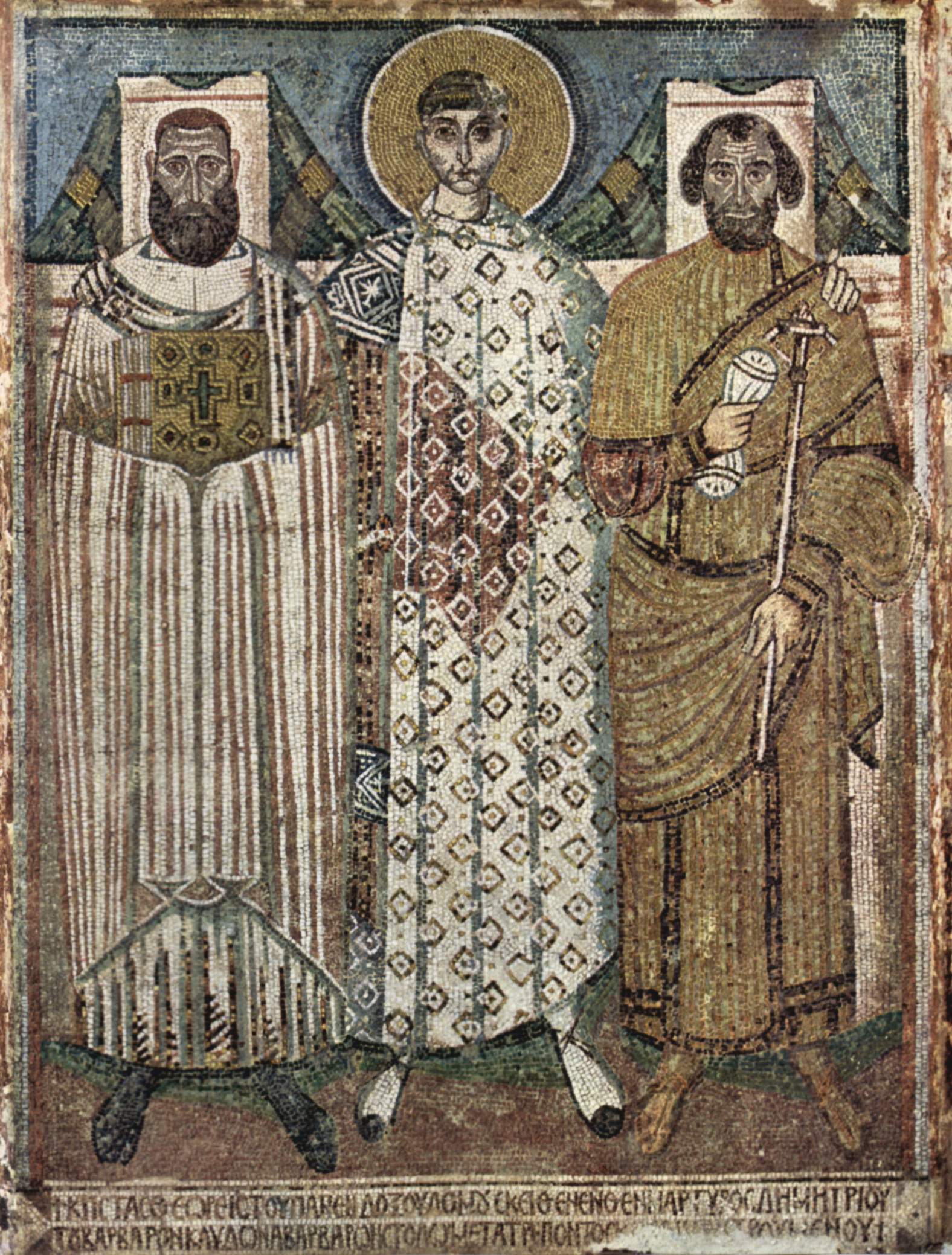
Siege of Thessalonica (676–678)
Perboundos lived in two worlds, and in the end neither saved him. He was the king of a Slavic tribe called the Rhynchinoi, settled in the country around Thessalonica. He spoke Greek. He maintained a residence inside the city walls. He dressed in Byzantine fashion. By every visible measure he was assimilated into the empire that called his neighbors barbarians. Then the eparch of Thessalonica heard rumors that Perboundos was planning to move against the city, reported it to the emperor, and had him arrested in his own Thessalonian home and shipped in irons to Constantinople. What followed was a two-year siege that started with diplomatic protests and ended with imperial troops marching through Thrace.
A Roman Island in a Slavic Sea
By the 670s, after generations of Slavic settlement across the Balkans, Thessalonica was, in the historian John Van Antwerp Fine's phrase, virtually a Roman island in a Slavic sea. The city's Greek population looked out across territory that had once been imperial Macedonia and now belonged effectively to half a dozen tribes who farmed it, traded with the city, and occasionally tried to take it. In 658 Emperor Constans II had campaigned through Thrace and brought some of these Slavic groupings, the Sclaviniae, back under imperial control. Many he relocated to Asia Minor. But the basic situation remained: the city held its walls, and beyond those walls the world had changed. Some of the Slavic tribes were friendly. The Belegezitai, settled around the Pagasetic Gulf in Thessaly, would prove willing to sell grain to the Thessalonians during the worst of the coming famine. Other tribes, the Rhynchinoi, the Strymonitai, the Sagoudatai, would prove the opposite.
Diplomacy and Escape
When Perboundos was arrested, his people were upset. The Rhynchinoi joined the neighboring Strymonitai in sending a joint delegation to Constantinople, with Thessalonian envoys included, to ask for clemency on his behalf. Paul Lemerle, the great modern editor of the Miracles of Saint Demetrius, considered this delegation extraordinary, evidence of a surprisingly amicable relationship between the imperial city and its barbarian neighbors. The envoys did not ask that Perboundos be exonerated. They acknowledged he had done something wrong. They asked only that his life be spared. The emperor, preoccupied with preparing for an enormous Arab attack on Constantinople itself, agreed to release Perboundos once the Arab war was over. The envoys went home satisfied. Then Perboundos escaped. He was hidden by an imperial translator who handled Slavic affairs, found after a forty-day manhunt, brought back to confinement, escaped again, and finally announced openly that he intended to raise all the Slavic tribes against Thessalonica. The emperor had him executed. The translator who had helped him was executed too.
Famine and Profiteering
Word of Perboundos' execution reached the Slavs and they rose. The Rhynchinoi, the Strymonitai, and the Sagoudatai blockaded Thessalonica by land. They divided the surrounding country among themselves and ran three or four raids per day for two years. All livestock was carried off. Agriculture stopped. Anyone who left the walls was likely killed or captured. The emperor had ordered grain stockpiled in the city's granaries against just such a siege. But on the day before the blockade began, the city authorities sold the grain to foreign ships in the harbor at favorable rates. The author of the Miracles of Saint Demetrius is openly furious about this, naming the commercial and civic elites for their greed and short-sightedness. Famine hit fast inside the walls. Some Thessalonians defected to the besiegers, who in turn, fearful of the numbers, sold them as slaves to other Slavic tribes deeper in the Balkans. Some of these enslaved Thessalonians escaped and made their way home, and word of their suffering kept others from defecting.
The Final Assault
On 25 July 677, the Slavs launched a coordinated assault on the walls. They had asked for help from the Drougoubitai, a large tribal confederation northwest of the city who knew how to build siege engines. The defenders had been weakened by the absence of much of the population who had sailed off in the city's available ships to buy grain from the friendly Belegezitai. According to the Miracles, the Strymonitai got within three miles of the walls and then turned back, crediting the saint's intervention. That left the Rhynchinoi and Sagoudatai to carry the brunt of the fighting. They attacked for three days. On 27 July they withdrew, leaving their siege engines behind. Saint Demetrius was credited with appearing in person on foot, carrying a cudgel, to repel an attack on a postern at a place called Arktos. Some modern commentators read this as evidence the Slavs briefly broke through the wall there. A few days later the grain expedition returned from Thessaly. The city had food again.
Imperial Reprisal
The blockade continued for another year, but with less intensity. The Slavs turned to piracy in the northern Aegean, building actual seagoing ships and raiding all the way to the Sea of Marmara. Then in 678, with the great Arab fleet destroyed at Constantinople and the imperial threat there ended, the emperor finally sent troops. Constantine IV's army marched through Thrace and struck the Strymonitai in their own settlements. The Slavs, warned, prepared their defense, occupied the passes, and called on allied tribes for aid. They were defeated anyway. Settlements close to Thessalonica emptied as Slavs fled inland. The famished Thessalonians, including unarmed women and children, came out to pillage the abandoned Slavic villages for food. Then the emperor sent a grain fleet under armed escort, sixty thousand measures of wheat for the city. The Slavs requested peace negotiations. What was agreed has not been recorded. The siege had ended.
From the Air
The Walls of Thessaloniki at 40.63N, 22.95E run along the upper city of modern Thessaloniki, with the surviving Heptapyrgion fortress visible at the northeast corner and the eastern Trigonion section descending to the Thermaic Gulf. The 7th-century walls would have been roughly the same line as the medieval defenses still visible today. Recommended viewing altitude is 4,000-6,000 feet for the wall trace and the city's amphitheater layout against the gulf. Thessaloniki Makedonia (LGTS) sits 10 nautical miles southeast. The Strymon River, home to the Strymonitai who blockaded the city in this siege, flows about 70 km east. The Vardar (Axios) River runs west. The Pagasetic Gulf, where the friendly Belegezitai sold grain to the besieged city, is around 100 nautical miles south near modern Volos. Northern Aegean haze is heaviest in summer.