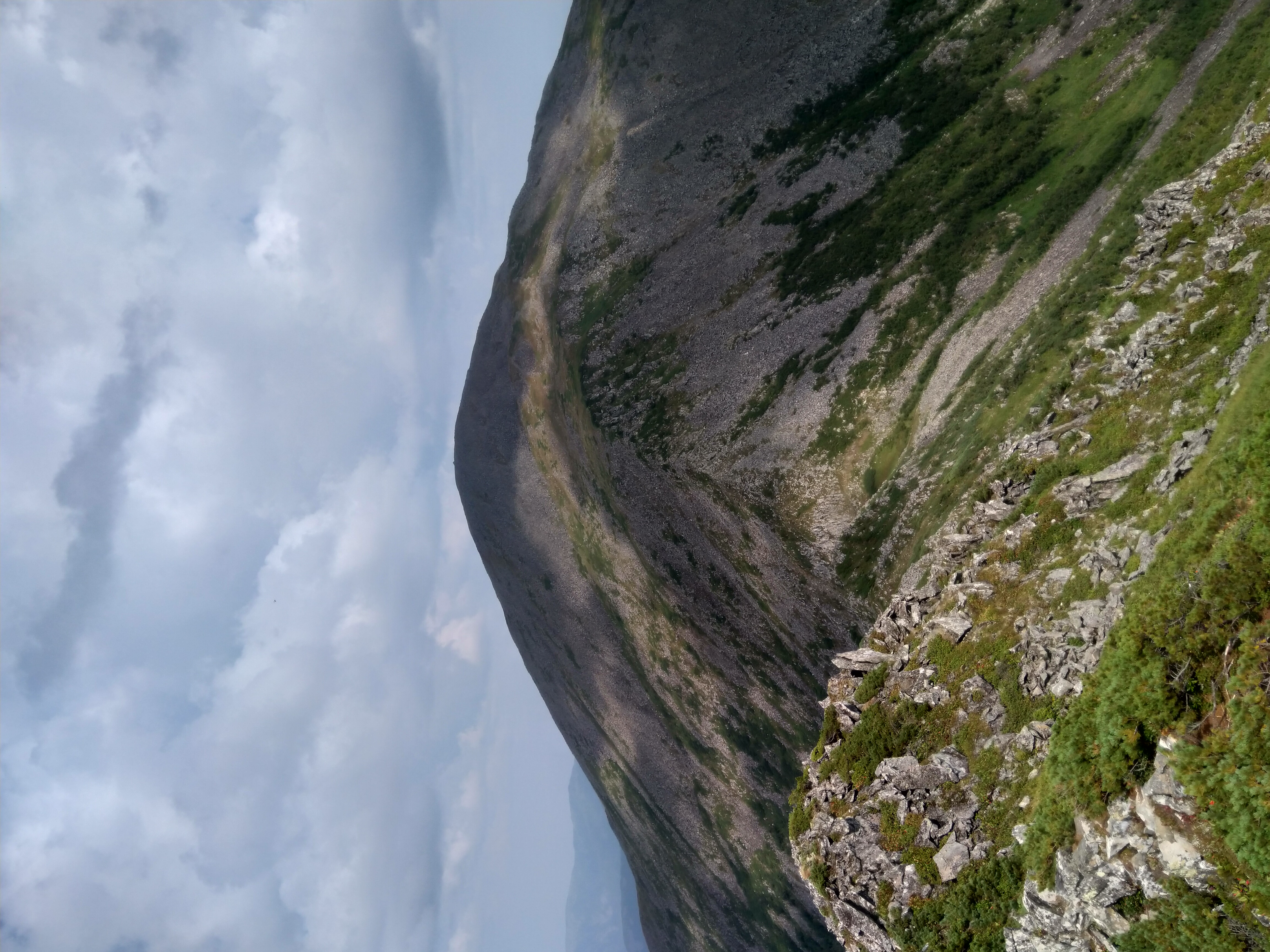
Sikhote-Alin
Akira Kurosawa's 1975 film Dersu Uzala, which won the Academy Award for Best Foreign Language Film, was based on the journals of a Russian explorer navigating a mountain range most of the world had never heard of. Vladimir Arsenyev spent the 1900s and 1910s mapping the Sikhote-Alin, guided by a Nanai hunter named Dersu Uzala, writing down what he found: a temperate forest where the same valley might hold reindeer and Amur tigers, where a millennium-old yew tree still stood, where no European word yet existed for the beetle species found only here. The mountains gave Arsenyev his greatest material. In 2001, UNESCO agreed they were worth protecting.
Where the Cold Meets the Warm
The Sikhote-Alin mountains run roughly 900 kilometers northeast from Vladivostok, forming the spine of Russia's Maritime region. Their ecological strangeness comes from position: they sit at the convergence of the cold northern taiga and the warmer, more humid influences of the Sea of Japan to the east. Reindeer move through the same forest as Amur leopards. Northern species overlap with subtropical ones. The result is a biodiversity that is extraordinary by any measure and wholly unique by Russian standards. The region holds so few wolves not because the habitat is poor for them, but because tigers compete for the same prey and wolves cannot win that contest. Where tigers thrive, wolves retreat. The mountains shape that equation, directing the drainage patterns that support the river systems these predators depend on.
A Morning It Rained Iron
On February 12, 1947, an Amur tiger might have looked up from the snow to watch the sky split open. At 10:38 in the morning, a large iron meteorite entered the atmosphere over the Sikhote-Alin mountains and broke apart under atmospheric pressure, raining fragments across an elliptical area of about 1.3 square kilometers. Craters marked the impact zone; the largest reached 26 meters in diameter. Thousands of individual iron pieces were scattered across the taiga, some the size of fists, some weighing hundreds of kilograms. Soviet scientists arrived quickly. The Sikhote-Alin meteorite became one of the best-documented iron meteorite falls in history, a reference point in planetary science. Museum specimens from the fall were distributed worldwide. The craters themselves remain visible today, a series of shallow depressions in the forest floor that locals can point a visitor toward.
The Most Mysterious Beetles
Hidden within the Sikhote-Alin ecosystem is a creature that has puzzled entomologists for over a century. Sikhotealinia zhiltzovae, the only living member of the ancient beetle family Jurodidae, has been described as the most mysterious representative of beetles due to its uncertain placement within the order Coleoptera. The family has a fossil record extending back to the Jurassic period, yet this single living species persists in the Sikhote-Alin forests and nowhere else on Earth. Alongside it grows the millennium-old Japanese yew — not a grove or a stand, but a single tree that has been alive since before the Mongol conquests. The Sikhote-Alin does not advertise its records. You have to go looking.
UNESCO and the Long Arc of Protection
Vladimir Arsenyev's advocacy in the early Soviet period led to the establishment of the Sikhote-Alin and Lazo wildlife refuges in 1935. The core protected zone can only be visited with ranger accompaniment — a restriction that has kept human pressure limited in the most sensitive areas. In 2001, UNESCO inscribed Central Sikhote-Alin as a World Heritage Site, citing the survival prospects of the scaly-sided merganser, Blakiston's fish-owl, and the Amur tiger as the primary justification. The total World Heritage area at inscription was 16,319 square kilometers. In 2018, the site expanded by another 11,605 square kilometers with the addition of Bikin National Park under the name Bikin River Valley — honoring both the ecosystem and the Udege people whose traditional territory it covers.
From the Air
The Sikhote-Alin range runs northeast to southwest at approximately 45.3°N, 136.2°E, extending about 900 kilometers from near Vladivostok northward through Primorsky Krai and into Khabarovsk Krai. The highest peak, Tordoki Yani, reaches 2,077 meters. From altitude, the range appears as a forested spine with the Sea of Japan coastline visible to the east and the broader Amur River basin to the west. The nearest major airport is Vladivostok International (UHWW), approximately 250 kilometers to the southwest. Mountain weather is variable; orographic cloud formation is common along the ridge. Recommended viewing altitude: 20,000–35,000 feet for a full view of the range extent.