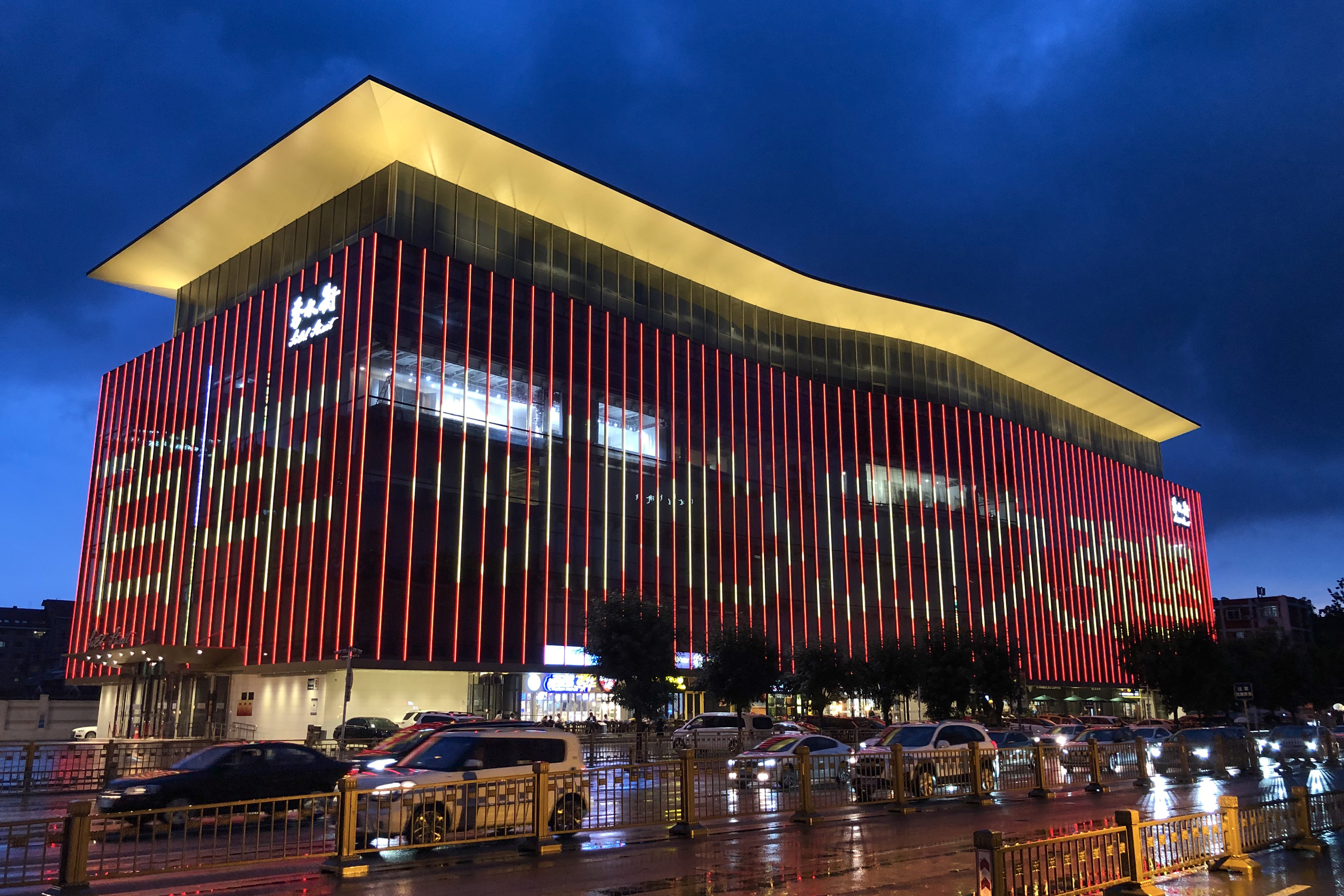
Silk Street
Its original name was Smelly Water Alley. In the final years of the Qing Dynasty, Xiushui Street was nothing more than a mud path outside the Jianguo Gate, a place where drainage pooled and the air was thick with the odor of standing water. Somewhere along the way, the characters were changed from 臭水 (smelly water) to the more elegant 秀水 (beautiful water), a bit of linguistic cosmetics that would prove prophetic. By the late twentieth century, the street had reinvented itself again, this time as Beijing's most notorious marketplace for counterfeit luxury goods -- a place where you could buy a convincing Gucci handbag for the price of a taxi ride across town.
The Alley That Drew the World
The original outdoor Xiushui Market grew organically near the First Embassy Area of Beijing, its 410 stalls clustered along a narrow alley southeast of Ritan Park. Proximity to the diplomatic quarter made it a natural magnet for foreign visitors, and the market's vendors quickly learned to stock what their customers wanted: knock-off designer garments, silk products, and tourist souvenirs at prices that invited aggressive haggling. By the early 2000s, the market was drawing 20,000 visitors on weekends and generating annual sales of 100 million yuan. It had become, for better or worse, one of the most famous shopping destinations in Beijing -- a place where the line between authenticity and imitation blurred to the point of irrelevance.
From Mud to Marble
On January 6, 2005, the old alley market was shuttered. Fire-safety hazards, security concerns, and missing land permits provided the official justification, but the real impetus was intellectual property. The new Silk Street opened just two months later on March 19, 2005 -- a gleaming seven-story complex with three basement levels, 35,000 square meters of retail space, and room for 1,700 vendors and over 3,000 salespeople. The transformation was dramatic. Where rickety stalls once lined a muddy lane, escalators now connected floors devoted to everything from traditional Chinese handicrafts and calligraphy to silk fabrics and electronic gadgets. The venerable Tongrentang Pharmacy and a Quanjude Peking Duck restaurant took up residence, lending an air of legitimacy to the new establishment.
The Counterfeit Wars
Moving indoors did not solve the problem it was supposed to fix. Despite earnest reforms, counterfeit goods continued to fill the stalls, and the luxury brands came calling -- not to shop, but to sue. In April 2006, Prada, Chanel, Louis Vuitton, Gucci, and Burberry were each awarded 20,000 yuan in compensation from the landlord and five stallholders. It was a symbolic amount, barely enough to cover legal fees, but it signaled a shift. Two months later, Silk Street signed a deal with European luxury houses promising to evict any tenant caught violating trademark rights. A 30-million-yuan Intellectual Property Rights Protection Fund was established, financed by the vendors themselves. By August 2006, the market reported that 80 percent of its vendors had obtained proper trademark authorization.
Theater of Commerce
Walk into Silk Street today and you enter a theater where commerce is performance art. Vendors call out in a babel of languages, their opening prices deliberately inflated to leave room for the negotiation dance that follows. The building attracts roughly 20,000 visitors daily on weekdays, and between 50,000 and 60,000 on weekends. It remains one of Beijing's essential tourist experiences, a place where the transaction itself is the attraction. Accessible via a direct tunnel from Exit A of Yong'anli Station on Line 1, and sitting just west of the China World Trade Centre, Silk Street occupies a strange middle ground in Beijing's commercial landscape -- neither fully legitimate nor entirely underground, a marketplace that has spent decades trying to reinvent itself without quite abandoning the identity that made it famous in the first place.
From the Air
Located at 39.91°N, 116.44°E in Beijing's Chaoyang District, near the China World Trade Centre. The building sits just west of the CBD cluster visible from the northeast approach to Beijing Capital International Airport (ZBAA/PEK). Nearby Nanyuan Airport (ZBNY) lies to the south. Best viewed at 3,000-5,000 feet for urban context.