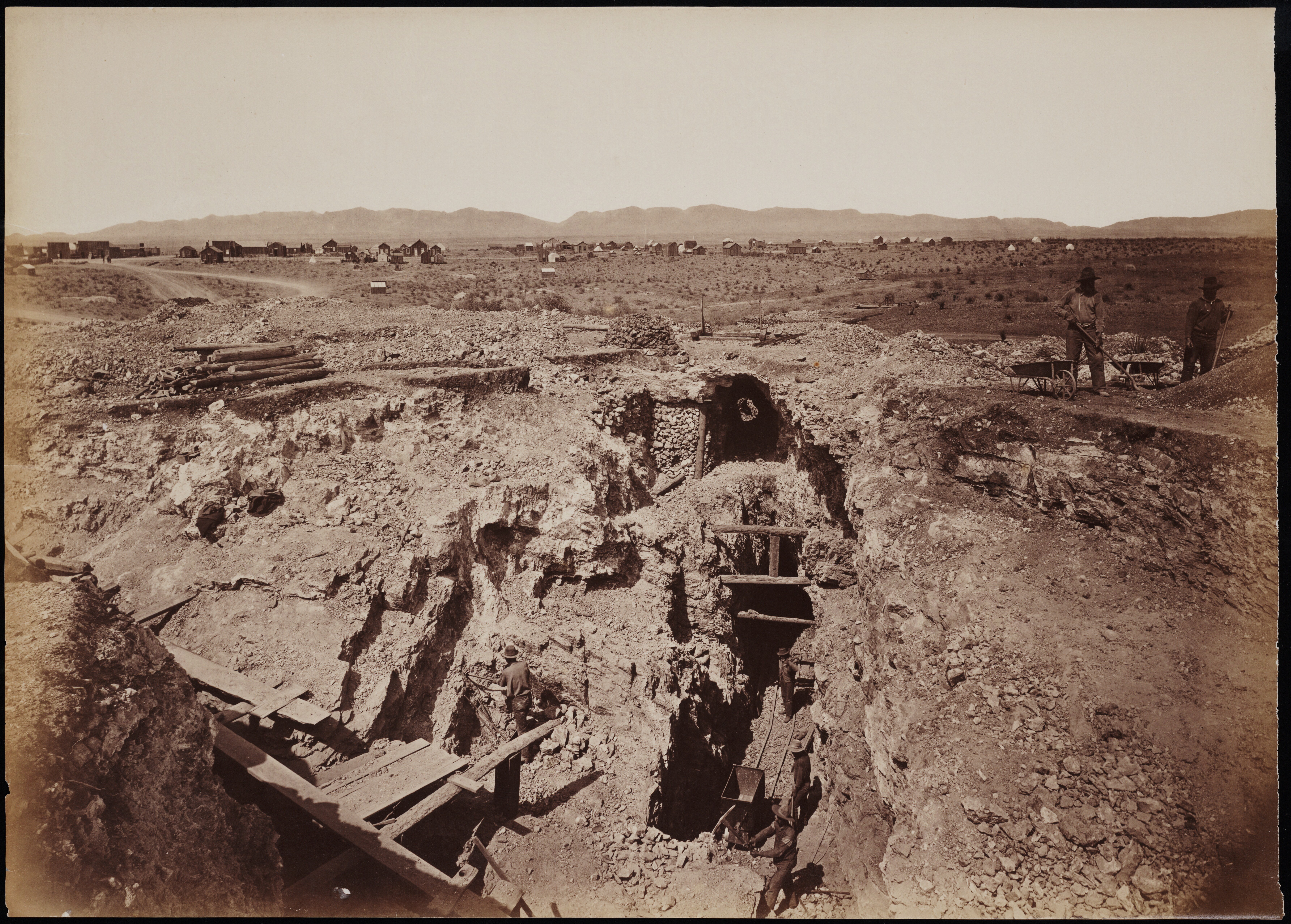
Silver Mining in Arizona
The soldiers at Fort Huachuca thought they were being clever when they warned the scruffy prospector about to head into Apache territory. The only stone you will find out there, they told Ed Schieffelin, will be your own tombstone. What they did not know was that Schieffelin would turn their grim joke into one of the most famous place names in the American West. When he finally struck silver on a waterless plateau called Goose Flats in 1877, he filed his claim as Tombstone, and within three years the boomtown that bore that name had become the largest city between San Francisco and St. Louis.
Spanish Silver, Apache Resistance
The Spanish knew about Arizona's silver long before American prospectors arrived. Father Eusebio Kino, who ran missions in southern Arizona from 1687 to 1711, recorded numerous mineral deposits in the mountains bordering the Santa Cruz Valley. A major silver discovery in 1736 at Planchas de Plata, just south of the present border in Sonora, drew attention to the region's potential. Spanish documents record mining operations in the 1770s at Quijotoa, Arivaca, and other sites in southernmost Arizona. But development remained minimal because Arizona sat on the northern fringe of the Spanish frontier, locked in a guerrilla war with Apache bands who controlled the territory and violently opposed any intrusion.
Blood and Silver in the San Pedro Valley
The violence that preceded Tombstone's discovery was stark. In 1858, Frederick Brunckow, a Prussian-born mining engineer, built a cabin near the San Pedro River after locating a small silver deposit. He hired three white workers and about a dozen Mexican miners. Two years later, in September 1860, two of his white employees were murdered at the cabin, and Brunckow himself was found dead in his mine with a rock drill driven through his body. The cabin would become infamous as the site of 22 murders during the frontier period. When Schieffelin arrived in 1877, he used Brunckow's abandoned mine as his base of operations, prospecting just miles from the Chiricahua Apache led by Cochise, Geronimo, and Victorio.
Thirty Cents and a Handshake
Schieffelin's breakthrough came after months of searching. He located loose silver ore that had eroded from nearby hills into a dry wash. But finding ore and profiting from it were two different things. With only thirty cents in his pocket, Schieffelin tracked down his brother Al at the McCracken Mine in northeastern Arizona. Together they convinced assayer Richard Gird to examine Ed's samples. Gird, an expert with a solid reputation, tested the best of the three samples and declared it high-quality ore worth two thousand dollars per ton. On the spot, the three men formed a handshake partnership that was never put on paper. That informal agreement would make all three millionaires. As news spread east, capital poured into the Tombstone district, and mines with names like Goodenough, Contention, Toughnut, and Grand Central honeycombed the hills.
The Sister Towns That Vanished
The mines around Tombstone required water to process ore, but the plateau where the silver lay was dry. Three sister towns sprang up along the San Pedro River to run the stamping mills: Charleston, Millville, and Contention. All three are ghost towns today. At its peak, the Tombstone district produced 32 million troy ounces of silver, making it the most prolific silver producer of any Arizona mining district that was worked primarily for silver. But in late March 1881, miners in the Sulphuret shaft struck water at 520 feet below the surface. Pumping costs began to eat into profits. Fires devastated the town twice in the early 1880s. By the end of the decade, Tombstone's great boom was over, though it left behind a name that still echoes across the American West.
Silver's Surprising Legacy
Arizona ultimately produced 490 million troy ounces of silver through 1981, but here is the irony: only about ten percent came from silver mining. More than eighty percent of Arizona's silver was actually a byproduct of copper mining. The Silver Queen mine near Superior, for example, shut down around 1893 when the silver played out. Investors bought the property in 1910, renamed it the Magma mine, and began extracting the rich copper ores that silver miners had ignored. The Magma became one of Arizona's most productive copper mines and, through 1964, produced more than 25 million troy ounces of silver as a byproduct. The prospectors who chased silver dreams across the territory had been walking over copper fortunes the whole time.
From the Air
This story covers the Tombstone mining district centered at approximately 31.72N, 110.06W in Cochise County, Arizona. The town of Tombstone is clearly visible from altitude, with the mine tailings and the grid pattern of streets evident. The San Pedro River runs north-south to the west, where the ghost towns of Charleston, Millville, and Contention once processed ore. Tombstone Municipal Airport (P33) is located just north of town. The high desert terrain offers excellent visibility except during summer monsoon season. The Dragoon Mountains rise to the northeast and the Mule Mountains to the south near Bisbee.