Silver Springs
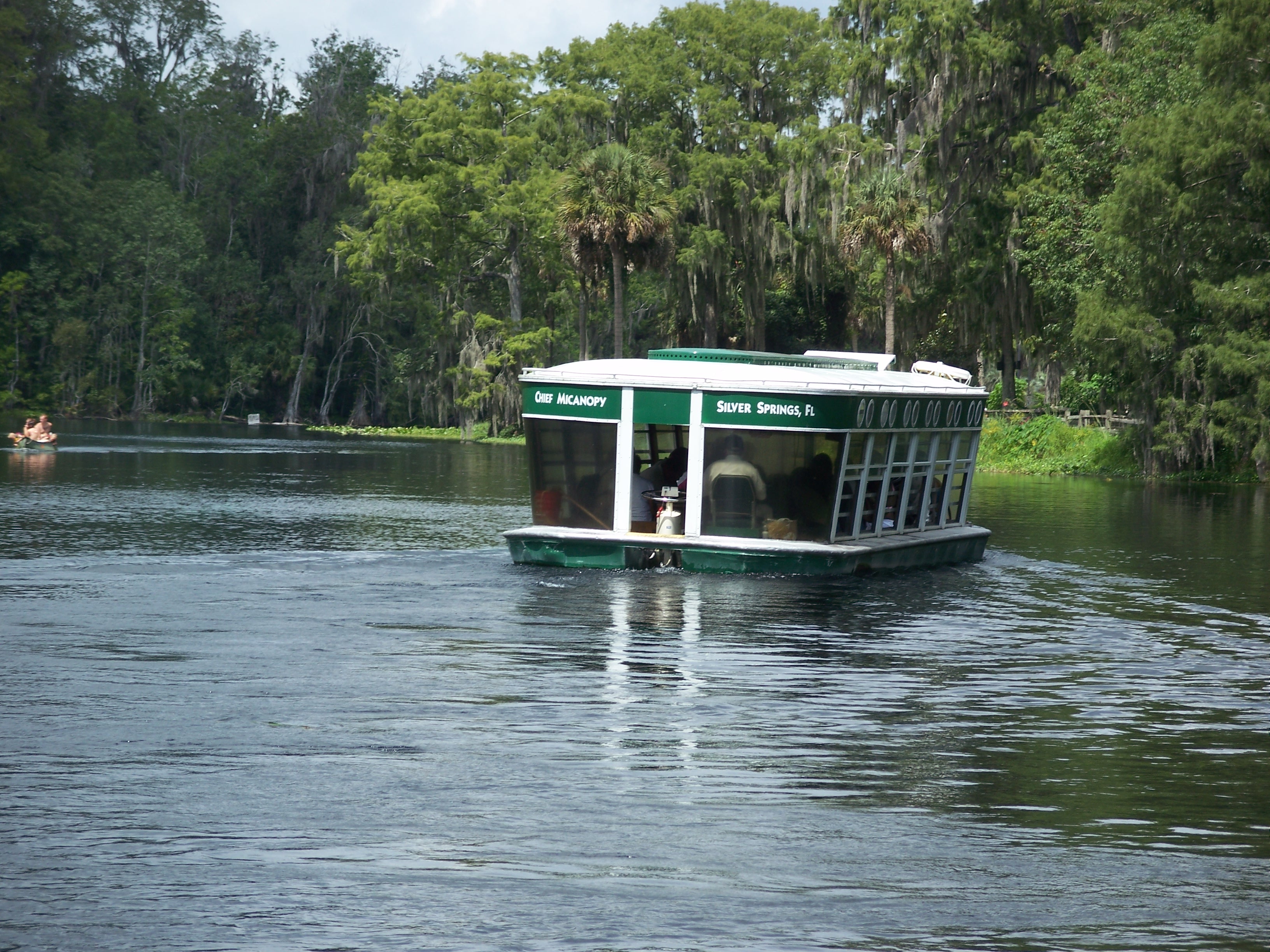
The water is so clear you forget it is there. Peering through the glass bottom of a tour boat at Silver Springs, visitors have watched fish glide over white sand and limestone for nearly 150 years, the illusion so perfect that the springs became a natural film set for Hollywood. Johnny Weissmuller swam these waters as Tarzan in the 1930s, and Lloyd Bridges dove into them for Sea Hunt in the late 1950s. But long before the cameras arrived, Silver Springs was already famous. In the late 1870s, Hullam Jones invented the glass-bottom boat here, and by the time former President Ulysses S. Grant visited in 1880, the springs had become a mandatory stop on the grand tour of Florida.
Hollywood's Underwater Stage
Silver Springs entered the movies in 1916 when The Seven Swans was filmed on location, the first known use of the springs for cinematography. But it was the 1932 production of Tarzan the Ape Man, starring Johnny Weissmuller, that turned the springs into a genuine filming destination. Five more Tarzan films followed through the early 1940s, with actors swinging over the river and diving into its crystalline depths. Then came the television series Sea Hunt, starring Lloyd Bridges, which filmed episodes here from 1958 to 1961, using the springs' remarkable clarity to stand in for oceans and shipwrecks around the world. In 1962, ABC-Paramount bought Silver Springs for $7.5 million, recognizing the commercial potential of a place where nature did the set design for free.
The Monkeys Who Escaped
In the 1930s, a concessionaire named Colonel Tooey hatched a plan to boost ridership on his Jungle Cruise boat tour. He placed a troop of rhesus monkeys on a small island in the Silver River, expecting them to stay put as a living attraction. What Tooey did not know was that rhesus monkeys are excellent swimmers. The animals promptly escaped their island, scattering into the surrounding forest and establishing feral troops along the riverbanks. Nearly a century later, their descendants still live there, wild and thriving, a reminder that Florida's ecosystem has a way of absorbing the unexpected. Boaters on the Silver River today regularly spot the monkeys watching from the cypress branches overhead.
A Divided Paradise
Silver Springs was restricted to white patrons only for most of its commercial history. By 1950, the springs drew more than 800,000 guests a year, but none of them were Black. In 1949, operators Carl Ray and W.M. Davidson opened a separate facility called Paradise Park, designated for Black visitors, on a nearby stretch of the Silver River. Paradise Park became a beloved destination for Black American tourists, offering its own glass-bottom boat rides and picnic grounds along the water. It operated for twenty years until Silver Springs finally integrated in 1969, and Paradise Park closed its gates for good. The story of these twin attractions captures a painful chapter of Florida's tourism history, one where even the beauty of a natural spring could not transcend the divisions of the era.
Springs Under Siege
By the early 2000s, the crystal water that had made Silver Springs famous was turning cloudy. Fertilizer runoff and septic outflow from surrounding development poured nitrates into the aquifer, fueling the overgrowth of brown algae that dimmed the springs' legendary clarity. Water flow dropped dramatically, falling from 510 million gallons per day to 346 million gallons per day by 2012. Fish populations plummeted by an estimated 90 percent compared to 1950s levels. In October 2013, the State of Florida took over the aging theme park, combining it with the adjacent Silver River State Park to form Silver Springs State Park. The amusement rides were dismantled, the animal exhibits closed, and the focus shifted to ecological restoration of one of the largest artesian springs in the United States.
From the Air
Silver Springs sits in Marion County, central Florida, at 29.218N, 82.055W. From the air, look for the distinctive blue-green spring run winding through dense forest east of Ocala. The Silver River is visible as a bright ribbon flowing northeast to the Ocklawaha River. Nearest airport: Ocala International (KOCF), approximately 6nm to the west. Best viewed at 2,000-3,000 feet AGL for full spring and river visibility.