Silverton, Colorado
In the single worst week of October 1918, 125 residents of Silverton perished from the Spanish Flu -- more than five percent of the town's population gone in seven days. By the time the pandemic relented the following March, 246 people had died, giving this isolated mountain town the highest mortality rate for the Spanish Flu in the entire United States. Silverton had always been a place that tested human endurance, perched at over 9,000 feet in the Animas River valley of Colorado's San Juan Mountains, ringed by thirteen-thousand-foot peaks, accessible only through passes that winter sealed shut for months at a time. Yet people kept coming back, drawn first by gold and silver, then by the sheer stubborn beauty of the place.
Baker's Park and the Rush for Silver
Silverton's story begins in 1860, when a group of prospectors led by Charles Baker pushed into the San Juan Mountains searching for gold. They found traces of placer gold in what became known as Baker's Park, but the real wealth lay deeper in the rock. Long before Baker's party arrived, the Ancestral Puebloans and later the Ute people had hunted and lived in the San Juans during summer months. Spanish explorers and fur traders may have ventured through even earlier. The town itself was founded in 1874 by mining entrepreneurs William Kearnes, Dempsey Reese, and Thomas Blair. Within a few years, the surrounding mountains were riddled with mine shafts, and the communities of Howardsville and Eureka sprang up alongside Silverton to serve the growing mining workforce.
Boom, Bust, and the Last Mill Standing
Mining drove Silverton through cycles of fortune and collapse. The 1929 stock market crash shuttered the mines, but Standard Metals Corp. acquired operations in 1959 and reopened them, striking gold again in 1973 with the Little Mary vein. The final blow came in 1992 when the Shenandoah-Dives mill -- the last operating mill in the entire region -- permanently closed. Silverton had lost the industry that built it. But the town had another asset: its history. Both the town and its rail line had been designated a National Historic Landmark in 1961, and in 1966, the entire town was placed on the National Register of Historic Places. The boundaries expanded again in 1997 to include the Shenandoah-Dives mill itself, preserving the industrial bones of a mining era that shaped the American West.
The Railroad That Refused to Quit
The Durango and Silverton Narrow Gauge Railroad is Silverton's heartbeat. Originally built to haul ore out of the mountains, the rail line transitioned to carrying tourists as mining faded. In 1980, the Denver and Rio Grande Western Railroad sold the Silverton-Durango line to an independent operator who renamed it the Durango and Silverton Narrow Gauge Railroad. Today the D&SNG delivers several trainloads of visitors to Silverton daily during operating season, their coal-fired steam engines winding through the Animas River gorge on tracks laid in the 1880s. The railroad also operates a museum in town. For a community of roughly 530 people, this daily influx is transformative -- and seasonal. Silverton's harsh winters and geographic isolation long made it a summer-only attraction.
Avalanche Country
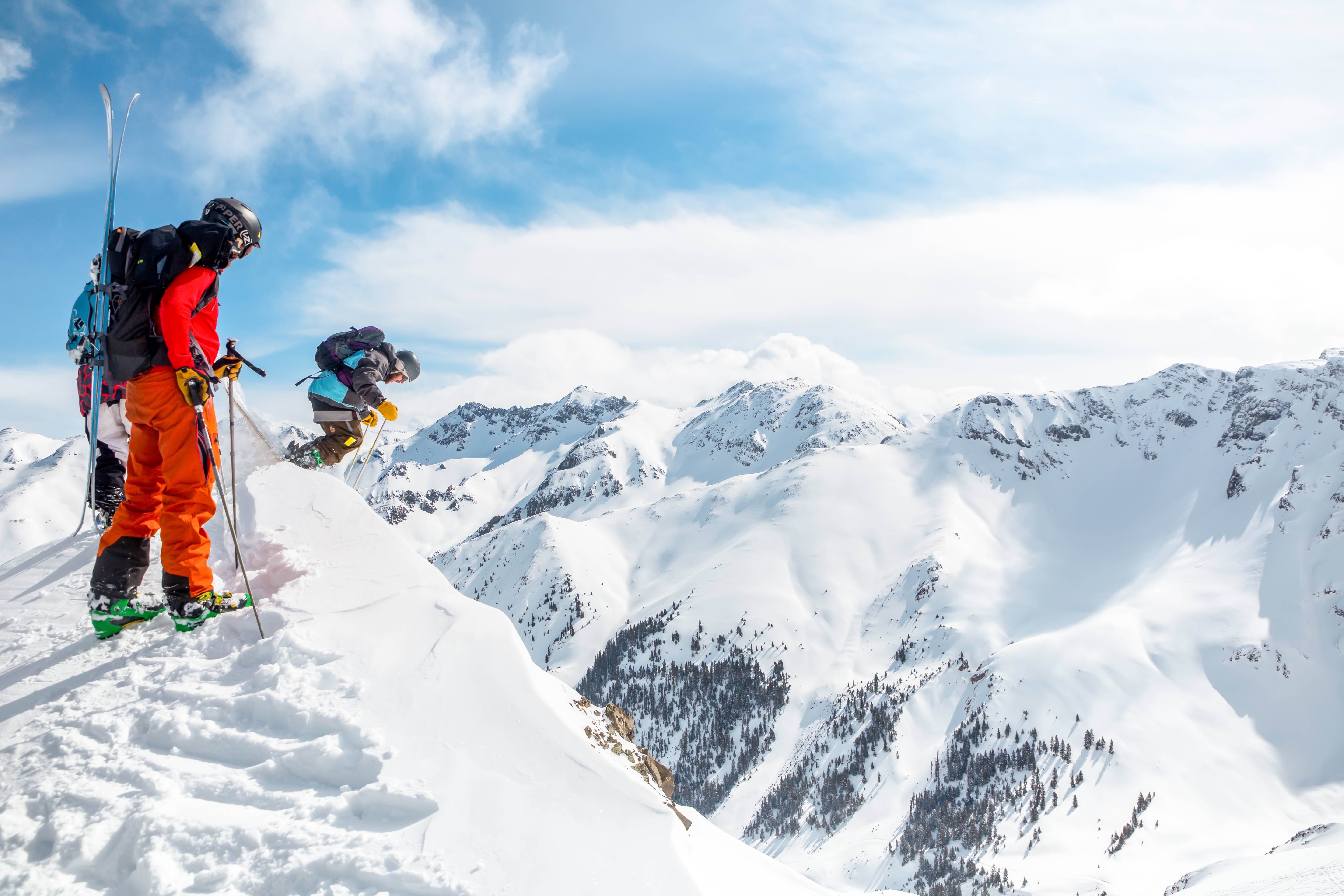
The mountains around Silverton are unforgiving. In January 1906, an avalanche struck the Sunnyside mine, killing five miners. Only months later, twelve more died in a slide at the Shenandoah Mine -- one of the deadliest avalanches in Colorado history. The terrain that makes Silverton spectacular also makes it dangerous, with the town sitting in a flat stretch of valley surrounded by several thirteeners, the highest being Storm Peak at 13,487 feet. Seven of Colorado's 53 fourteeners -- peaks above 14,000 feet -- stand within 15 miles. Today, that same landscape draws backcountry skiers, ice climbers, and snowmobilers. Shaun White built his secret training facility for the 2010 Vancouver Olympics, called Project X, on Silverton Mountain. The town that once dreaded winter is learning to embrace it.
A Town Measured in Altitude
Silverton sits in San Juan County, the highest county in the United States by mean elevation. The town itself is one of the highest incorporated communities in America. Its alpine subarctic climate brings very cold, snowy winters and brief cool summers. The local school serves just 53 students from kindergarten through twelfth grade. Country singer C. W. McCall immortalized the Durango-Silverton route on his 1975 album Black Bear Road. The 1957 western Night Passage was filmed here. And in the 1970s and 1980s, Silverton hosted the International Speed-Skiing Championship. For all its remoteness, Silverton keeps finding ways to draw the world to its doorstep -- one narrow gauge trainload at a time.
From the Air
Silverton sits at approximately 37.81N, 107.66W in the Animas River valley at over 9,000 feet elevation. The town is visible as a small cluster of buildings in a flat valley floor surrounded by 13,000+ foot peaks. Approach with caution -- terrain rises steeply on all sides. Storm Peak (13,487 ft) is the highest nearby summit. The narrow gauge railroad track is visible winding south through the Animas River gorge toward Durango. Nearest airport with scheduled service is Durango-La Plata County Airport (KDRO), approximately 48 miles south. The Million Dollar Highway (US-550) connects Silverton to Ouray to the north over Red Mountain Pass.