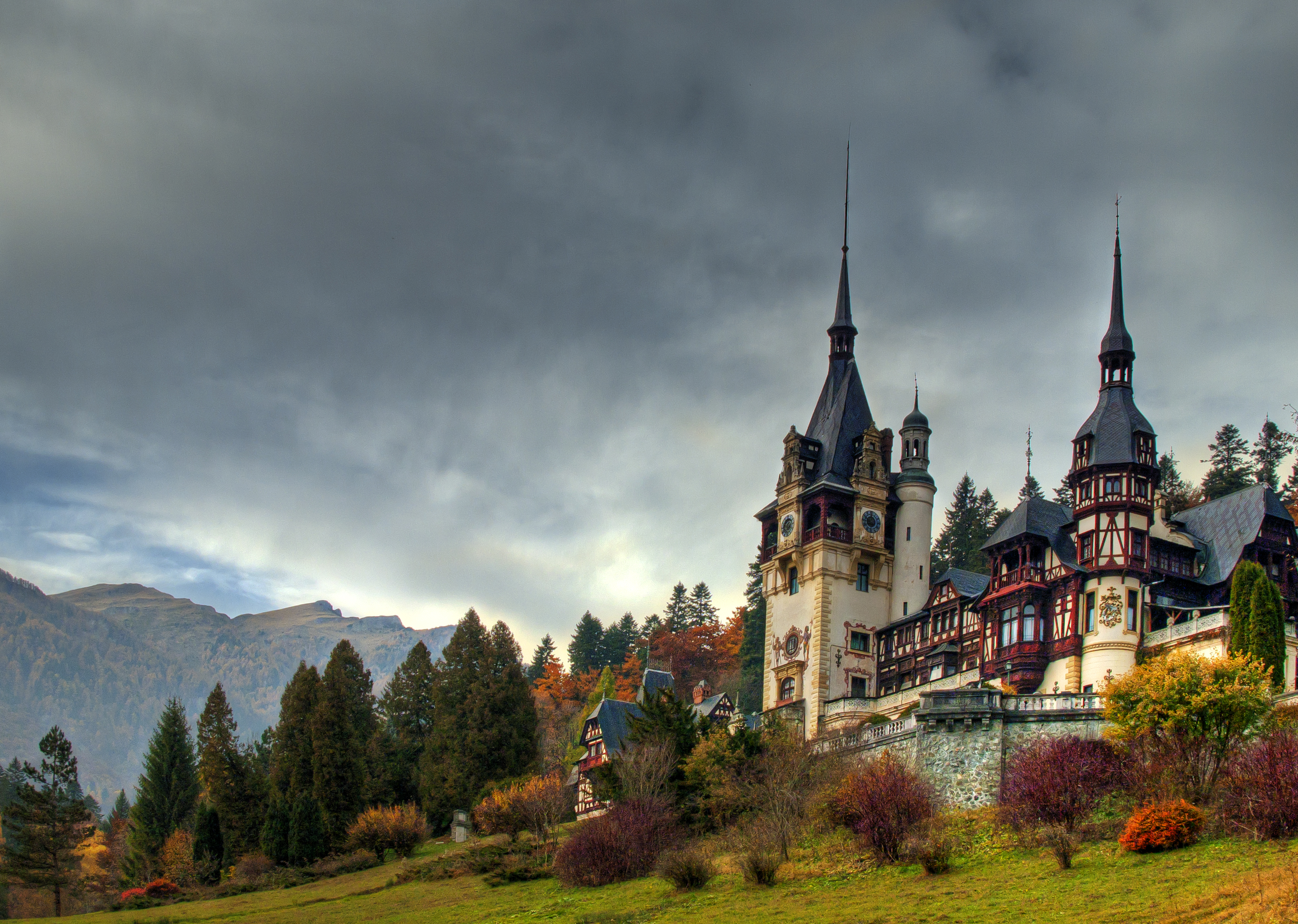
Sinaia
A Wallachian nobleman returned from the Holy Land in 1690 with the memory of a mountain still burning in his mind. Mihail Cantacuzino built a small monastery on the upper Prahova River and named it after the place that had moved him most: Mount Sinai. The monastery gave the village its name, and the village might have remained obscure forever had Romania's first king not ridden through two centuries later and fallen for the same wild beauty that Cantacuzino had. Charles of Hohenzollern chose this valley deep in the Carpathians for his summer residence, and what he built here -- Peles Castle, inaugurated in 1883 -- transformed a monastery village into the most fashionable address in Romania.
A King's Summer Capital
In the 1860s, when Charles of Hohenzollern first saw the Prahova Valley, Romania was a young nation still defining itself. The king's decision to build at Sinaia was both personal and political -- a statement that Romania could produce architecture to rival any European court. Peles Castle, with its German Renaissance facade, ornate interiors, and surrounding grounds, became the centerpiece of an elite migration. The Romanian upper class followed their king into the mountains, raising luxurious holiday villas along the valley. Hotels, casinos, restaurants, and shops appeared in rapid succession. By the end of the nineteenth century, Sinaia had earned a reputation as Romania's unofficial summer capital, a place where politics, society, and mountain air mingled on shaded terraces.
The Monastery and the Mountain
Cantacuzino's original monastery still stands, a quieter counterpart to the castle that overshadowed it. The Sinaia Monastery sits on the hillside above town, its stone walls and painted interiors a reminder that this place existed as a spiritual retreat long before it became a royal playground. The connection to Mount Sinai is not merely nominal -- Cantacuzino intended the monastery as a place of pilgrimage and contemplation, and the mountain setting reinforces that purpose. Above town, the Bucegi massif rises sharply, its ridgeline visible from nearly every street. The Bucegi Natural Park offers hiking routes that climb from forested valleys into open alpine meadows, with views stretching across the Carpathian range. The transition from resort town to wilderness happens remarkably fast.
Gateway to the Carpathians
Sinaia occupies a strategic position on the main rail line between Bucharest and Brasov, making it one of the most accessible mountain destinations in Romania. Every train heading from the capital toward Transylvania passes through the Prahova Valley, and Sinaia's station sits within walking distance of the town center. National Road No. 1 follows the same corridor by car. This accessibility shaped the town's character -- unlike remote mountain villages that developed slowly, Sinaia urbanized quickly once the railroad arrived. A gondola carries visitors from the lower town toward the heights of the Bucegi, and local buses loop from the main street up through the hillside neighborhoods past the monastery and Peles Castle.
Beyond the Castle Walls
The pedestrian walkway to Peles Castle, the Aleea Carmen Sylva -- named after Queen Elisabeth of Romania's literary pen name -- is lined with souvenir vendors and food stalls, a reminder that Sinaia runs on tourism. But the surrounding region rewards those who push farther. Bran, with its castle famously associated with the Dracula legend, lies about fifty minutes away. Brasov, the nearest major Transylvanian city, offers medieval architecture and a very different mountain atmosphere. The Diham Chalet serves as a base for serious hikers heading into the Bucegi, and the village of Magura, about an hour out, provides a quieter starting point for exploring the dramatic limestone ridges of the Piatra Craiului Mountains. Sinaia is a destination in its own right, but it also functions as the front door to some of the most spectacular landscapes in southeastern Europe.
From the Air
Located at 45.35N, 25.55E in the Prahova Valley of the Southern Carpathians. Peles Castle and the town are nestled in a forested valley with the Bucegi massif rising sharply to the west. Best viewed from 3,000-5,000 feet AGL, where the contrast between the developed valley and the surrounding mountain wilderness is striking. Nearest major airport: Bucharest Henri Coanda International (LROP), approximately 65 nm south-southeast. Brasov does not have scheduled commercial service. The Prahova Valley corridor is a prominent visual landmark running roughly north-south through the mountains.