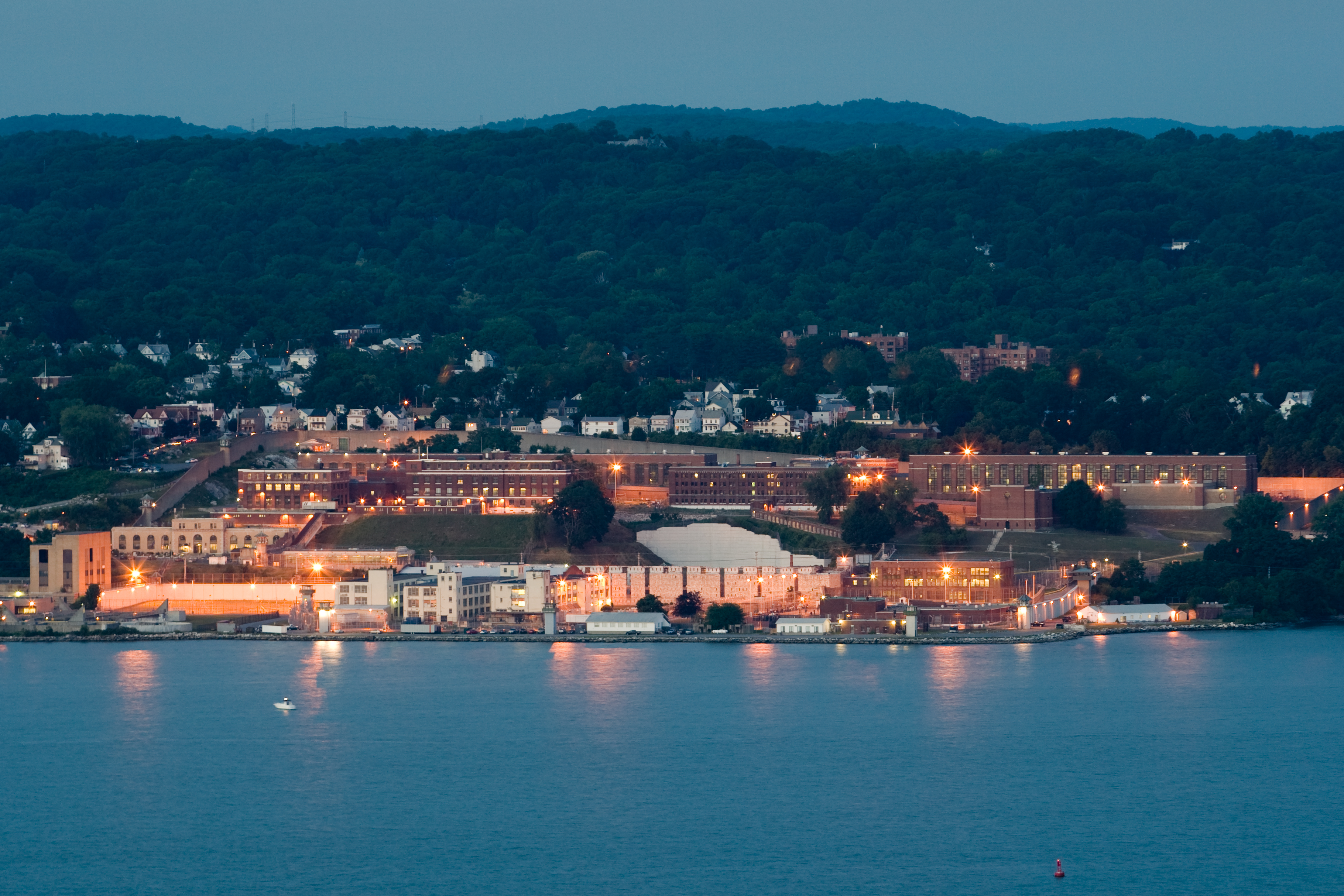
Sing Sing
The phrase entered the language in 1891 and never left. 'Up the river' -- meaning headed to prison -- traces directly to Sing Sing, because for generations, convicted New Yorkers were literally sent up the Hudson River to serve their sentences in this fortress of stone and iron in Ossining, Westchester County. The name itself comes from the Wappinger word meaning 'stone upon stone,' and the prisoners who built the place in 1825 gave that phrase a brutal literalness: they quarried marble from the grounds and stacked it, block by block, into their own cells.
Stone Upon Stone
In 1824, the New York State Legislature handed Elam Lynds a grim assignment. The warden of Auburn Prison and former Army captain was tasked with building a new, more modern facility. After scouting Staten Island and the Bronx, Lynds chose Silver Mine Farm in the town of Mount Pleasant, near a small Westchester County village named after the Sintsink people who had sold the land to the colony in 1685. The legislature appropriated $20,100 to purchase the site. Lynds marched his prisoners from Auburn to the Hudson riverbank and set them to work mining the local marble. By 1826, Sing Sing opened as what was considered a model prison -- not for its humanity, but because it turned a profit. Lynds enforced the Auburn system: absolute silence at all times, maintained by whipping. The quarried stone didn't just build cells. Tarrytown's Lyndhurst mansion and New York City's Grace Church were constructed from marble mined by Sing Sing inmates.
Reformers Behind the Walls
Sing Sing's history is not merely one of punishment -- it is also a laboratory for the idea that prisons could do more than warehouse human beings. In 1844, Eliza Farnham took charge of the women's ward and overturned the silence regime, introducing social engagement and smuggling Charles Dickens novels into the chaplain's library against his wishes. It was the first documented expansion of a prison library to include secular literature. Seven decades later, Thomas Mott Osborne arrived as warden with radical credentials: he had spent a week incognito inside Auburn Prison and published a scathing indictment of traditional prison administration. At Sing Sing, he stripped privileges from inmates who had bribed officers and intimidated others. Powerful political allies of those inmates conspired to destroy him, even getting him indicted. When Osborne triumphed in court, his return to Sing Sing triggered wild celebration among the prisoners. Lewis Lawes, who served as warden for 21 years beginning in 1920, transformed what he inherited as an 'old hellhole' into a facility with sports teams, educational programs, and reformed discipline.
Old Sparky
The electric chair at Sing Sing, nicknamed 'Old Sparky,' executed 614 men and women before the death penalty was abolished in New York. The executions spanned decades of American history and infamy. Julius and Ethel Rosenberg died in the chair on June 19, 1953, convicted of passing atomic secrets to the Soviet Union. Gerhard Puff was executed in 1954 for murdering an FBI agent. Albert Fish, the serial killer and cannibal, met his end there in 1936. Hans Schmidt, executed in 1916, remains the only Roman Catholic priest executed in the United States. Ruth Snyder's 1928 execution became infamous when a reporter illegally photographed her death, the image splashing across the front page of the New York Daily News. The last person executed in New York state was Eddie Lee Mays, put to death on August 15, 1963. After the Supreme Court's 1972 ruling in Furman v. Georgia created a nationwide moratorium, Old Sparky was transferred to Green Haven Correctional Facility in working condition but never used again.
The Black Sheep of Lawes Stadium
The most improbable chapter in Sing Sing's history played out on a football field. In 1931, prison reforms allowed inmates to participate in organized sports. Tim Mara, owner of the New York Giants, sponsored the prison's football team, providing equipment, uniforms, and coaching. The Sing Sing Black Sheep -- sometimes called the Zebras -- played all their games at home in Lawes Stadium, named for their reform-minded warden. Alabama Pitts starred at quarterback for four seasons before finishing his sentence and signing with the Philadelphia Eagles in 1935. That same year, the starting quarterback and two other starters escaped on the morning before a game. Another 'graduate,' Jumbo Morano, was signed by the Giants in 1932. The program ended in 1936 when the State Commissioner of Correction banned ticket sales to prison events. The revenues had been funding disbursements to prisoners' families -- including the kin of those executed -- as well as equipment and coaching salaries. Without funding, the season and the era ended.
Redemption on the River
Sing Sing sits on the east bank of the Hudson, about 30 miles north of Midtown Manhattan, its grounds bisected by Metro-North Railroad's four-track Hudson Line. Trains carrying commuters to Grand Central Terminal pass daily through the property of one of America's most storied prisons. The old 1825 cellblock has long been slated for conversion into a museum -- plans dating to 2002 envision displaying the prison's story as it unfolded over two centuries. Today, Sing Sing houses approximately 1,500 inmates and employs about 900 people. Programs like Rehabilitation Through the Arts, founded in 1996, bring theater professionals inside the walls. Hudson Link for Higher Education in Prison, established when state funding for prison college programs was cut in 1998, restores degree-granting education through private funding. In 2023, Clarence Maclin -- sentenced to 17 years for robbery -- co-wrote and starred in the Academy Award-nominated film 'Sing Sing,' drawing from his experience in those very programs. The prison built from stone upon stone continues to reshape itself.
From the Air
Located at 41.15N, 73.87W in Ossining, Westchester County, New York, on the east bank of the Hudson River. The prison complex is visible as a cluster of buildings along the riverbank, with the Metro-North Hudson Line railroad tracks running through the property. Best viewed at 2,000-3,500 feet AGL following the Hudson River northbound from the Tappan Zee Bridge (Governor Mario M. Cuomo Bridge). Nearest airports: Westchester County Airport (KHPN) approximately 8nm east; Spring Valley (N72) approximately 12nm west. The facility sits within the New York Class B airspace transition area. Look for the prison's distinctive waterfront layout and guard towers contrasting with the residential village of Ossining to the east. Clear weather provides good contrast between the institutional grounds and surrounding suburban landscape.