Singhasari Temple
The temple was never finished. You can see it in the kala head above the lower entrance -- the demonic face that traditionally guards Javanese sacred spaces -- carved in detail on one side, left rough and incomplete on the other. Singhasari Temple, or Candi Singhasari, stands ten kilometers north of Malang in East Java, a 13th-century monument to a king whose death came before his builders could complete their work. That king was Kertanagara, the last ruler of the Singhasari dynasty, assassinated in 1292 in a palace coup that ended one kingdom and, through a chain of political consequences no one could have predicted, gave birth to another: Majapahit, the empire that would unify the Indonesian archipelago for the first and arguably last time before the modern era.
A King's Unfinished Monument
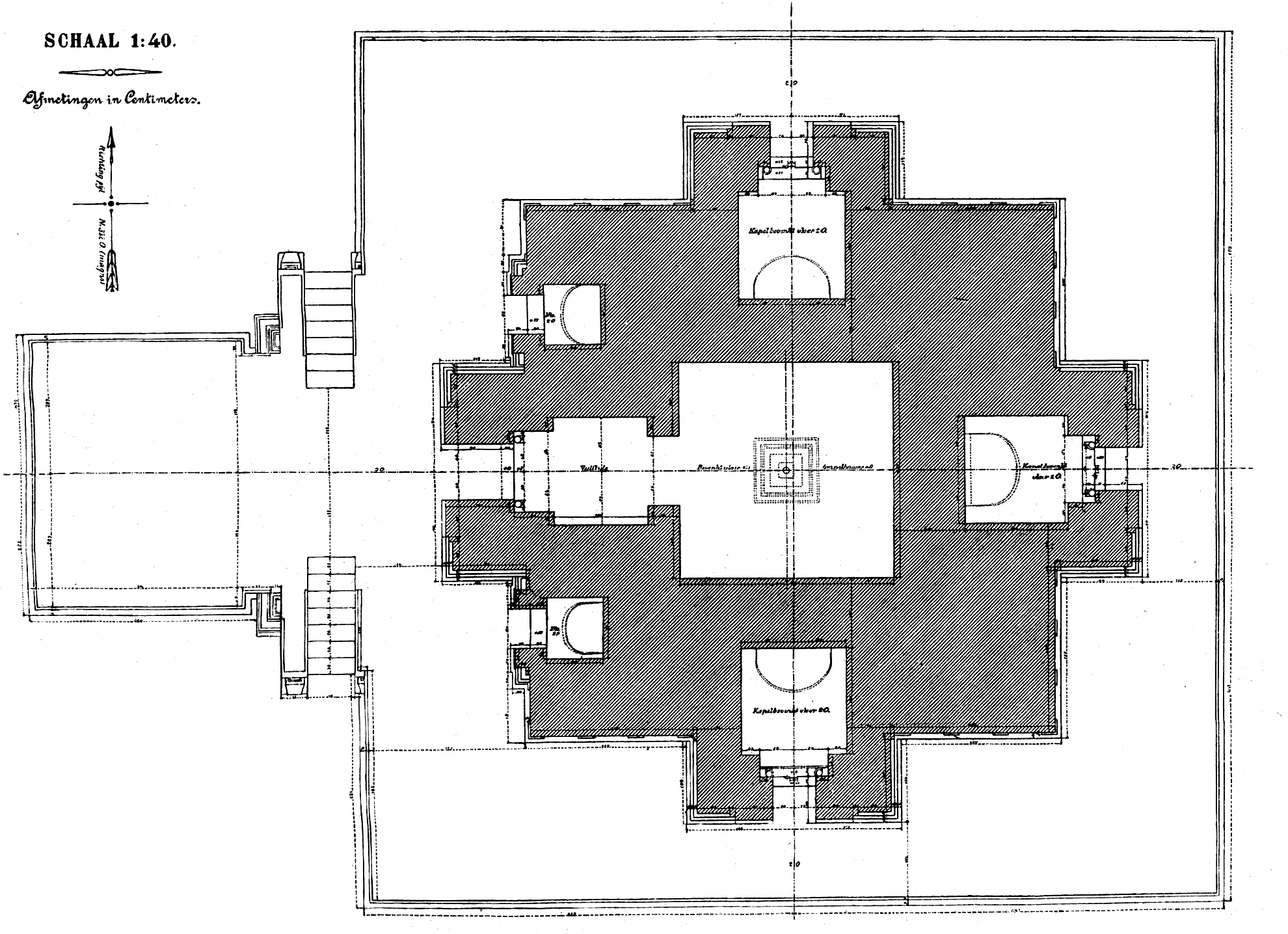
Kertanagara ruled the Singhasari kingdom from 1268 to 1292, a period of aggressive expansion and deepening religious syncretism. He was a tantric practitioner who merged Hindu and Buddhist traditions into a single devotional framework -- an approach that scandalized some contemporaries but reflected the theological experimentation flourishing across medieval Java. His funerary temple embodies that fusion. The lower level is dedicated to Shiva, with a large statue of Shiva as Batara Guru occupying the southern cella. The upper level held a second shrine room, this one Buddhist in dedication. Two faiths, two levels, one structure -- a syncretic architecture that mirrors the king's own spiritual practice. The temple faces northwest, oriented toward Mount Arjuno, connecting the sacred geometry of the building to the volcanic landscape that Javanese cosmology regarded as the dwelling place of gods.
The Giants at the Gate
Before you reach the temple itself, you pass between its most imposing guardians: a pair of colossal dvarapalas, giant monolithic statues carved from single blocks of stone. These figures once flanked the entrance to the Singhasari royal cemeteries, their massive frames and fierce expressions designed to ward off malevolent spirits. They are among the largest free-standing stone sculptures in Java, and their survival through seven centuries of tropical weather, volcanic eruptions, and human conflict speaks to the quality of the stone and the skill of the carvers. The dvarapalas set the tone for the entire site -- this was not a modest shrine but a statement of royal power, built to endure and to intimidate.
The Assassination That Built an Empire
In 1292, Jayakatwang, a vassal ruler from the neighboring kingdom of Gelang-gelang (later known as Kediri), led a rebellion that killed Kertanagara and toppled the Singhasari dynasty. The funerary temple was left unfinished, its incomplete carvings frozen in mid-stroke. But the story did not end with the assassination. Kertanagara's son-in-law, Raden Wijaya, fled into the jungle, rallied allies, and exploited the arrival of a Mongol invasion fleet -- sent by Kublai Khan to punish Kertanagara for a diplomatic insult -- to defeat both the Mongols and Jayakatwang in a single, audacious campaign. The kingdom Wijaya founded in the aftermath was Majapahit, which would grow into the most powerful maritime empire Southeast Asia had ever seen. Singhasari Temple stands at the hinge point of that transformation: the burial place of the king whose death made everything that followed possible.
Between Two Volcanic Ranges
The temple sits at 512 meters elevation on Jalan Kertanegara in Candirenggo village, Singosari district, in a valley bracketed by two of Java's most dramatic mountain ranges. To the east rises the Tengger-Bromo massif, whose caldera draws hundreds of thousands of visitors each year. To the west stands Mount Arjuno and its neighbor Mount Welirang, their forested flanks climbing past 3,000 meters. The 14th-century Javanese poem Nagarakretagama, composed at the height of Majapahit power, mentions this temple by name in cantos 37 and 38. A stone inscription attributed to the great prime minister Gajah Mada, dated 1351, was discovered in the temple's yard -- physical evidence linking the site to the political narrative recorded in the poetry. The area around the temple is believed to have been the center of the Singhasari court itself, making this not just a funerary monument but the administrative heart of a vanished kingdom.
From the Air
Located at 7.89°S, 112.66°E in Singosari district, approximately 10 km north of Malang, East Java. The temple compound is small and not individually visible from cruising altitude, but it lies in a distinctive valley between the Tengger-Bromo massif to the east and the Arjuno-Welirang range to the west. Abdul Rachman Saleh Airport (WARA) in Malang is approximately 12 km to the south. The temple faces northwest toward Mount Arjuno (3,339 m). Terrain rises sharply in all directions except south toward the Malang plain.