Sinharaja Forest Reserve
The leeches find you before the birds do. Within minutes of stepping onto the trail at Kudawa entrance, the tiny black threads are inching up your boots, sensing warmth and carbon dioxide with the blind certainty of creatures perfectly adapted to their world. Experienced visitors tuck trousers into socks, slather repellent on every seam, and keep walking -- because Sinharaja Forest Reserve, Sri Lanka's last significant expanse of primary tropical rainforest, does not give up its treasures to anyone unwilling to get a little uncomfortable.
The Kingdom of the Lion
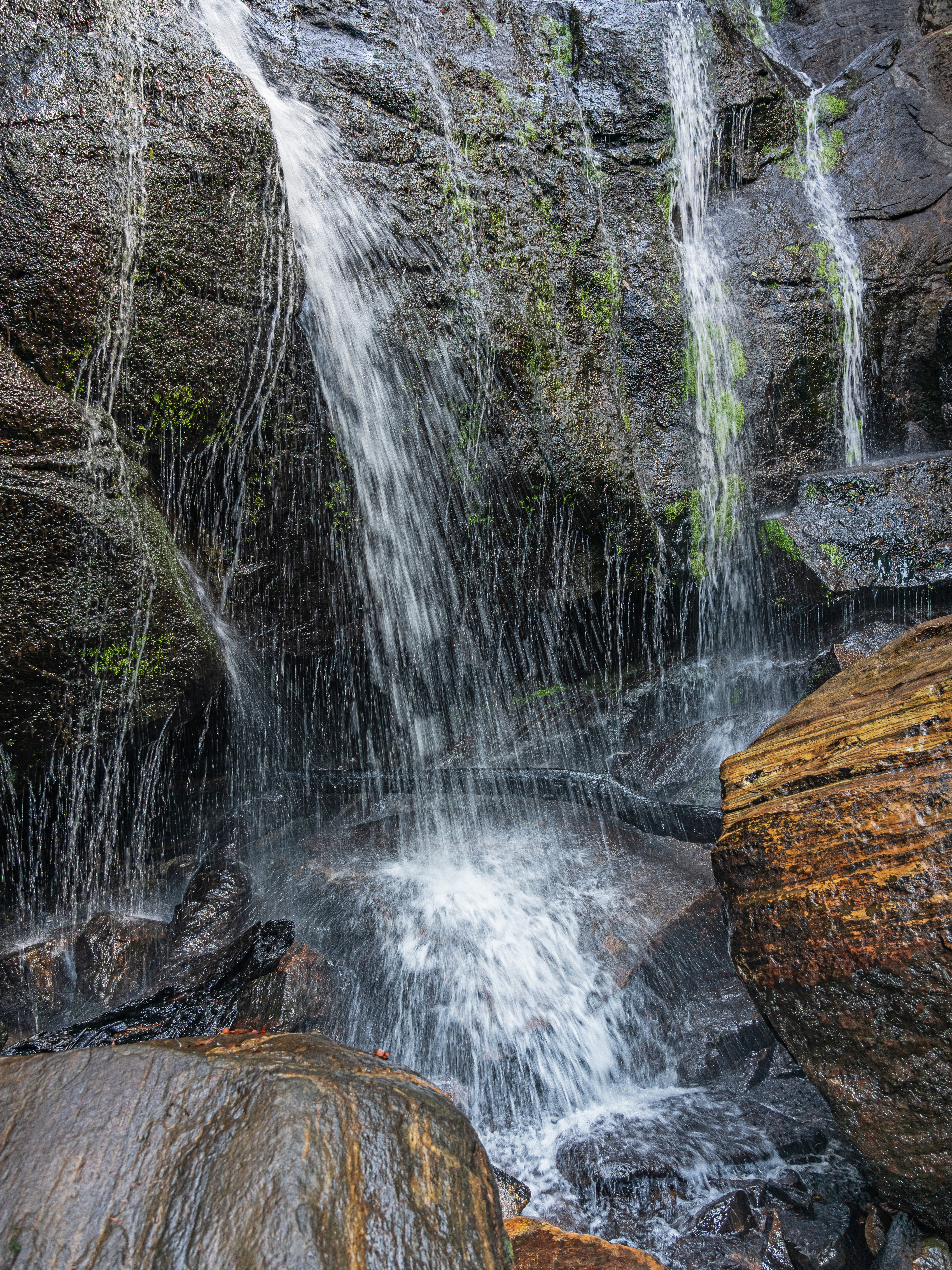
The name says everything the forest cannot say for itself. Sinharaja translates from Sinhala as "lion king" or "lion kingdom" -- sinha for lion, raja for king -- and local legend holds that a great lion once ruled this dark, fog-wrapped territory. Whether the name refers to an actual Sri Lankan lion (now long extinct) or to the forest's own regal indifference to human plans, it fits. The reserve stretches 21 kilometers from east to west and just 7 kilometers from north to south, covering 89 square kilometers of steep, waterfall-cut terrain in the island's wet zone. UNESCO designated it a Biosphere Reserve in 1978 and a World Heritage Site in 1988, recognizing what biologists had known for decades: this small patch of lowland rainforest holds a concentration of endemic life found almost nowhere else.
Following the Feeding Flocks
Birders come to Sinharaja for one reason above all others: it is the only place on Earth where all of Sri Lanka's endemic rainforest bird species occur together. Of the island's 26 endemic birds, 20 rainforest species live here, moving through the canopy in mixed feeding flocks that are themselves a spectacle. A typical flock is led by the fearless Sri Lanka drongo, whose bold aerial sallies flush insects for the birds following behind. The noisy orange-billed babbler chatters in the mid-story. Deeper in the foliage, patient observers might spot the elusive red-faced malkoha or the vivid Sri Lanka blue magpie, its electric blue plumage startling against the green. Binoculars are essential -- the canopy is dense and the birds move fast. A licensed guide, required by park regulations, knows where the flocks tend to gather and which fruiting trees draw the rarest species on any given morning.
Mud, Water, and Green Vipers
Sinharaja is not a park you drive through. There are no vehicle roads inside the reserve, no gift shops beyond a small stand at the main entrance selling snacks, drinks, and insect repellent. You walk, on trails that range from muddy to submerged depending on the season. The best months are December through early April, and again in August and September, when rainfall eases enough to make the paths navigable. Sturdy boots are not optional -- green pit vipers coil on low branches, and the hump-nosed viper, well camouflaged in leaf litter, is common along the forest floor. A walking stick helps for balance on steep sections and for probing the trail ahead. The forest's larger residents -- Sri Lankan leopards and elephants -- are rarely seen through the dense vegetation, though their presence is real enough that guides advise staying together and staying alert.
Three Gates into the Green
The reserve has three entrances, each offering a different experience. Kudawa, the main and most-used gate on the northern side, is reached by a chain of local buses from Ratnapura through Kalawana -- a journey that takes patience but deposits you in the small village of Kudawa, from which it is a half-mile uphill walk to the entrance. The Pitadeniya entrance to the south sees fewer visitors but has had problems with unlicensed guides overcharging tourists. The Morning Side entrance, the least used of the three, offers the most remote and undisturbed experience. All visitors must obtain a permit at the entrance and hire a licensed guide. Bring your own food and water in reusable containers -- disposable bottles are prohibited inside the reserve. Pack out everything you carry in. The crystal-clear streams that run through the forest supply drinking water to every village along the reserve's border, and the forest's protection is, for those communities, not abstract conservation but daily survival.
From the Air
Located at 6.24°N, 80.28°E in Sri Lanka's southwestern wet zone, Sinharaja appears from altitude as a dense, unbroken block of dark green canopy set against the lighter greens of surrounding tea estates and villages. The reserve spans parts of Ratnapura, Galle, and Kalutara districts. Nearest airport is Koggala (VCCK), approximately 50 km to the south. Bandaranaike International Airport (VCBI) is roughly 160 km to the north. The forest's narrow east-west profile -- 21 km long, only 7 km wide -- is distinctive from the air. Cloud cover and mist are frequent, especially in the wet season.