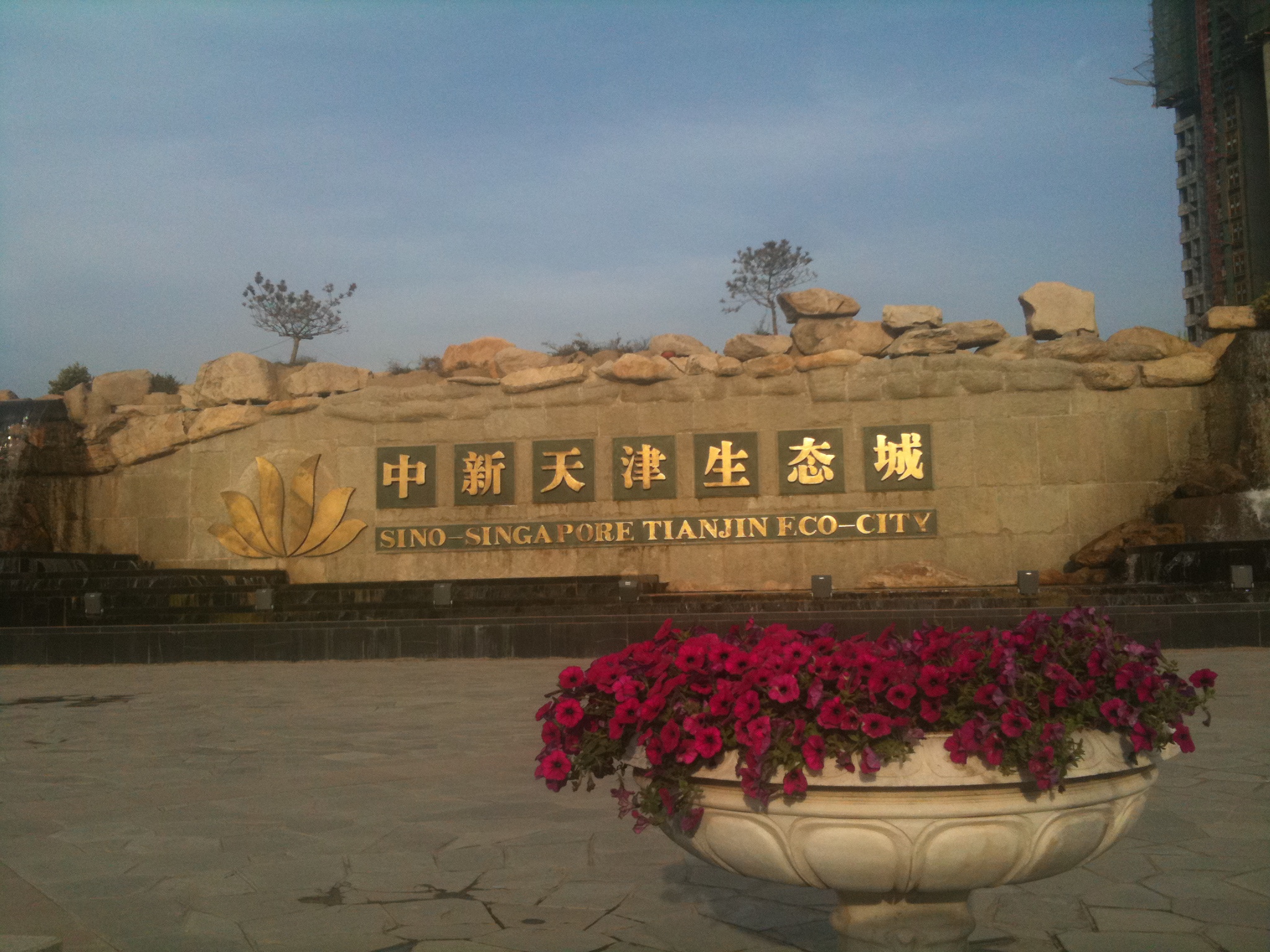
Sino-Singapore Tianjin Eco-City
Before the first road was paved, this patch of coast southeast of Tianjin was a landscape of saltpans, barren soil, and polluted ponds -- chosen precisely because nobody wanted it. That was the point. When Singapore's Prime Minister Lee Hsien Loong and China's Premier Wen Jiabao signed the framework agreement on November 18, 2007, the entire premise of the Sino-Singapore Tianjin Eco-City rested on a deliberate provocation: could you build a sustainable city on land so degraded that conventional development would have passed it by?
The Proving Ground
The Eco-City spans 30 square kilometers in Tianjin's Binhai New Area, intentionally sited on non-arable land with acute water shortages. In 2008, the two governments established 26 key performance indicators to measure ecological, economic, and social progress -- targets covering everything from carbon emissions to green building standards to the percentage of water supply drawn from non-traditional sources like desalination and recycling. The goal was 60 percent. Construction began with an 8-square-kilometer start-up area that included community centers, administrative buildings, residential zones, and the National Animation Industrial Park, which opened in May 2011 as one of the project's first economic milestones. The city's first residents moved in during March 2012, though for years the streets remained notably quieter than the planners had hoped.
Growing Pains on Reclaimed Ground
The original plan called for 350,000 residents by 2020. By April 2019, the population stood at roughly 100,000 -- ambitious growth from zero, but well short of the target. Critics were quick to compare the Eco-City to China's other new-town projects, some of which became notorious as "ghost cities" with gleaming infrastructure and no inhabitants. The Guardian described the development in 2014 as lacking hospitals, shopping centers, and people. Yet the Eco-City's developers have continued to press forward, beginning work on a 4.5-square-kilometer Central District in 2019 designed to house 58,000 residents with features like a "Green Smart Hub" and the Friendship Garden, blending native and exotic plantings -- even including artificial foliage during Tianjin's harsh winters.
Singapore's Fingerprints
What distinguishes this project from China's other planned cities is Singapore's involvement. The island nation brought decades of experience in urban planning, environmental management, and governance efficiency to a joint venture structure overseen by a bilateral steering council and working committee. The collaboration extended to technology partnerships, including a 2018 arrangement with Huawei to implement cloud computing infrastructure for urban management. A light-rail transit system and a network of trams and buses are designed to reduce car dependency, with a Tianjin Metro extension planned to connect the Eco-City to Binhai Station and onward to Beijing via high-speed rail. The transit-oriented design reflects Singapore's own approach to urban mobility, transplanted to a very different climate and political context.
Proof of Concept or Cautionary Tale
The Eco-City occupies an uncomfortable position between showcase and experiment. Its environmental credentials are genuine -- the water recycling systems, green building standards, and transit planning represent real advances in Chinese urban development. But the slow population growth raises questions about whether sustainability alone can make a place where people want to live. Located in the economically prominent Binhai New District, surrounded by the Bohai Sea Rim's industrial activity, the Eco-City is not isolated from China's broader development pressures. It exists as both proof of concept and work in progress, a city still becoming itself on ground that was once considered worthless.
From the Air
Located at 39.15°N, 117.78°E in Tianjin's Binhai New Area, on the coast southeast of Tianjin's urban core. The Eco-City's planned grid layout is visible from altitude, contrasting with the surrounding industrial and port areas. The National Maritime Museum of China is located within the development. Nearest airport: Tianjin Binhai International (ZBTJ/TSN), approximately 25 km southwest. At 5,000-8,000 feet AGL, the contrast between the Eco-City's green planning and the surrounding industrial landscape is striking.