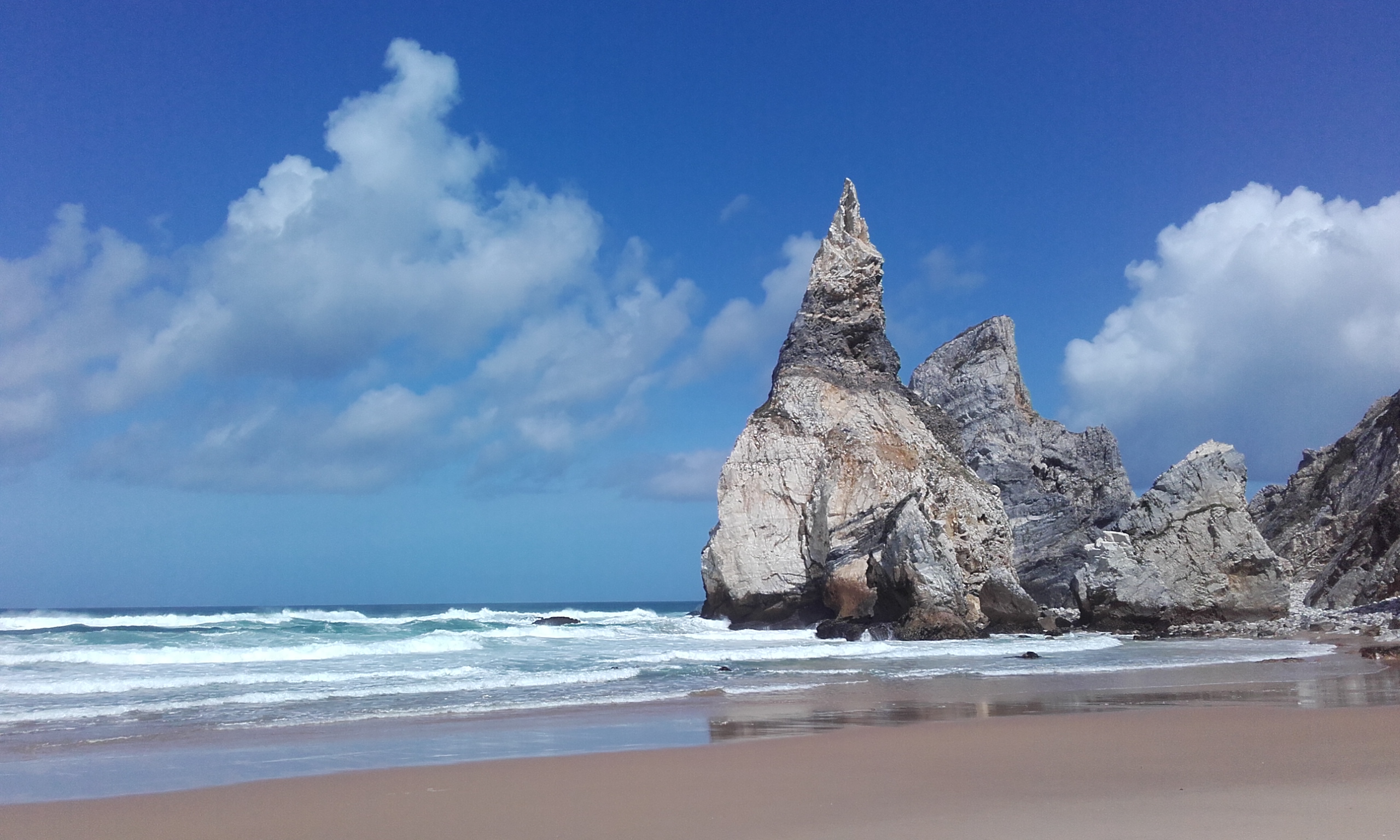
Sintra
Lord Byron called it the 'Glorioso Eden.' Richard Strauss said it was 'a true garden of Klingsor, and there in the heights, a castle of the Holy Grail.' When two of Europe's most extravagant imaginations agree on something, it is worth paying attention. Sintra occupies the northern slopes of the Sintra Mountains, 28 kilometers northwest of Lisbon and roughly 10 kilometers from the Atlantic coast, a town whose setting has attracted poets, kings, and dreamers for over a millennium. The misty hills cradle palaces, castles, and estates in such profusion that UNESCO designated the entire Cultural Landscape a World Heritage Site — not one building but the whole extraordinary accumulation.
A Thousand Years of Rulers
Human activity here predates recorded history — the Sintra Collar, a golden neck ring from around the 9th century BC, now resides in the British Museum in London. During the 8th century, Moorish rulers fortified a mountaintop to create what is today called the Castle of the Moors, which held until 1147, surrendering to crusader troops one month after the fall of Lisbon. The Moors also built a residential palace downhill, which became the summer residence of Portuguese kings. This Sintra Palace, expanded by John I around 1415 and adorned with Manueline flourishes by Manuel I, is the best-preserved medieval royal residence in Portugal. King Afonso VI was imprisoned here from 1676 until his death in 1683, pacing the rooms of a palace that had hosted coronations and conspiracies in equal measure.
The Romantic Fever
By the late 18th century, Sintra's ruins and wild vegetation had made it famous among Romantic poets. Byron visited and was entranced. The town became a standard stop on the Grand Tour, drawing young European nobles who arrived expecting the picturesque and found something stranger. The Portuguese upper classes responded by building villas in the surrounding hills, transforming Sintra into a village of chateaus. The most dramatic expression of this Romantic fever was the Pena Palace, a mountain-top fantasy constructed by King-Consort Ferdinand II between 1842 and 1854 from the ruins of a Hieronymite monastery. After Ferdinand's death, he caused national outrage by donating the palace to his second wife, the Countess of Edla; the matter was eventually resolved when King Luís purchased it back in 1890.
A Constellation of Palaces
Sintra's density of remarkable buildings is almost absurd. Within a few kilometers of the town center stand the medieval Sintra Palace with its twin conical chimneys; the Pena Palace in its Romantic hilltop splendor; the Quinta da Regaleira with its Initiation Wells and Templar symbolism; the Moorish Revival Monserrate Palace with its botanical gardens; and the Seteais Palace, now a luxury hotel. The Castle of the Moors provides a ruined-fortress counterpoint on an adjacent ridge. Each represents a different architectural era, a different set of obsessions, a different vision of what Sintra's hills could hold. The circular bus routes 434 and 435 connect these sites, but walking the trails between them — particularly the 1.1-kilometer forest path from town to the Castle of the Moors — rewards visitors with the mist, eucalyptus scent, and sudden views that made the Romantics lose their composure.
Beyond the Palaces
Sintra's charms extend past its famous monuments. The town's historic district sells cork products, ceramics, and the local specialty queijadas — small cheese pastries best eaten at Casa do Preto. The travesseiros (almond pastries) at Piriquita are equally essential. A restored early-20th-century tram runs from town to Praia das Maçãs on the Atlantic coast, a 45-minute ride through 13 kilometers of countryside, with a stop at the Colares Winery for one of Portugal's rarest wines. From Sintra, the Scotturb 403 bus reaches Cabo da Roca, the westernmost point of mainland Europe, in about 40 minutes. Sintra can be overwhelmingly crowded on summer weekends — the narrow roads were built for carriages, not tour buses — but early morning or late afternoon visits reveal the town at its quietest and most atmospheric, the mist doing what it has always done: making the ordinary disappear.
From the Air
Located at 38.797°N, 9.390°W on the northern slopes of the Sintra Mountains, approximately 28 km northwest of Lisbon. Key aerial landmarks: the Pena Palace (red and yellow hilltop palace, most visible), the Castle of the Moors (ruined fortification on adjacent ridge), and the twin conical chimneys of the Sintra National Palace in the town center. The town sits in a valley with the mountains rising to the south. Recommended viewing altitude: 3,000-5,000 ft for the full mountain and palace context. Nearest airport: Lisbon/Humberto Delgado (LPPT) approximately 30 km southeast. Cabo da Roca (westernmost point of continental Europe) is visible on the coast approximately 18 km west. Expect orographic cloud formation on the Sintra Mountains, particularly during westerly flow from the Atlantic.