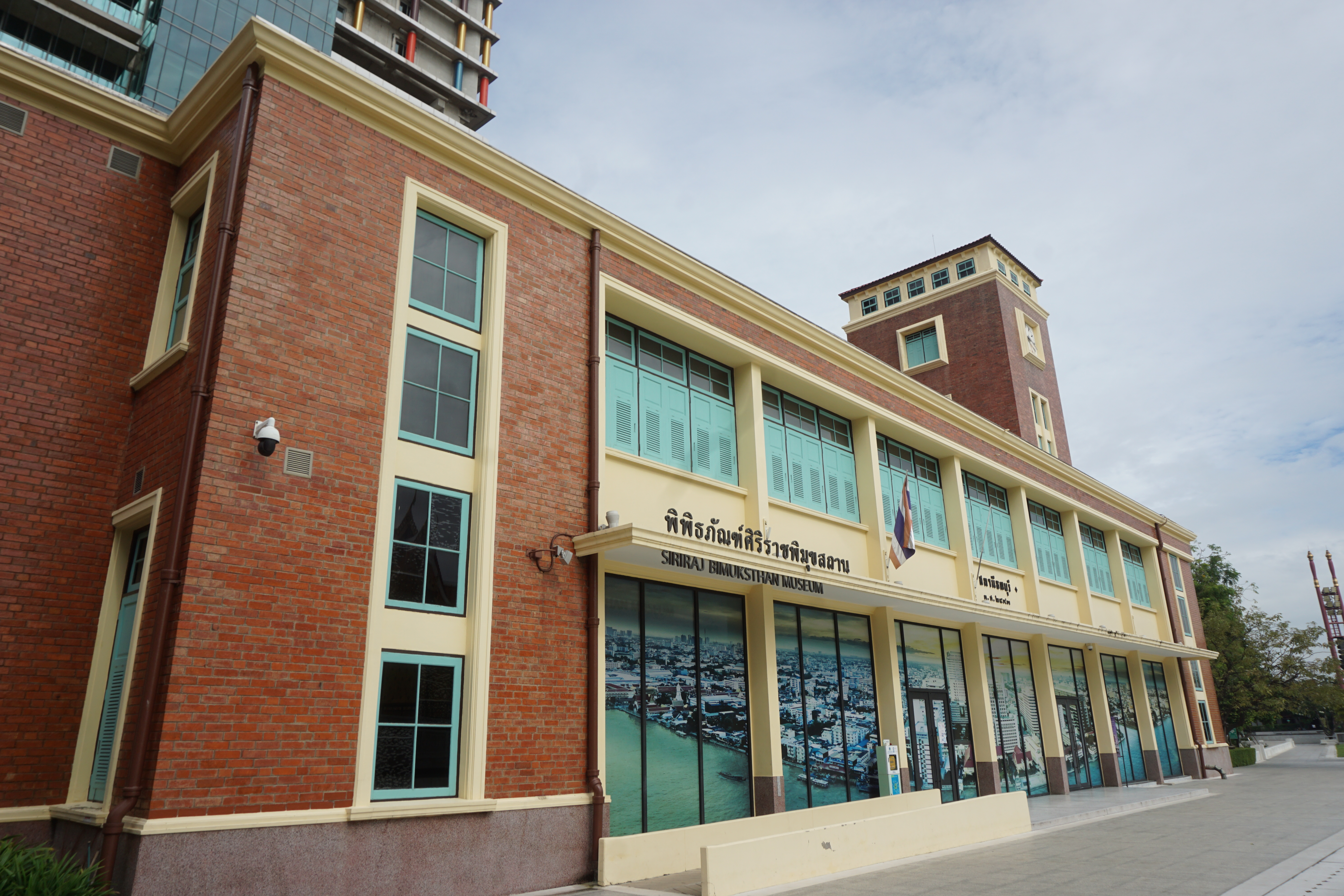
Siriraj Medical Museum
The label on the glass case reads like a clinical note: cause of death, weapon type, angle of entry. Behind the glass, a skull confirms every detail. This is the Songkran Niyomsan Forensic Medicine Museum, one of seven small museums tucked inside the grounds of Siriraj Hospital on the west bank of Bangkok's Chao Phraya River. The complex is officially the Siriraj Medical Museum. Locals and guidebooks call it the Museum of Death. Both names are accurate, though neither quite captures the range of what these rooms contain -- a million-year-old skeleton, the nervous system of an entire human body dissected into a single specimen, parasites preserved in jars, and the forensic evidence collected from decades of Thai criminal cases.
A Hospital Born from Grief
Siriraj Hospital, Thailand's oldest, was founded on 26 April 1888 by King Chulalongkorn, Rama V. He named it after his eighteen-month-old son, Prince Siriraj Kakudhabhand, who had died of dysentery the previous year. The king had seen cholera and other diseases sweep through his kingdom, and he wanted a public institution that could bring Western medicine to bear against them. The museums grew organically from the hospital's teaching mission. The Ellis Pathological Museum came first, founded by the American pathologist Dr. Aller G. Ellis, who began collecting disease-identified specimens for his pathology classes. Today it displays the conditions that kill the most Thai people -- heart disease, cancer, congenital anomalies -- alongside treatments and preventive measures. What began as a teaching aid became a public resource, and eventually a destination.
Bodies of Knowledge
The Congdon Anatomical Museum, established by Dr. Edgar Davidson Congdon, holds more than 2,000 organs arranged to teach the structure of the human body from conception through adulthood. The collection's masterpiece is a full-body dissection of the nervous and arterial systems by Dr. Patai Sirikarun -- the only exhibit of its kind in the world, a single specimen revealing the web of nerves and blood vessels that threads through every limb. Nearby, the Parasitology Museum displays creatures most people prefer not to think about: protozoa invisible to the naked eye alongside flatworms stretching a full meter in length, each presented with its life cycle, habitat, and the cooking processes that allow it to thrive. Dr. Vichitr Chaiyaporn, the museum's founder, collected these parasites from his own patients.
Deep Time on the Riverbank
In 1960, anatomist and anthropologist Dr. Sood Sangvichien joined an excavation at Chorakhe Phueak in Kanchanaburi Province, one of Thailand's most significant prehistoric sites. He brought back tools, ornaments, and earthenware that had been buried alongside ancient skeletons, and these became the foundation of the museum that bears his name. Opened to the public in 1972, the Sood Sangvichien Prehistoric Museum takes visitors from Homo erectus to the Neolithic. Its centerpiece is the skeleton known as Lampang Man, who lived roughly 400,000 to one million years ago -- a contemporary of Peking Man. Stone tools from the Paleolithic, Mesolithic, and Neolithic periods surround him, alongside painted earthenware and colorful stone beads. In a complex otherwise devoted to death and disease, this room reminds visitors that humans have lived, worked, and adorned themselves on this land for a very long time.
The Bogeyman in the Glass Case
For decades, the most visited exhibit in the Forensic Medicine Museum was not a specimen but a person. Si Ouey Sae Ung, born in 1927, emigrated from China to Thailand after the Second World War. Between 1954 and 1958, he was charged with the murder of seven children across multiple Thai provinces. Executed by firing squad on 17 September 1959, his mummified body was displayed in a glass case for sixty years. He became a bogeyman figure in Thai culture -- parents warned misbehaving children that Si Ouey would come for them. In 2019, residents of the Thap Sakae district, where Si Ouey and most of his victims had lived, petitioned the National Human Rights Commission, arguing that the display was undignified. No family members came forward to claim the remains. On 23 July 2020, his body was cremated at Wat Bang Praek Tai, a temple near the prison where he had been executed. The empty case prompted reflection on what museums owe to the dead -- a question the Siriraj complex continues to grapple with as it integrates augmented reality, interactive surgery simulations, and exhibits about the ethics of displaying human remains.
Teaching the Living
The Siriraj Medical Museum is not a cabinet of curiosities, though it can feel like one. Its primary purpose remains education. Medical students rotate through these rooms as part of their training, studying pathology from preserved organs rather than textbook photographs. Recent additions include presentations on traditional Thai medicine, historical surgical instruments, and exhibits drawn from the 2004 tsunami, which killed more than 8,000 people in Thailand and tested the nation's forensic identification capabilities. The museum has also begun addressing the ethical tensions inherent in its collections -- the line between scientific education and voyeurism, the question of consent, the cultural weight of putting human remains on public display. These are not easy conversations, but the Siriraj complex has been having them since King Chulalongkorn built the hospital that houses them, naming it for a child he could not save.
From the Air
Located at 13.758N, 100.486E on the west bank of the Chao Phraya River in Bangkok's Bangkok Noi district. The large Siriraj Hospital campus is visible from altitude along the river. Best viewed at 2,000-3,000 feet. Nearest airports: Don Mueang (VTBD) approximately 14 nm north, Suvarnabhumi (VTBS) approximately 18 nm east-southeast.