Sirpur Group of Monuments
For centuries, locals in the Chhattisgarh village of Sirpur used tunnels running through a large earthen mound near the Mahanadi River. They called them surang -- passages -- and thought little of what lay beneath. When archaeologists excavated the mound between 2006 and 2007, they uncovered an entire temple complex: a thirty-foot pillared terrace connecting five sanctums, complete with Shiva lingas in gray and black granite and inscriptions dating to the 7th or 8th century. The Surang Tila was just one discovery in a site that has yielded Hindu, Buddhist, and Jain monuments spanning from the 5th to the 12th century CE -- the remains of a city that was once the capital of the Dakshina Kosala kingdom and one of the most significant multi-faith settlements in early medieval India.
Capital of Three Faiths
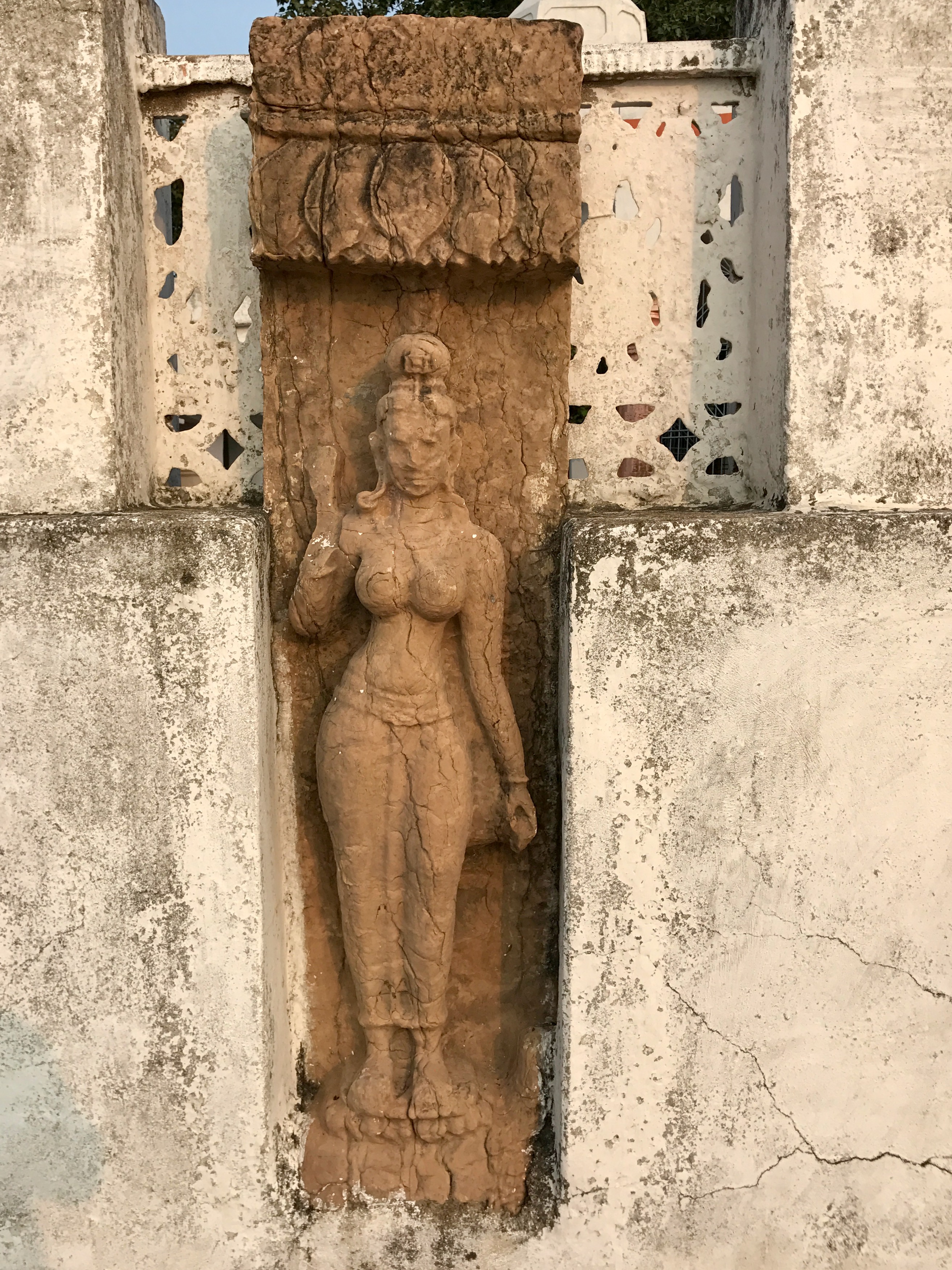
Sirpur's importance lies not in any single monument but in the sheer density of religious traditions coexisting within walking distance of each other. The Sharbhapuriya and Somavamshi kings who ruled Dakshina Kosala from this riverside capital presided over a culture where Hindu temples, Buddhist monasteries, and Jain basatis operated simultaneously. The Teevardev monastery, built by a Shaiva king and his Buddhist queen, embodies this syncretic spirit: its walls display Buddha statues alongside Ganga and Yamuna goddesses, Panchatantra tales beside Gajalakshmi relief carvings. Archaeological excavations have uncovered 22 Shiva temples, 5 Vishnu temples, 12 Buddhist viharas, and a Jain monastery -- all within a single site spread along the Mahanadi banks, 78 kilometers east of modern Raipur.
Cunningham's Report and Decades of Neglect
Alexander Cunningham arrived at Sirpur in 1882 and immediately recognized the significance of what he found. His report on the Lakshmana Temple -- a 7th-century brick structure built by Vasata, mother of King Maha-Shivagupta Balarjuna, and dedicated to Vishnu -- brought the site to international attention. The Lakshmana Temple's carved doorway and surviving tower fragments revealed a sophistication that rivaled better-known sites like Aihole and Pattadakal in Karnataka. But attention did not translate into action. The two World Wars consumed the resources and energy of British India's archaeological establishment, and Sirpur lay largely neglected until excavations resumed in 1953. Even then, the site's full scope remained hidden -- the Surang Tila would not be excavated for another half century.
Bronze Masters of the Mahanadi
Among Sirpur's most remarkable contributions to Indian art history are its bronze sculptures. Art historian Geri Hockfield Malandra identified Sirpur as a significant bronze workshop of ancient India, and the Buddhist bronze artwork recovered from the site ranks among the "finest bronze sculptures" of the early medieval period. Malandra noted striking similarities between Sirpur's bronzes and artwork found at the Ellora Caves and Ratnagiri in Odisha, suggesting a flow of ideas and artists across central and eastern India during this period. A 9th-century bronze image of Adinatha, the first Jain Tirthankara, was discovered near a Jain basati along the riverbank, adding yet another religious tradition to Sirpur's artistic repertoire. The ASI museum on the Lakshmana Temple grounds now preserves pieces spanning Shaiva, Vaishnava, Buddhist, and Jain traditions, dated between the 6th and 12th centuries.
Temples That Open to the West
Each of Sirpur's monument clusters carries its own architectural signature. The Baleshwar Mahadev temples, built by King Shivagupta Balarjuna in the mid-8th century, break from the site's dominant east-facing orientation -- these temples open to the west. Their sanctums are stellate in plan, formed by overlaying two squares rotated forty-five degrees against each other, creating an eight-pointed star shape in brick and stone. Marble Shiva lingas sit inside. The Gandheshwar Temple, still an active Shiva shrine, occupies the Mahanadi's bank directly. And the Swastika Vihara, excavated in the 1950s, earned its name from its aerial plan -- a cruciform layout that traces the ancient Indian swastika symbol, the auspicious sign of well-being that predates its 20th-century misappropriation by millennia.
Layers Beneath Layers
The Kalachuri dynasty absorbed Dakshina Kosala in the 11th century, and the following centuries remain historically murky. But the soil tells its own story. Excavations have yielded deposits traceable from the mid-first millennium BCE through the Gupta Empire, through the late medieval period. The youngest archaeological layer contains chilum smoking pipes and coins from the Delhi Sultanate, confirming that Sirpur remained an inhabited settlement well into the Islamic era. Chhattisgarh has prepared a nomination for Sirpur's inclusion on the UNESCO World Heritage list, recognition that would place it alongside India's most celebrated archaeological complexes. For now, the site remains relatively uncrowded -- a place where you can walk from a 7th-century brick temple to an 8th-century star-shaped sanctum to a Buddhist vihara in the shape of a sacred symbol, all within the sound of the Mahanadi flowing past.
From the Air
Located at 21.345N, 82.185E on the banks of the Mahanadi River in Mahasamund district, Chhattisgarh, approximately 78 km east of Raipur. The nearest major airport is Swami Vivekananda Airport at Raipur (VERP). From cruising altitude, look for the Mahanadi River's course and the village of Sirpur along its banks. The monument complex is spread along the river and not visible as a single structure from high altitude. Best viewed at 3,000-5,000 feet AGL in clear weather to distinguish the temple platforms and excavated areas from surrounding vegetation.