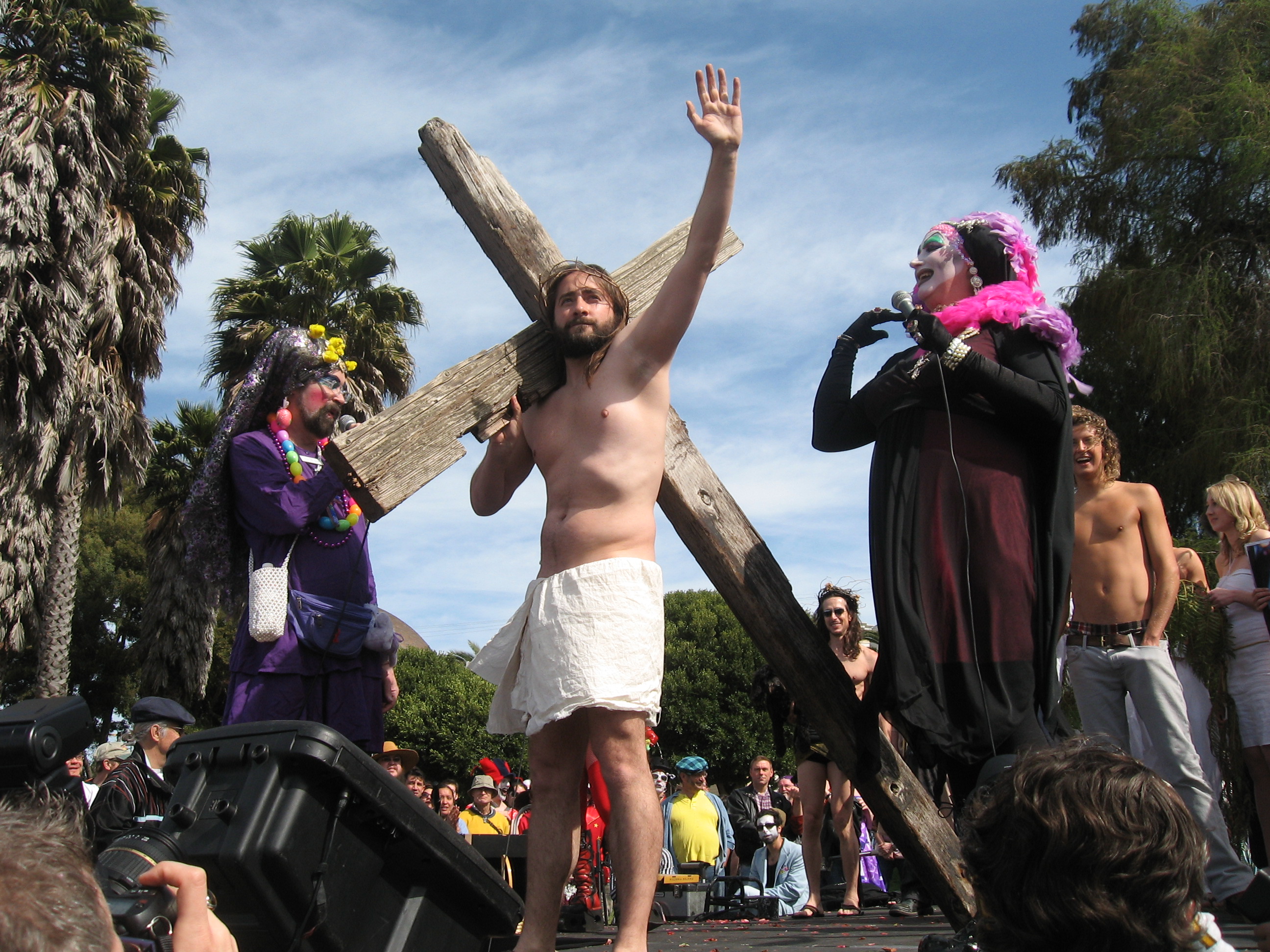
Sisters of Perpetual Indulgence
On Easter Sunday 1979, a small group of gay men walked through San Francisco's Castro District wearing the habits of Catholic nuns. The habits were real -- acquired, by various accounts, from an actual convent. The intent was subversive, joyful, and deadly serious all at once. The Sisters of Perpetual Indulgence, as they named themselves, would go on to become one of the most recognizable and controversial organizations in queer culture: a charitable movement that uses drag and religious imagery to satirize moral hypocrisy while raising money for causes the moralists neglect.
The Order Takes Shape
What started as street theater evolved into a structured organization with its own rituals, hierarchy, and naming conventions. Each Sister takes a punning religious name and adopts elaborate whiteface makeup inspired by both theatrical clowning and religious iconography. The combination of Catholic vestments, queer identity, and deliberate provocation has made the Sisters a lightning rod for controversy since their founding. Conservative religious groups have condemned them as blasphemous. LGBTQ communities have embraced them as champions. The Sisters operate in the space between these reactions, using the discomfort they generate to start conversations about sex, gender, morality, and the weaponization of religious authority against marginalized people.
AIDS and the Front Lines
The AIDS epidemic transformed the Sisters from provocateurs into essential community workers. As the crisis devastated San Francisco's gay community in the 1980s, the Sisters became frontline educators, producing some of the first safe-sex materials distributed in the city. Their visibility and their willingness to address sexual health directly -- without the euphemisms and moralizing that characterized mainstream public health messaging -- made them effective communicators in communities that had every reason to distrust official institutions. The charitable fundraising that had always been part of the Sisters' mission took on desperate urgency as friends and fellow community members sickened and died around them.
A Worldwide Order
The Sisters have spread far beyond San Francisco. Chapters -- called houses or orders -- exist across the United States, in Europe, Australia, and South America. Each house adapts the core concept to its local context while maintaining the visual vocabulary of white makeup, habits, and religious-drag performance. The San Francisco house remains the founding chapter and retains a special status within the movement. Their public appearances -- at Pride events, community fundraisers, political protests, and their annual Easter celebration in Dolores Park -- are fixtures of San Francisco's cultural calendar. Whether the Sisters are a charity, a performance troupe, a protest movement, or a religious order depends on when you encounter them. They are, characteristically, all of these at once.
From the Air
The Sisters of Perpetual Indulgence are headquartered in San Francisco's Castro District at approximately 37.76N, -122.44W. Their public events are held throughout the city, particularly in Dolores Park and the Castro neighborhood. Nearest airports: KSFO 10nm south, KOAK 9nm east.