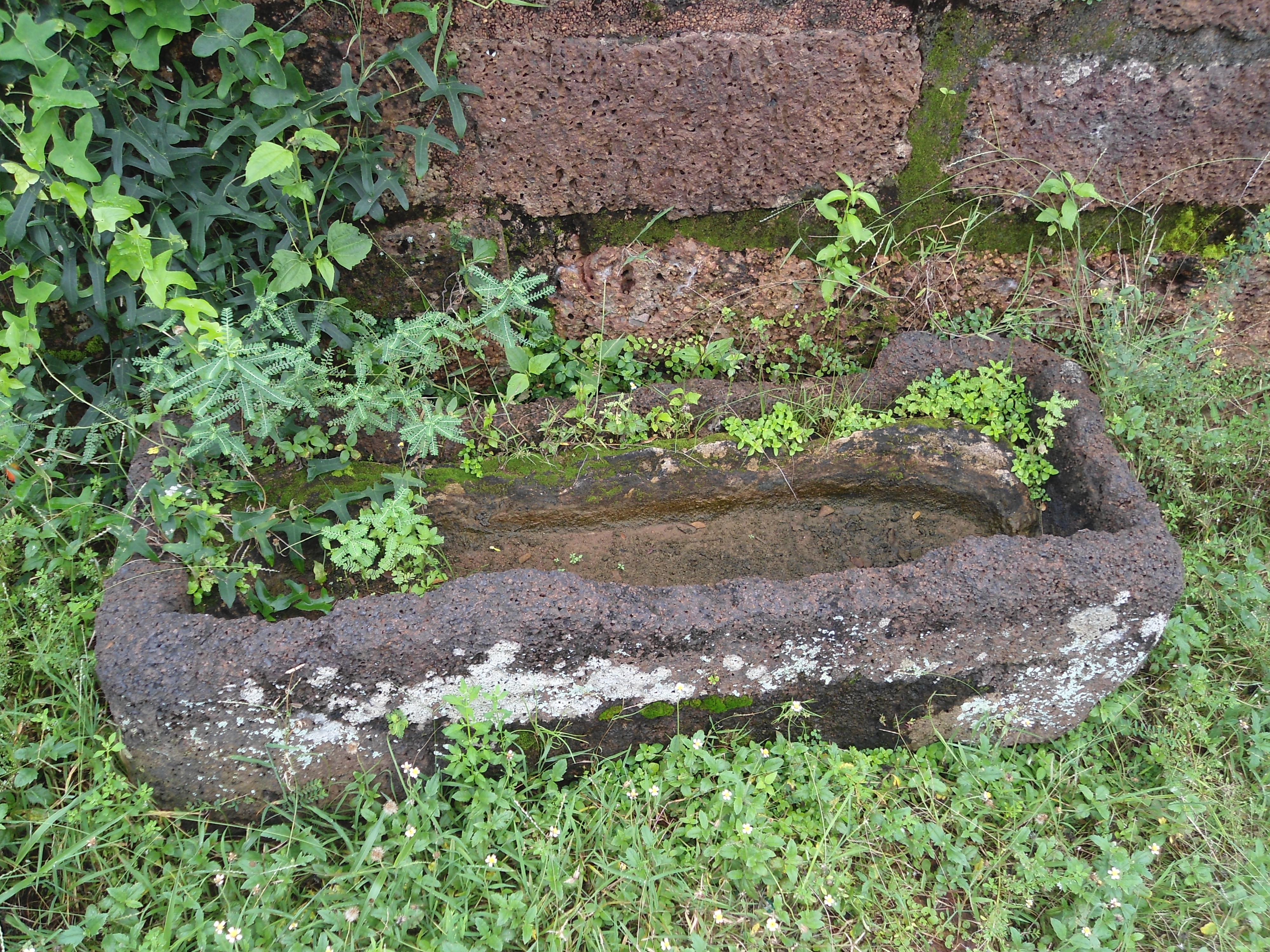
Sisupalgarh
When classical Athens held perhaps 10,000 citizens, a fortified city on India's eastern coast may have housed twice that number. Sisupalgarh - identified by scholars as Kalinganagara, capital of the warrior king Kharavela, and possibly Tosali, the provincial seat of Emperor Ashoka - was a metropolis before the word existed in South Asia. Carbon-14 dating from excavations between 2005 and 2009 pushes the earliest occupation to somewhere between 804 and 669 BCE, making it one of the oldest urban settlements in the Indian subcontinent. Its massive ramparts, the highest known defensive walls of their period in India, once enclosed a planned settlement with civic architecture, domestic quarters, and open grazing land. Today, what remains of this pre-Mauryan city sits at the edge of Bhubaneswar, Odisha's modern capital, and the distance between the two - between an ancient civilization and the one encroaching on its ruins - can be measured in meters.
A City Before Empire
The conventional story placed Sisupalgarh in the 3rd century BCE to the 4th century CE, a timeline established by the eminent archaeologist B.B. Lal after the first excavations in 1948. Lal's conclusions held for half a century until an American-Indian team led by M.L. Smith and R. Mohanty returned to the site in 2001. Their findings rewrote the chronology. Radiocarbon dates from five different locations inside the fortification, and additional samples from outside, demonstrated that people had been living here since the 7th or 6th century BCE - centuries before Ashoka's Mauryan armies marched into Kalinga, centuries before the war that supposedly transformed the emperor from conqueror to Buddhist. The northern rampart dates to 510-400 BCE. Whatever civilization built these walls was not a Mauryan outpost. It was already old when the Mauryans arrived.
The Shape of Power
Seen from above, Sisupalgarh is a near-perfect quadrangle, its walls tilted 10 degrees clockwise from true north - the same orientation found at Jaugada, a contemporary fortification to the southwest, suggesting a shared surveying tradition or cosmological principle. The fortified perimeter stretches 4.8 kilometers, enclosing an area large enough that cattle could graze within the walls. Two gates pierce each of the four sides, eight entry points controlling access to a city whose population archaeologists estimate at 20,000 to 25,000. Near the center, a structure supported by 19 columns was recorded three-dimensionally by laser scanner in 2005 - disturbed and incomplete, but unmistakably monumental. Ground-penetrating radar revealed the probable position of a southern moat, adding another layer to defenses that included glacis walls, the sloped earthworks designed to deflect attackers and prevent scaling. These were not improvised defenses. They were the work of a state that understood siege warfare.
What the Ground Remembers
Archaeology at Sisupalgarh has proceeded in fits and starts. After Lal's pioneering work in 1948, the site languished for over fifty years. The 2001 resumption brought modern techniques - geophysical survey, systematic surface collection, laser scanning - to a site that had been protected on paper but neglected in practice. By studying individual houses and civic architecture across the settlement, the team built a picture of urban life: domestic spaces of varying size suggesting social stratification, civic buildings implying organized governance, and enough internal open space to suggest the city was not cramped but deliberately planned with room to breathe. The settlement was not a fortress alone but a living city - one where people cooked, worshipped, traded, and raised families within walls that kept them safe from a violent world.
The Siege That Succeeds
Sisupalgarh survived conquests by Ashoka, by Kharavela, by centuries of political upheaval. It did not survive modern real estate development. When Lal arrived in 1948, the site was wilderness. Somehow, in the decades that followed, nationally protected land became private property. By 2002, satellite imagery was documenting the encroachment: lots staked out in the northwestern quarter, building materials piled, foundation walls laid. Then, with the speed of a fait accompli, houses erected before officials could react. An Indo-German documentation team recorded considerable illegal construction in 2005. Since 2010, developers have begun building directly into the southern city wall itself. The Archaeological Survey of India holds jurisdiction, but jurisdiction without enforcement is just paperwork. The ramparts that held against ancient armies are losing to concrete block walls and corrugated roofing, a siege conducted not with battering rams but with land deeds and bureaucratic inertia. The irony would be bitter if it were not so common across South Asia's archaeological heritage.
From the Air
Located at 20.227°N, 85.853°E, immediately southeast of Bhubaneswar, Odisha. From altitude, the fortified quadrangle of Sisupalgarh may be partially visible as a geometric outline in the landscape, though modern construction increasingly obscures the ancient walls. Biju Patnaik International Airport (VEBS) lies approximately 4 km to the west-northwest. The site sits between the old city of Bhubaneswar and the growing southeastern suburbs. The Daya River runs nearby to the south. Look for the contrast between the ancient rampart lines and the encroaching modern development. Best viewed at moderate altitudes on clear days when the geometric outline of the fortification walls can be distinguished from surrounding urbanization.