Six Flags AstroWorld: Houston's Lost Kingdom of Thrills
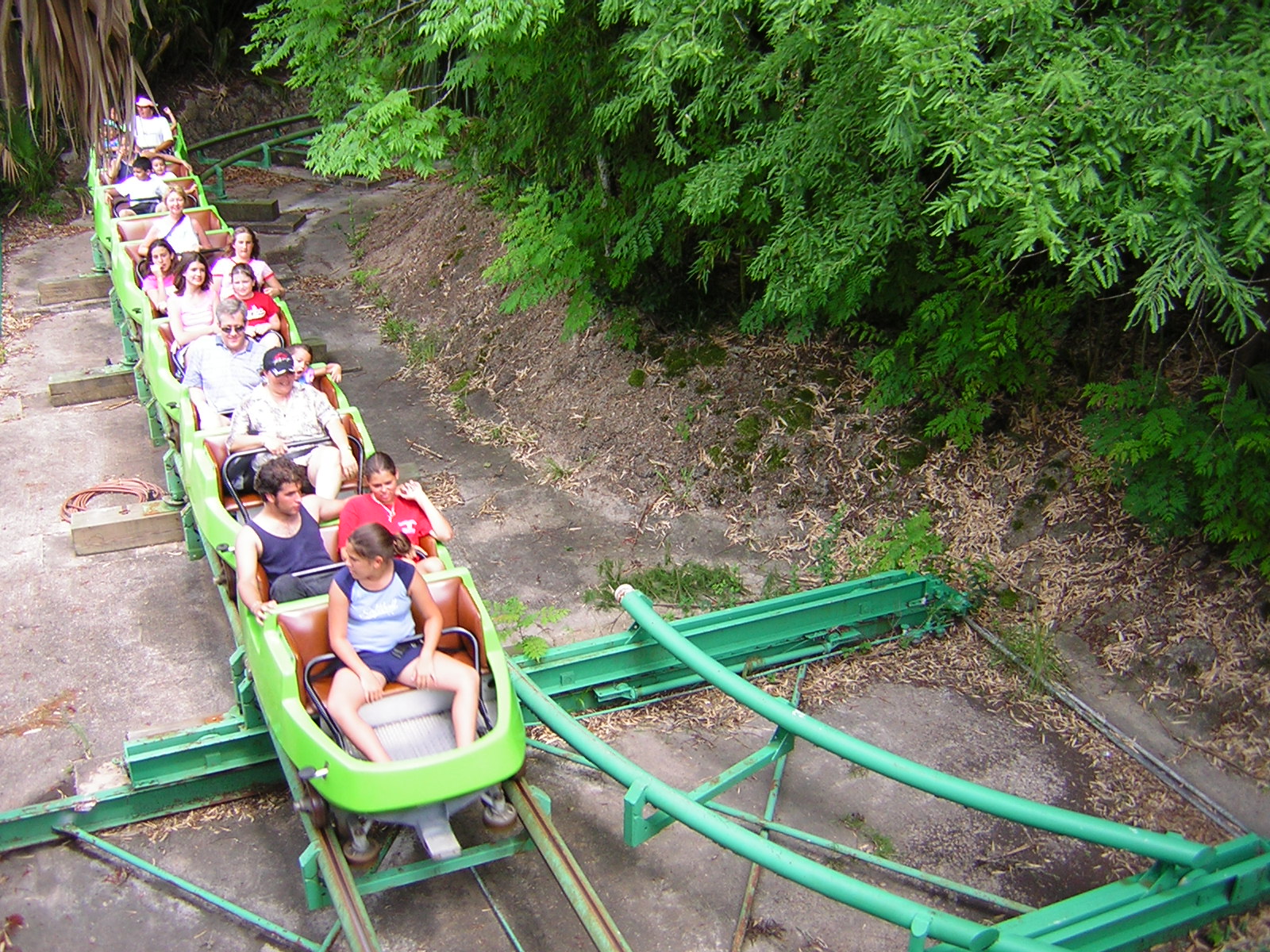
On October 30, 2005, the Texas Cyclone made its last run. Riders screamed through the wooden coaster's banks and drops one final time, then climbed out and walked toward the exit gates of Six Flags AstroWorld knowing the park would never reopen. Within weeks, demolition crews arrived. Within months, the roller coasters, the water rides, the pedestrian bridge that once spanned Interstate 610 -- all of it was gone. Where nearly two million visitors a year had once lined up for thrills, there was only a vast field of grass stabilized by asphalt, used occasionally for parking. Houston's beloved amusement park, born from one man's outsized ambition in the Space Age, had become one of the city's most bitter losses.
The Judge's Grand Vision
Roy Hofheinz was not a man who thought small. The former Houston mayor and county judge had already built the Astrodome -- the "Eighth Wonder of the World" -- when he turned his attention to the vacant land south of Interstate 610. On September 16, 1967, Hofheinz unveiled an architectural model designed by Randall Duell, the Hollywood set designer who had created Six Flags Over Texas. The initial investment was $25 million, and it paid for extensive landscaping and a long pedestrian viaduct spanning I-610, the first privately owned, publicly accessible bridge over a federal highway. Architecture students from Rice University and the University of Houston sculpted many of the buildings. When AstroWorld opened on June 1, 1968, it was meant to be the crown jewel of the Astrodomain -- Hofheinz's empire of entertainment alongside the Astrodome, four hotels, and even a circus he had acquired. Two of the park's sixteen original attractions were not yet operational on opening day, but the ambition was unmistakable.
Marvel McFey and the Ambassador of Happiness
By the early 1970s, AstroWorld had developed its own mythology. In 1972, the park introduced Marvel McFey, the official mascot branded as the "Ambassador of Happiness." McFey presided over a colorful menagerie of "animal gypsies": Winston Wolf served as AstroWorld's sheriff; three mischievous pigs named Quiz, Chiquito, and Harpo caused trouble; Pierre Le Rat was the resident artist; and Lester Lion was a frustrated baseball player. These characters represented AstroWorld at civic functions across Houston, becoming local celebrities in their own right. But the park's real star arrived in 1976 when the Texas Cyclone debuted -- a high-speed wooden roller coaster that Robert Cartmell would declare the best in the world. The coaster became AstroWorld's signature ride, drawing thrill-seekers from across the country. In 1984, the park gained Looney Tunes characters, and by the 1990s, DC Comics heroes joined the lineup, with Batman: The Escape installed for the 1993 season.
The Corporate Carousel
Hofheinz's stroke in 1970, just two years after AstroWorld opened, began a long chain of ownership changes that would ultimately doom the park. Creditors assumed control of the Astrodomain in 1974, and Six Flags formally purchased AstroWorld in 1978. Then came a dizzying series of corporate transactions: Bally Manufacturing bought Six Flags in 1982, private equity firm Wesray Corporation took over in 1987, and Time Warner acquired it outright by 1993. In 1998, Premier Parks -- led by CEO Kieran Burke, who received a $2 million bonus for completing the deal -- absorbed Six Flags and its twelve parks as part of a frenzied purchasing program that acquired 31 amusement parks in four years. The debt was staggering. Six Flags failed to turn a profit for five consecutive years, announcing a $122 million loss for just the first half of 2003. Each new owner squeezed more and invested less.
The Last Ride
On September 12, 2005, Kieran Burke announced what many Houstonians had feared: AstroWorld would close at the end of the season. The company cited dwindling attendance, rising property values, and conflicts over off-site parking at neighboring Reliant Stadium. The numbers told the story of decline -- attendance had dropped from 1.99 million in 1997 to 39th among all theme parks by 2004. Burke later explained in 2014 that the decision came down to cold mathematics: "its condition and location and the costs to modernize... we had big offers pouring in for the land at the time and it just made more sense to close it." Company executives expected to sell the cleared land for $150 million. After spending $20 million on demolition, they sold it for $77 million to a Conroe-based land development firm. By 2009, the former AstroWorld site was still vacant, marketed under the "SouthPoint" brand with no development in sight. Burke had been removed as CEO. The land that Hofheinz had transformed into a wonderland of rides and spectacle sat empty -- a monument to what happens when corporate arithmetic replaces civic imagination.
From the Air
Located at 29.68°N, 95.41°W, the former AstroWorld site sits directly south of the I-610/US-59 interchange in southwest Houston, adjacent to NRG Stadium (formerly Reliant Stadium) and the Astrodome. From the air, the area appears as a large cleared parcel amid urban development. Nearest airports: William P. Hobby Airport (KHOU) approximately 7 nm southeast, and George Bush Intercontinental (KIAH) 22 nm north. The NRG Park complex and the Astrodome's distinctive roof serve as visual landmarks for locating the former park site.