Six Flags St. Louis
When Screamin' Eagle opened in 1976, it held three world records simultaneously: tallest, longest, and fastest wooden roller coaster on the planet. That a theme park in the Missouri suburbs could claim such a title speaks to the ambitions that Six Flags St. Louis has carried since its first day of operation on June 5, 1971. Conceived in the 1960s by Six Flags founder Angus G. Wynne as the last of his original three parks, this was the first one the company designed entirely in-house -- architect Randall Duell, who had shaped the first two Six Flags parks, was busy building AstroWorld in Houston. The result was a park laid out in Duell's signature loop design but stamped with the company's own creative identity, set among the wooded hills of Eureka, Missouri, just west of St. Louis.
Six Nations, One Loop
The park's original concept divided the grounds into six themed sections, each representing a nation whose flag had flown over the Mid-America region: Missouri, U.S.A., France, Spain, England, and Old Chicago. The naming was aspirational rather than strictly historical, but the architecture committed to the theme -- Spanish-style buildings in the southwest quadrant, a French colonial trading post to the east, medieval English villages to the northwest. By the 1990s, all six original areas had been either replaced or renamed. Missouri became 1904 World's Fair, paying homage to the Louisiana Purchase Exposition that had put St. Louis on the world stage. France transformed into Chouteau's Market, named for Auguste Chouteau, the city's founder. Spain gave way to DC Comics Plaza in 1997, and U.S.A. became Time Warner Studios in 1995. Two additional themed areas were added: Gateway to the West in 1993 and Bugs Bunny National Park in 2006. The park now encompasses eight distinct sections across 283 developed acres.
Steel and Timber
The coaster lineup tells its own history of amusement engineering. River King Mine Train, operating since opening day in 1971, holds the title of oldest operating permanent roller coaster in Missouri. Batman: The Ride arrived in 1995, a Bolliger & Mabillard inverted coaster that threads riders through a queue themed after Gotham City before launching them through loops and corkscrews with their feet dangling in the air. The Boss, a Custom Coasters International wooden terrain coaster that opened in 2000, was the tallest and fastest ride that company ever built, with an original track length of 5,051 feet. Mr. Freeze: Reverse Blast, a launched coaster themed after the Batman villain, originally ran forwards when it debuted in 1998; in 2012, the trains were flipped to run backwards, and its shoulder restraints had already been replaced with lap bars after the 2001 season. The Ninja, a steel coaster originally built for Expo 86 in Vancouver, was relocated to the park in 1989 -- proof that roller coasters, like their riders, sometimes travel far from home.
When Darkness Falls
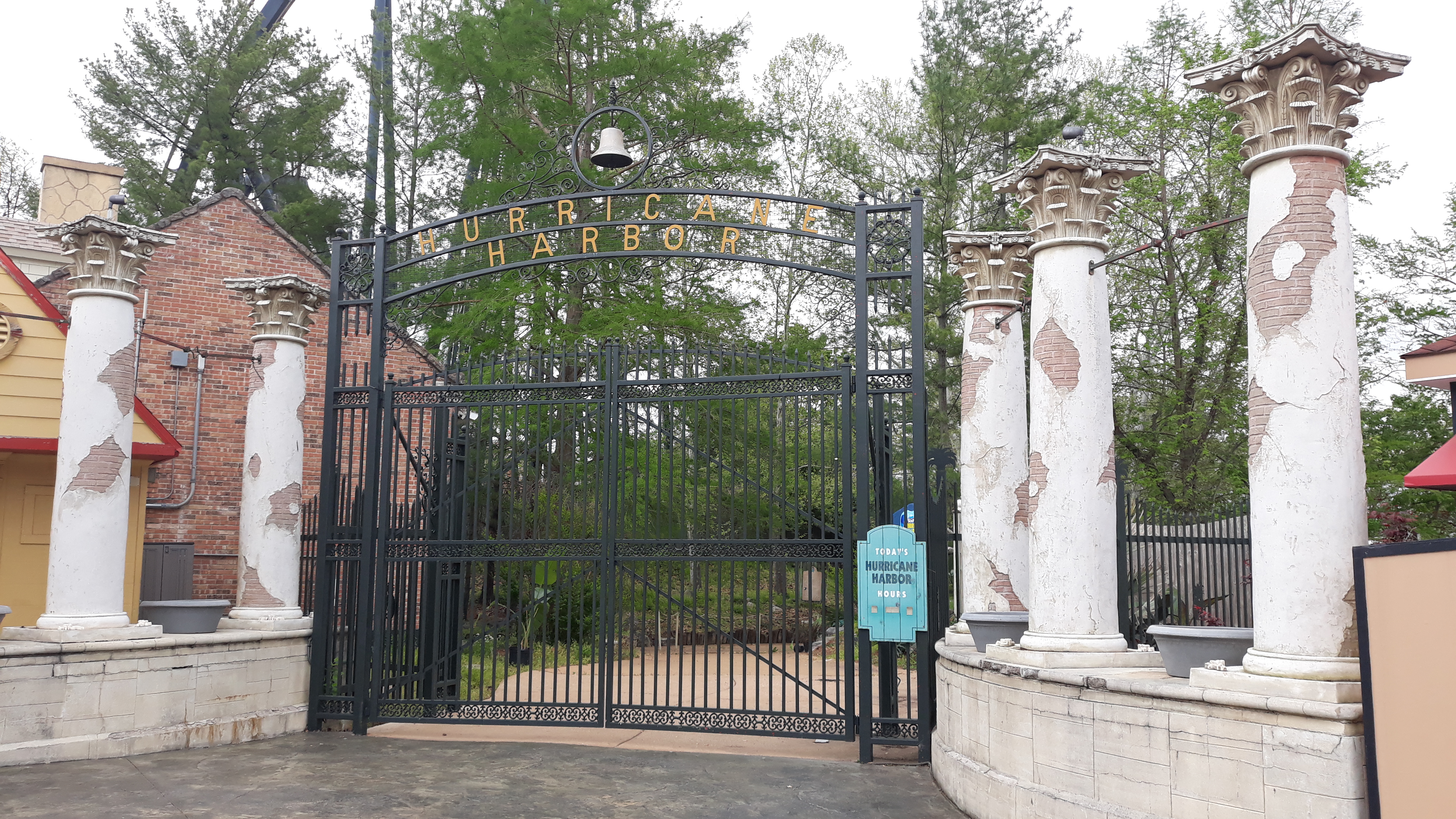
Fright Fest began in 1988 as 'Fright Nights' and has become one of the park's signature events, running from mid-September through Halloween with haunted attractions, scare zones, and live entertainment. The event celebrated its 30th anniversary in 2018. The 2020 season brought an unwanted fright of its own: the COVID-19 pandemic forced the cancellation of the traditional Fright Fest, replaced by HALLOWFEST with park capacity reduced to 25 percent and all indoor haunted houses swapped for outdoor, socially distanced alternatives. The park's seasonal calendar has expanded over the years with events like Star Spangled Nights on the Fourth of July and the summer Kids Weekend series introduced in 2023. The Hurricane Harbor water park, which opened adjacent to the main park on June 5, 1999, at a cost of $17 million, extended the park's warm-weather appeal across 12 additional acres.
A Park That Keeps Reshaping Itself
Six Flags St. Louis has never stopped evolving. In 2014, the park sold 180 acres of unused land to developer McBride & Sons, reducing the total property from 503 to 323 acres -- a pragmatic acknowledgment that a park's value lies in its experiences, not its empty acreage. The Grand Ole Carousel, a Philadelphia Toboggan Coasters creation that has been in the park since 1972 under four different names, underwent a multi-year refurbishment beginning in 2021 and reopened in July 2025. During the 2025 pre-season, 215 feet of The Boss's wooden track was replaced with modern Titan Track for a smoother ride. The newest major ride, Joker Carnival of Chaos, a Zamperla pendulum attraction, arrived in 2024. From the Colossus Ferris wheel, standing roughly 180 feet tall, riders can see the Missouri hills rolling west toward Eureka and east toward the distant St. Louis skyline -- a view that encompasses both the park's suburban setting and the metropolitan energy that has sustained it for over half a century.
From the Air
Located at 38.51°N, 90.68°W in Eureka, Missouri, approximately 30 miles west-southwest of downtown St. Louis along Interstate 44. The 323-acre park site is identifiable from the air by its roller coaster structures, parking lots, and the adjacent Hurricane Harbor water park. The Colossus Ferris wheel (approximately 180 feet tall) is the most prominent vertical structure. Spirit of St. Louis Airport (KSUS) is approximately 10 nm northeast. Lambert-St. Louis International Airport (KSTL) is about 25 nm northeast. The terrain is wooded Missouri hills at approximately 500-600 feet MSL. Best viewed from 2,000-4,000 feet in clear conditions, when individual ride structures become distinguishable.