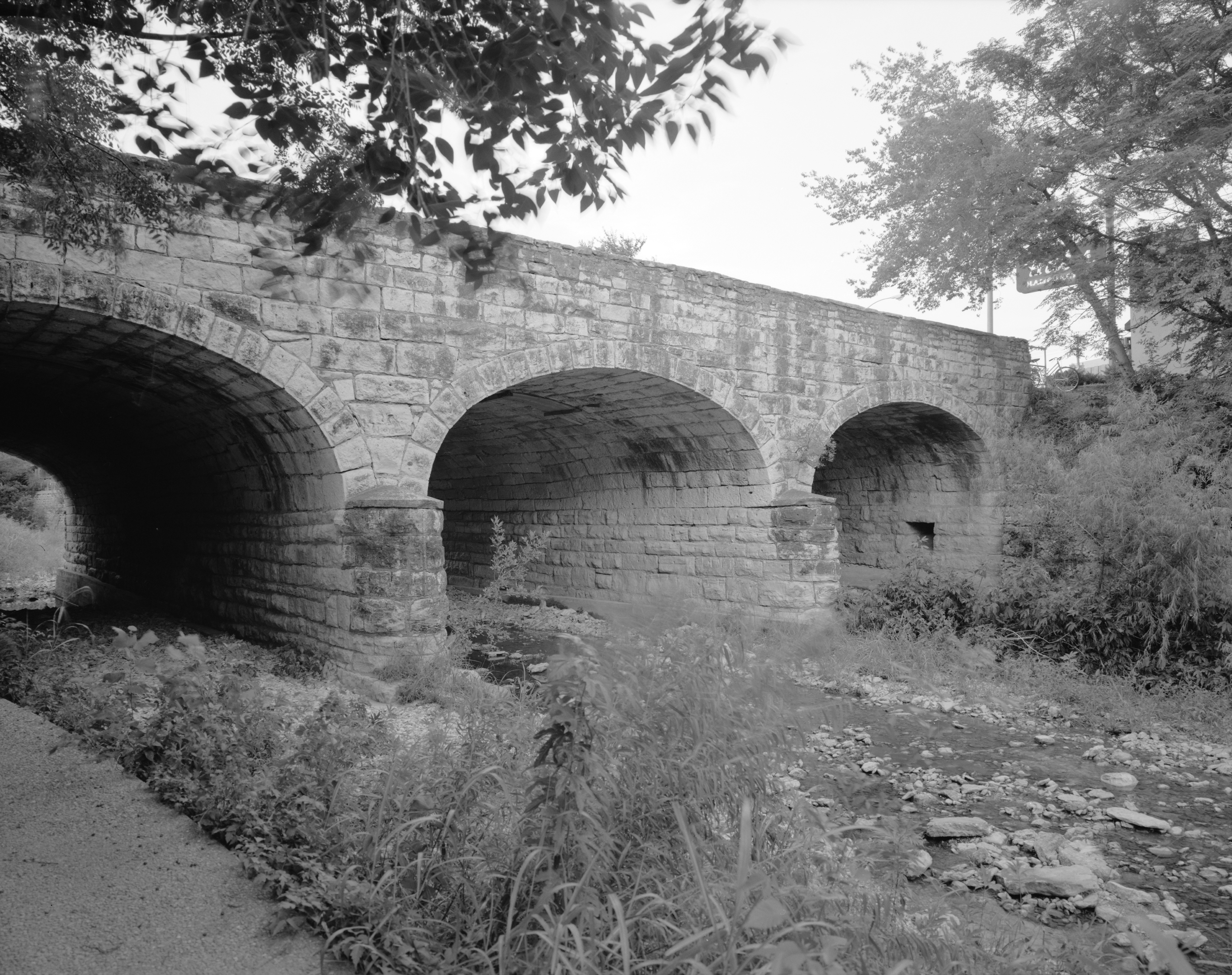
Sixth Street (Austin)
Before it was Sixth Street, it was Pecan Street -- named under Austin's original convention where east-west streets took the names of trees and north-south streets took the names of Texas rivers. The stagecoach that rolled into Austin in 1840 followed the Bastrop Highway straight down Pecan Street and stopped at the Bullock Hotel on the corner of Pecan and Congress, a complex of log buildings that served as the town's unofficial gathering place. That intersection became the focal point of Austin's early life, and in some ways it still is. The street survived frontier hardship, Civil War stagnation, postwar boom, mid-century decline, and near-total abandonment before reinventing itself as one of the most famous entertainment districts in the American South.
The Crossroads of a Young Republic
Edwin Waller laid out Austin on a 15-block grid bisected by Congress Avenue running north-south. Pecan Street had a natural advantage: it sat far enough from the Colorado River to escape the floods that sometimes spread as far as Cypress Street -- present-day Third Street -- yet it was the last east-west street flat enough for wagons and pedestrians to travel comfortably. Between 1850 and 1860, the town's population exploded, and Pecan Street filled with wagon yards, livery stables, and saloons to meet the needs of travelers. Austin's first bridge was built to carry Pecan Street across Shoal Creek in 1865, though the narrow iron footbridge, built by the United States Army, could not handle wagon traffic. A proper wagon-width bridge did not arrive until 1887, and that West Sixth Street Bridge remains in use today, listed on the National Register of Historic Places.
Limestone, Railroads, and the Merchant Class
The arrival of the railroad in 1871 transformed Sixth Street from a frontier main drag into a proper commercial center. Businesses positioned themselves near the depot, and demand for lots drove construction of two- and three-story limestone Victorian commercial buildings where one-story frame structures and vacant lots had stood. By the 1880s, the nine-block stretch that would become the Sixth Street Historic District had taken shape, listed on the National Register of Historic Places in 1975. The Driskill Hotel opened in 1886. Scarbrough and Hicks department store, founded at the corner of Sixth and Congress in 1893, built Austin's first modern skyscraper -- the eight-story Scarbrough Building -- in 1909. George Littlefield followed in 1911 with a nine-story brick and limestone building on the opposite corner to house his American Bank. A remarkable diversity characterized the street: by 1940, businesses on Sixth Street were owned by Black, Jewish, German, Chinese, Lebanese, Syrian, and Mexican-American proprietors.
Decline, Pawn Shops, and the Last Resident
After World War II, the commercial importance of East Sixth Street eroded steadily. Second-hand stores and discount chains replaced the established merchants, catering to a lower-income clientele. By the 1950s and 1960s, the multiplying pawn shops, loan companies, and dive bars gave the area a skid-row atmosphere. Buildings emptied. One of the last people to actually live on Sixth Street was local architect David Graeber, who purchased the building at 410 East Sixth and made it his family's residence until his death in 2010. His home included an indoor swimming pool and substantial sound mitigation -- necessary concessions to the noise of a street that was slowly, stubbornly coming back to life around him.
Pecan Street Revival
The resurrection began in the 1970s. A group of Austinites led by Dr. Emma Lou Linn, calling themselves the Old Pecan Street Association, started reclaiming abandoned buildings and renovating the Victorian storefronts. They needed money, and their solution was a street fair. In 1978, the first Pecan Street Festival brought local food vendors, artists, and bands to the historic corridor, honoring the street's original name. The festival became a biannual tradition, drawing more than 300,000 visitors and generating an estimated $43 million in economic impact by 2010. Bars and music venues proliferated. East Sixth Street, known locally as Dirty Sixth, became the epicenter of Austin's nightlife -- the stretch between Congress Avenue and Interstate 35 where traffic is blocked on weekend evenings to let the crowds spill freely between venues. South by Southwest, the Republic of Texas Biker Rally, and film festivals all orbit this strip.
Dirty Sixth and Beyond
Today Sixth Street is really three distinct districts. East Sixth -- Dirty Sixth -- is the raucous, neon-lit stretch of bars and live music that most visitors picture when they hear the name. West Sixth Street, west of Lavaca, has developed its own identity as a more upscale entertainment district. And the historic core in between holds the Victorian commercial buildings that earned the street its place on the National Register. The Ritz, a historic theater at 320 East Sixth that opened in 1929, has cycled through incarnations as a movie theater, music hall, club, and comedy house before reopening in 2007 as the downtown location for the Alamo Drafthouse Cinema. The street continues to evolve. In 2025, the beloved Pecan Street Festival moved from its founding home to the Hill Country Galleria in Bee Cave, marking yet another chapter in a corridor that has been reinventing itself since before Texas was a state.
From the Air
Sixth Street runs east-west through downtown Austin at 30.267N, 97.740W, visible from altitude as part of the dense urban grid between the Colorado River (Lady Bird Lake) to the south and the Texas State Capitol grounds to the north. The street intersects Congress Avenue, Austin's central north-south axis. Interstate 35 cuts through the eastern edge of the district. Austin-Bergstrom International Airport (KAUS) is approximately 6 nm to the southeast. Best viewed at 2,000-4,000 feet AGL. The capitol dome and Lady Bird Lake are primary visual landmarks for orientation.