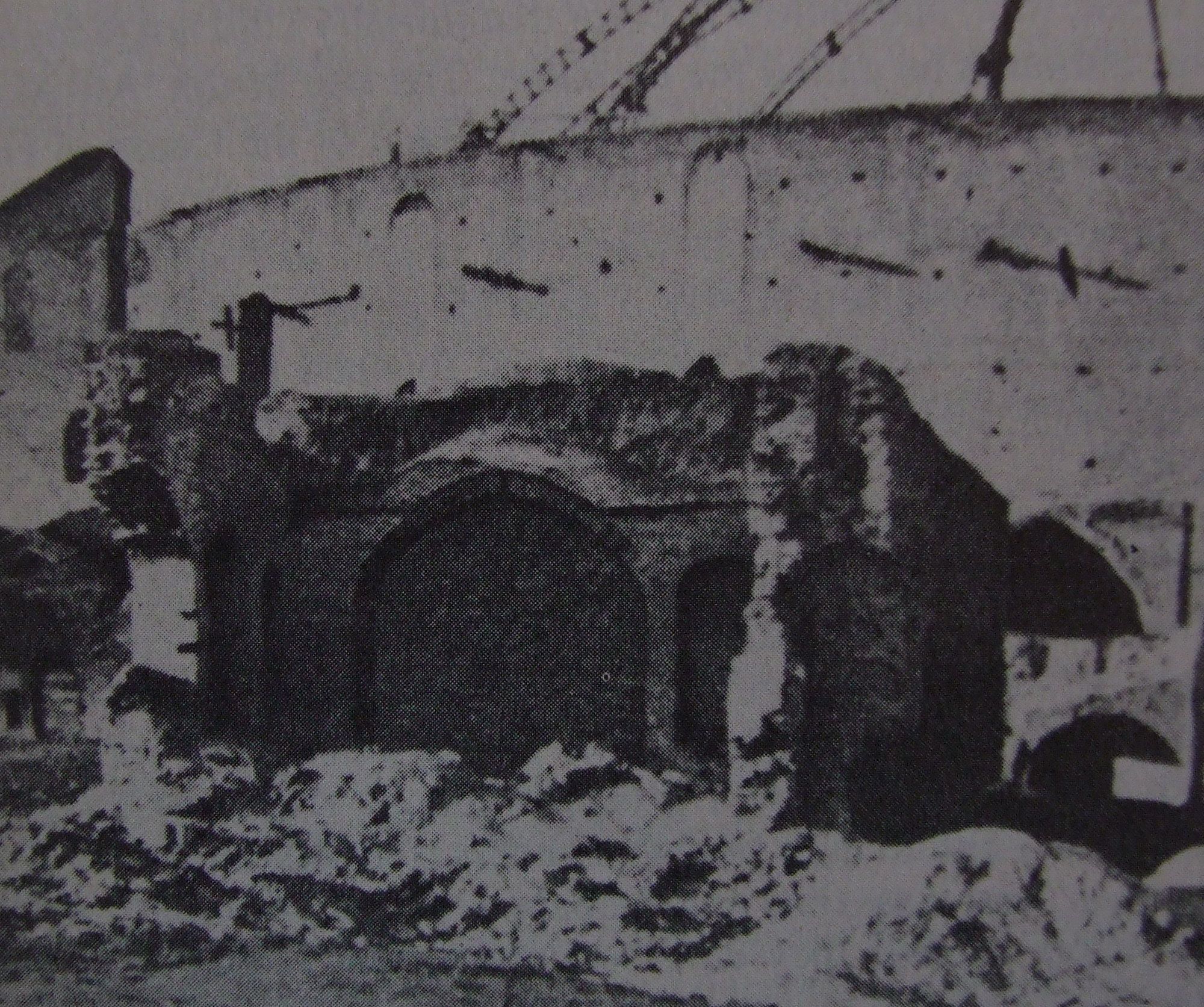
Siyah-Chal
Three flights of stairs descended into total darkness. At the bottom lay a discarded water cistern, converted into an underground dungeon, with no functioning latrine and no light. In the summer of 1852, up to 150 men were crammed into this hole southeast of Golestan Palace in Tehran. Among them was a nobleman named Baha'u'llah. He entered as a prisoner. He emerged, four months later, as the founder of a religion.
The Failed Assassination
On August 15, 1852, a radical faction of Babis attempted to assassinate Naser al-Din Shah Qajar. They failed. The conspirators were rounded up and executed, but their claim to have acted alone was ignored. The government seized the moment to launch a pogrom against the entire Babi community. Baha'u'llah, who had no connection to the plot, was swept up in the crackdown along with about thirty others. They were chained together and marched into the Siyah-Chal, the Black Pit, where they joined common criminals in conditions that defied description. The air was foul. The chains were heavy. Disease moved freely among the bodies packed into that lightless space.
Revelation in the Dark
According to Baha'u'llah's own accounts, it was in this pit, after roughly two months of imprisonment, that he experienced a series of mystical visions. He described seeing a maiden, a figure he called the Maid of Heaven, who revealed to him his mission as a messenger of God and as the one whose coming the Bab had prophesied. He composed his first known religious tablet, the Rashh-i-Ama, in the dungeon. For Baha'is, the Siyah-Chal is where their faith effectively began, making it the second holiest site in Iran after the house of the Bab in Shiraz. A world religion was born not in a temple or on a mountain, but in a converted cistern filled with prisoners.
Release and Exile
The Russian Empire's ambassador intervened, requesting that Baha'u'llah and others with no apparent connection to the assassination attempt be spared. After four months in the Siyah-Chal, Baha'u'llah was released on one condition: he had to leave Iran. It was the beginning of a lifetime of exile that would take him to Baghdad, Constantinople, Adrianople, and finally to Akka in Ottoman Palestine, where he would spend his remaining years. The sentence was meant as punishment. It became the mechanism through which the Baha'i Faith spread beyond Iran's borders.
Buried and Built Over
In 1868, the dungeon was filled in with earth. The Takyeh Dowlat, a grand royal theatre used for ta'zieh performances, was constructed over the site. The Siyah-Chal itself vanished beneath new foundations. From 1954 until the 1979 Islamic Revolution, the property was held by Baha'is. After the revolution, it passed to other hands. Today, the site bears little visible trace of the cistern that once held a future prophet. The stairs that descended into darkness are gone. The chains are gone. What remains is the story, and for millions of Baha'is worldwide, that story is the founding chapter of their faith.
From the Air
The Siyah-Chal site is located at 35.680N, 51.420E, southeast of the Golestan Palace complex in central Tehran. The original dungeon no longer exists above ground, having been filled in and built over in 1868. From the air, the location falls within the dense historic core of Tehran near the Grand Bazaar. Mehrabad International Airport (OIII) is approximately 9 km to the west. Best viewed at low altitude, 2,000-3,000 feet AGL, to appreciate the urban context around Golestan Palace.