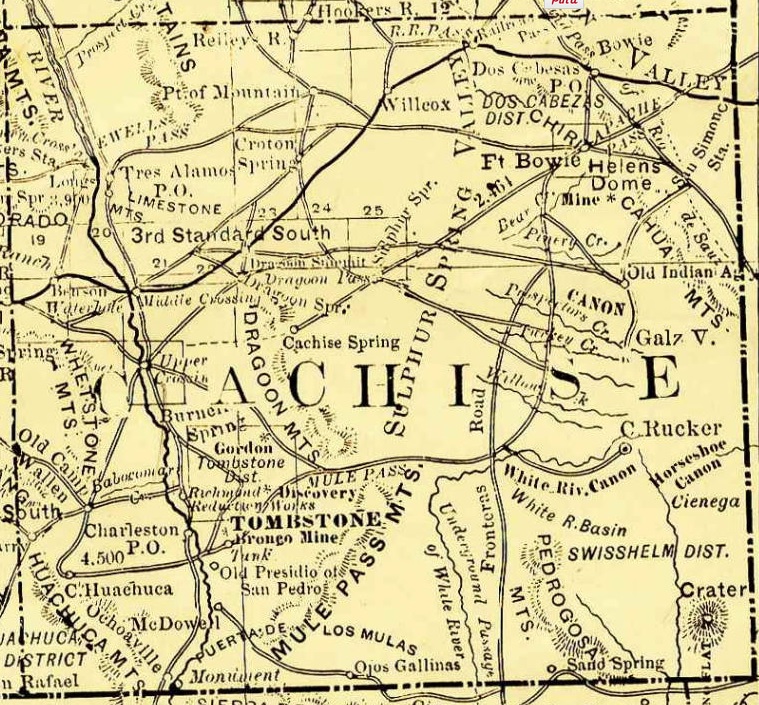
Skeleton Canyon Massacres
Johnny Ringo liked to talk. Years later, he would boast about what happened in Skeleton Canyon, ticking off names like a roll call of infamy: Old Man Clanton, Ike and Billy Clanton, Curly Bill Brocius, the McLaury brothers. These were the Cochise County Cowboys, and in this narrow passage through the Peloncillo Mountains, they ambushed Mexican lawmen and silver traders in two separate massacres that would ultimately seal their own fate.
The First Blood
In July 1879, cattle rustlers raided a rancho in northern Sonora, killing several inhabitants. The survivors reported to Commandant Francisco Neri, who dispatched a detachment of Rurales, Mexico's rural police force, under Captain Alfredo Carrillo. The Rurales crossed into Arizona in pursuit, entering Skeleton Canyon unaware that they had become the hunted. Shots erupted from the canyon walls. Of the large detachment that rode in, only three men rode out alive. The Mexican Government protested to President Chester Arthur, though they acknowledged their officers had crossed the border. No action was taken. The canyon had earned its name.
Silver and Ambush
Two years later, in July 1881, Curly Bill Brocius received word that Mexican traders carrying silver bullion were heading through Skeleton Canyon into Arizona. He gathered twenty men including Johnny Ringo and Jim Crane. The ambush was quick and profitable: four Mexicans dead, $4,000 in bullion and livestock stolen. But this time, the survivors made it back to Mexico with the names and descriptions of their attackers. Commandant Neri, perhaps remembering his slaughtered Rurales from 1879, acted decisively.
Revenge at Guadalupe Canyon
Two months after the second Skeleton Canyon massacre, Captain Carrillo led another detachment of Rurales across the border. This time, they had intelligence. The Cowboys were camped in Guadalupe Canyon, southeast of the Chiricahua Mountains, likely dividing their spoils. At dawn, the Rurales attacked. Five Cowboys died in the gunfire, including Old Man Clanton, the patriarch of the outlaw family, and Jim Crane, one of the Skeleton Canyon ambushers. The cycle of violence that began in these canyons would continue to ripple outward, contributing to the tensions that exploded months later at the O.K. Corral in Tombstone.
A Legacy of Violence
Skeleton Canyon connects the Animas Valley of New Mexico with Arizona's San Simon Valley, a natural corridor that invited travelers and outlaws alike. The Cochise County Cowboys controlled this borderland in the early 1880s, rustling cattle, robbing travelers, and operating with near impunity. The massacres here represent a particularly brutal chapter in their history, though the canyon's violence did not end with them. In 1896, another shootout would add more blood to these walls. Today the canyon remains remote, a quiet passage through the Peloncillo Mountains where the wind carries whispers of ambush and revenge.
From the Air
Located at 31.59N, 109.04W in the Peloncillo Mountains straddling the Arizona-New Mexico border. The canyon connects Animas Valley (NM) to San Simon Valley (AZ). Nearest airports: Douglas Municipal (KDUG, 35nm southwest), Lordsburg Municipal (KLSB, 45nm northeast). View from 3,000-5,000 AGL to see the canyon's full length and the valleys it connects. Terrain rises sharply; the Peloncillos reach 6,000+ feet. This is the same area as the Geronimo Surrender Site, just 2nm to the west.