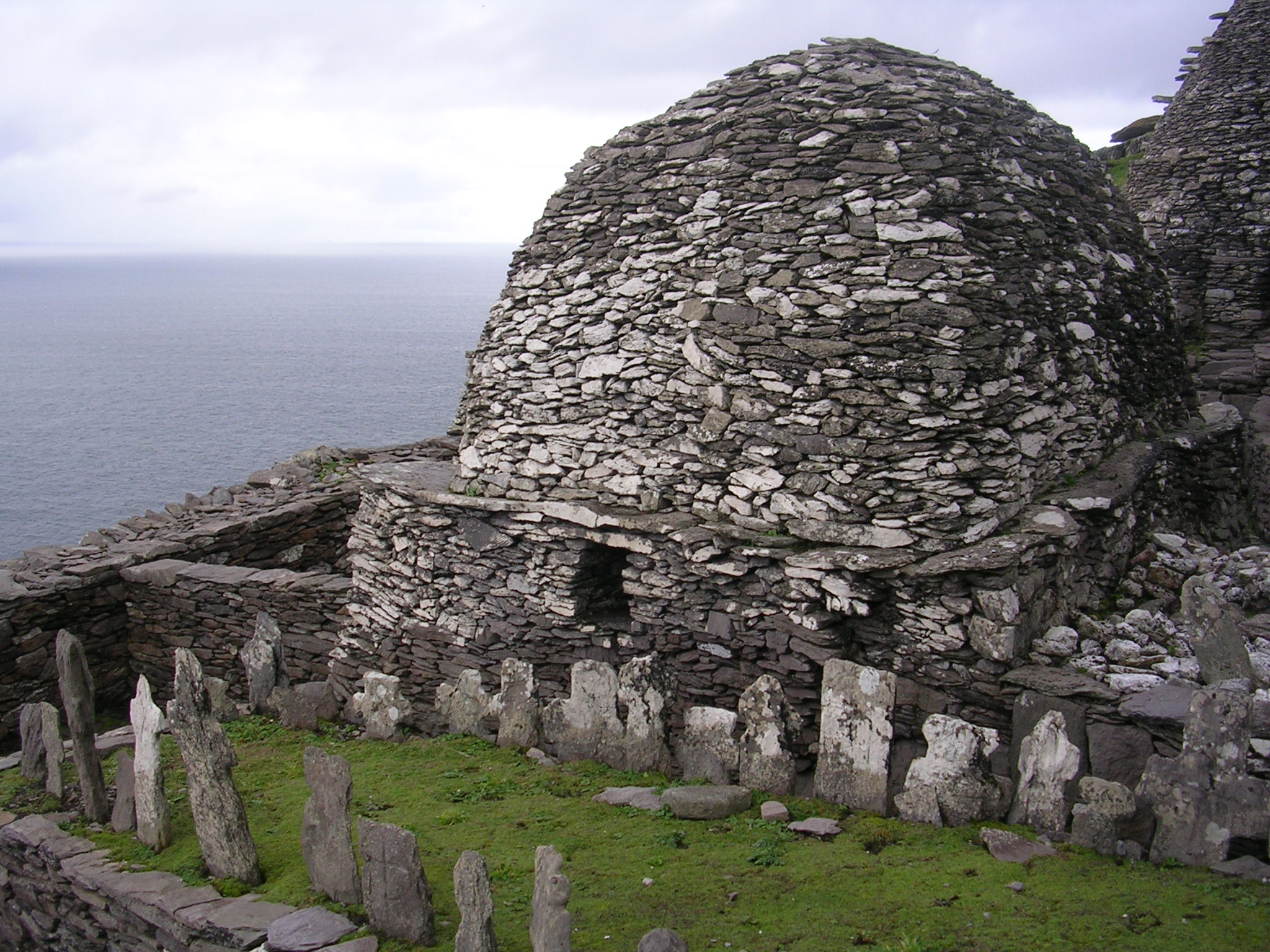
Skellig Michael
Here is the question Skellig Michael forces you to answer before you even leave the harbour: would you rather be on the mainland jetty wishing you could have gone out, or upchucking into the Atlantic wishing you had stayed ashore? The 45-minute boat crossing from Portmagee can be rough. The landing at Blind Man's Cove -- yes, that is its real name -- requires stepping from a rolling boat onto slick rock at the base of a sheer cliff. There are no toilets on the island, no food, no water, no mobile signal, and no safety rails on the 618 stone steps to the monastery. Only 180 people are permitted to land per day. And the waiting list stretches months into summer. People do not come here despite these obstacles. They come because of them.
Getting There (If the Sea Allows)
Boats sail from May to September, weather permitting, and the sea makes that decision fresh every morning. A ranger stationed on the island radios the mainland at dawn to advise whether it looks safe for boats to come. Only 15 licensed operators may land passengers, carrying a maximum of 12 per boat. Each operator has a fixed landing slot, so boats typically depart between 8:30 and 10:00 AM. You get two to three hours on the island before the return crossing. Expect to pay around 100 euros per person for a landing tour, or 40 euros for a non-landing "eco-trip" that circles the islands without attempting to put you ashore. The eco-trips offer more flexibility -- they can chase dolphin pods or linger near Little Skellig's gannet colony -- and they are far easier to book.
The Ascent
From Blind Man's Cove, the Lighthouse Road skirts the base of the cliffs south toward the helipad and the start of the South Steps -- the only passable route to the monastery. The original East Steps were dynamited during 19th-century lighthouse construction, and the North Steps are impassable. So you climb the South Steps: 618 of them, old, uneven, steep, with nothing between you and a precipitous drop but your own balance. In 2009, two tourists were killed in separate incidents by falling from the same spot near the head of the steps. The climb brings you to Christ's Saddle, the grassy depression between the island's two peaks, where the views alone justify the effort. From the saddle, a cliff-edge path leads to the monastery on the east peak. The hermitage on the south peak is off-limits.
What the Monks Left Behind
The monastery sits on a terraced ledge roughly 185 metres above the sea. Six corbelled beehive huts, two oratories, a cemetery, and a scattering of stone crosses survive in remarkable condition, dry-built without mortar and still weathertight after more than a thousand years. The island was probably settled as early as the sixth century, part of the great wave of Celtic Christian monasticism that pushed to the farthest edges of the known world. No more than twelve monks and an abbot lived here at any one time, growing vegetables in small garden terraces, eating fish and seabird eggs, and enduring Viking raids in 823 and 838 AD. By the 12th century, as the medieval climate worsened, they abandoned the island for the mainland abbey at Ballinskelligs. The monastery's UNESCO World Heritage designation came in 1996.
Feathers and Fins
The seabirds are everywhere -- storm petrels, fulmars, kittiwakes, guillemots, razorbills, and puffins nesting so close to the path that you could reach out and touch them (you absolutely should not). On the boat crossing, watch for grey seals, dolphins, and the occasional basking shark. Little Skellig, visible from the monastery as a white-capped rock roughly a kilometre away, hosts 35,000 pairs of gannets and was long considered utterly uninhabitable. But in 2020, archaeologists discovered remains of an oratory and dwellings for one or two monks -- hermits so committed to solitude that they apparently reached the islet by grappling hook and knotted rope. No steps were found.
Practical Wisdom
Bring food, water, and stout shoes. Eat your picnic near the helipad at the base of the steps, not at the monastery -- the seabirds will mob any food source and repay your generosity with guano. Have a Plan B ready before you even go to the jetty; trips are cancelled often enough that a backup itinerary prevents a wasted morning. Go easy on the drink the night before, for the obvious reason. And if the sea decides you are not going, accept it with grace. The monks chose this place precisely because it was hard to reach. The difficulty is not a bug; it is the entire point.
From the Air
Skellig Michael is located at 51.77N, 10.54W, roughly 12 km off the Iveragh Peninsula coast of County Kerry. From the air, the island's twin peaks and the white-capped Little Skellig nearby are distinctive landmarks. Kerry Airport (EIKY) is about 60 km northeast. Cork Airport (EICK) is approximately 130 km east. The island is best viewed at lower altitudes on clear days; the monastery is visible on the east peak terrace. Portmagee, the main departure point for boat tours, sits on the mainland opposite Valentia Island.