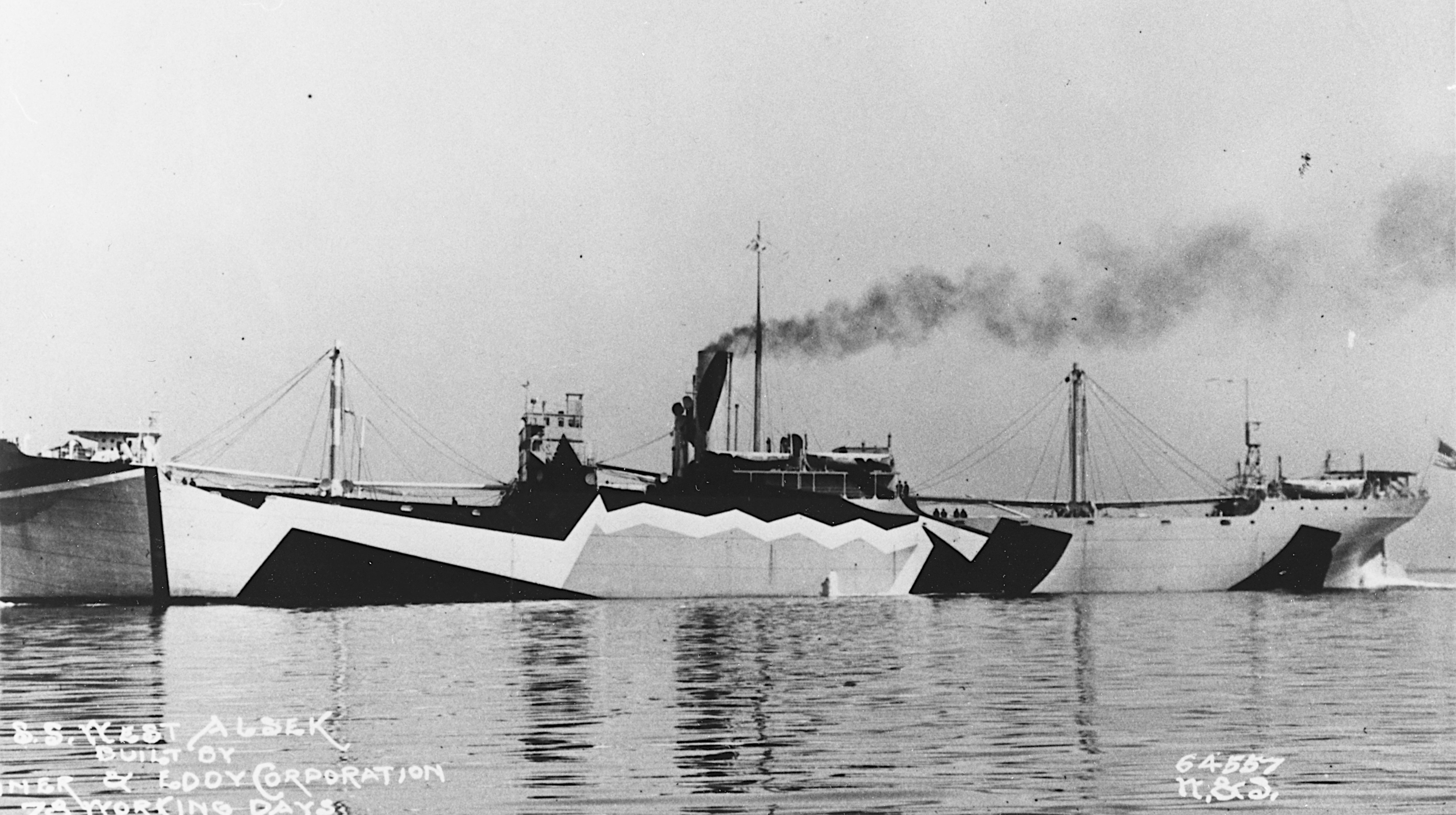
Skinner & Eddy
Seventy-nine days. That is how long it took Skinner & Eddy to lay a keel, build a steel cargo ship around it, and deliver the finished vessel to the United States government -- a world record at a time when 250 days was considered fast. The Seattle shipyard existed for barely seven years, from 1916 to 1923, yet in that brief span it produced 75 ships, outbuilt every other American yard during World War I, and helped transform a timber-town waterfront into an industrial powerhouse. Today, container terminals and the SoDo district cover the ground where those hulls once slid into Elliott Bay, and almost nothing visible remains of the operation that once employed thousands.
Two Mill Owners and a Waterfront Lease
David E. Skinner and John W. Eddy were lumber men, not shipbuilders. The pair had owned the Port Blakely Mill Company since 1903, and in January 1916 they founded a shipbuilding corporation on the downtown Seattle waterfront. Their first move was to lease the yard of the Seattle Construction and Drydock Company -- itself a successor to the Moran Brothers shipyard, which had been one of America's largest at the turn of the century and had built Seattle's first battleship in 1906. Fifteen months later, on April 6, 1917, the United States entered the war. Skinner & Eddy responded immediately, purchasing waterfront property from the Seattle Dock Company and the Centennial Flouring Mill for a combined $2.1 million and breaking ground on a second shipyard, Plant No. 2, just south of their leased facility. By June 1918, they had bought the original yard outright, naming it Plant No. 1.
The Fastest Yard in America
Under general manager David Rodgers, Skinner & Eddy turned shipbuilding into a race against the calendar. As early as June 1917, the yard completed a freighter, Stolt Nielson, in under 150 days -- a pace that would have impressed any rival. But the company kept accelerating. Every wartime vessel that followed came in well under 100 days, and by the armistice, the best keel-to-delivery time had been driven down to 79 days. In total, the corporation delivered 75 ships between 1916 and 1920: 72 cargo freighters and three oil tankers, including 32 completed for the Emergency Fleet Corporation. Skinner & Eddy built more ships for the U.S. war effort than any other American shipyard. The yard number sequence reached 76 -- they skipped number 13.
Lives on the Water
The ships Skinner & Eddy launched carried more than cargo; they carried decades of consequence. Only one vessel was lost to enemy action in the First World War. In the 1920s, three ships went down in maritime accidents, and seven more were scrapped during the 1930s as global shipping contracted. Then came World War II. Of the 64 Skinner & Eddy ships that saw service in the second conflict, 31 -- nearly half -- were destroyed by enemy action, most sunk by German U-boats in the Atlantic. Two others were deliberately scuttled as breakwaters during the Normandy invasion. The survivors were mostly scrapped in the late 1940s and 1950s. The last vessel still afloat was probably the Edray, transferred to the Soviet Union under Lend-Lease and finally broken up in 1967, more than fifty years after her keel was laid in Seattle.
From Shipyard to Hooverville
The postwar shipbuilding slump killed the yard by 1921, and the corporation formally closed its shipyards in 1923. Plant No. 2 was sold the following year to the Pacific Steamship Company, which built an office and passenger terminal on the site. The Admiral Line operated from there as well, running routes to Siberia and the Far East. But when the Great Depression struck in 1929, the waterfront property took on a grimmer identity: it became one of Seattle's Hoovervilles, a shantytown for the unemployed. World War II razed the Hooverville and replaced it with a massive Army Quartermaster Corps supply depot. After the war, the U.S. Coast Guard took over the site. Skinner & Eddy's Plant No. 1, meanwhile, was absorbed into what is now Seattle's SoDo industrial district.
Ghosts Beneath the Cranes
Skinner & Eddy itself lingered on as a shipping line operator for decades, apparently winding down in the early 1970s. The waterfront it once dominated now handles container ships rather than hand-riveted freighters, and no historical marker identifies where the slipways stood. Yet the ground remembers its layers: a lumber baron's gamble, a wartime industrial miracle, a Depression-era encampment, a military depot, and finally the modern port. From the air, the SoDo waterfront south of downtown Seattle is a geometry of container cranes and rail yards -- a landscape shaped, in part, by two mill owners who decided they could build ships faster than anyone alive.
From the Air
The former Skinner & Eddy shipyard sites lie along the Seattle waterfront at approximately 47.5902°N, 122.3394°W, in what is now the SoDo industrial district south of downtown. The area is recognizable from the air by its container terminals and rail infrastructure along Elliott Bay. Nearest airports: Boeing Field / King County International (KBFI), approximately 2 nm south-southeast; Seattle-Tacoma International (KSEA), approximately 9 nm south. Best viewed at 2,000-3,000 feet AGL. The waterfront runs roughly north-south, and the former yard locations lie between the current container terminals and the SoDo rail corridor.