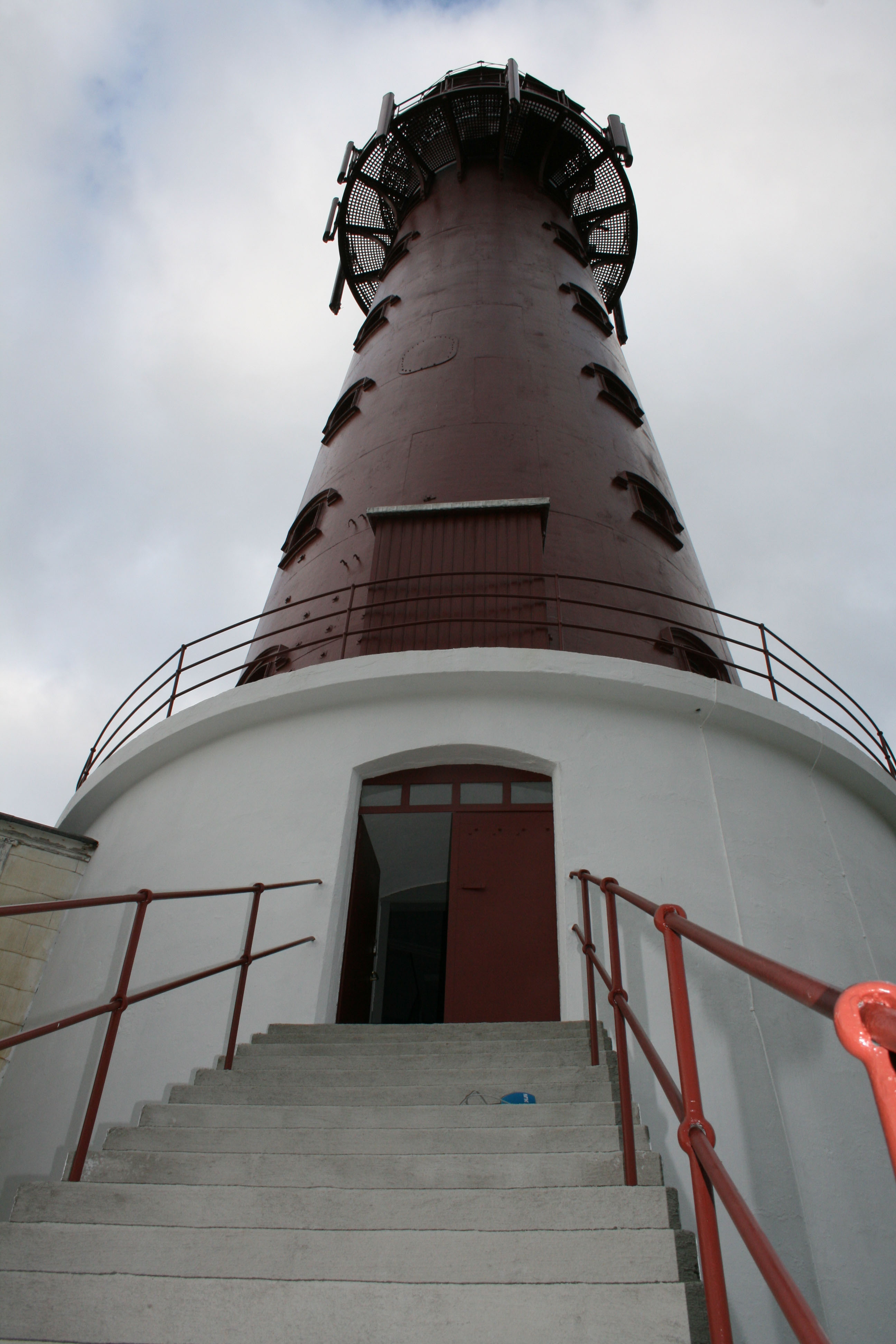
Skomvær Lighthouse
For nine months of the year, two white flashes pulse every thirty seconds from the outermost island of the Røst archipelago, visible for nearly 19 nautical miles in every direction. Then, in early May, the light goes dark. It stays dark until August. This is not a malfunction. At 67 degrees north latitude, the sun simply refuses to set, and a lighthouse with over two million candelas of output becomes, for a few bright weeks, redundant. Skomvær Lighthouse is the rare navigational aid that takes a summer vacation.
Red Tower on White Stone
The lighthouse stands on the island of Skomvær, roughly 15 kilometers southwest of Røstlandet, the main island in the Røst archipelago at the very tip of the Lofoten chain. Established in 1887, the station was a response to the treacherous waters surrounding these outermost islands, where the Norwegian Sea meets the Vestfjorden and currents collide unpredictably. The tower itself is a striking structure: 31.7 meters of red cast iron rising from a circular white stone base. At its full height, the light sits 47 meters above sea level, giving it the reach to warn ships well before they enter the dangerous shallows. The area was designated a protected site in 1999, recognizing not just the lighthouse but the entire cluster of buildings and landscape as a cultural monument worth preserving.
A Namesake at Sea
The steel-hulled barque Skomvær took her name from this lighthouse, a common practice in an era when ships and the lights that guided them were bound together in the public imagination. Sailing vessels like the Skomvær depended on coastal beacons for survival, and naming a ship after one was both tribute and talisman. The lighthouse, for its part, outlasted most of the ships it was built to protect. Automation came in 1978, ending 91 years of continuous human presence on the island. The keepers who had tended the light through Arctic winters, maintaining the mechanism and keeping the lantern clean against the salt spray, were replaced by electrical timers and remote monitoring systems.
Where the Midnight Sun Trumps Technology
Skomvær's seasonal operation is a function of pure astronomy. From early May until early August, the sun at this latitude either does not set at all or dips so briefly below the horizon that darkness never arrives. The Norwegian Coastal Administration accordingly operates the light only from August 4 through May 2, from dusk to sunrise. During the operational months, the two-million-candela beam - among the most powerful on Norway's coast - throws its paired flashes across open water that can be savage. Winter storms drive waves against the island's low rocks with tremendous force, and the light's reach of 18.7 nautical miles is not an extravagance but a necessity. Ships rounding the Lofoten Wall, as the archipelago's outer face is sometimes called, need every second of warning these waters allow.
Sentinel at the End of the Chain
The Lofoten archipelago stretches like a ragged spine into the Norwegian Sea, and Røst sits at its southernmost extremity, separated from the main chain by the Moskenesstraumen, one of the world's strongest tidal currents. Skomvær, further still, is the final outpost. From the air, the island appears as little more than a dark smudge in a vast expanse of grey-blue water, the red tower its only vertical feature. Seabirds outnumber any other inhabitants by orders of magnitude. The lighthouse complex, with its cluster of service buildings around the tower, has the look of a small village abandoned by everyone except the wind. Yet the light continues its work, flashing faithfully through the long polar night, then yielding gracefully to the one force that can make a two-million-candela beam irrelevant: the Arctic sun itself.
From the Air
Located at 67.41°N, 11.87°E on the island of Skomvær at the southwestern tip of the Røst archipelago, the outermost point of the Lofoten chain in Nordland county, Norway. Best viewed at 2,000-4,000 feet altitude. The red tower on its white stone base is visible against the low rocky island. The surrounding Lofoten archipelago provides dramatic scenery. Nearest airport: Røst Airport (ENRS) approximately 15 km northeast on Røstlandet; Leknes Airport (ENLK) approximately 100 km northeast. Expect strong winds and challenging weather, particularly in winter months.