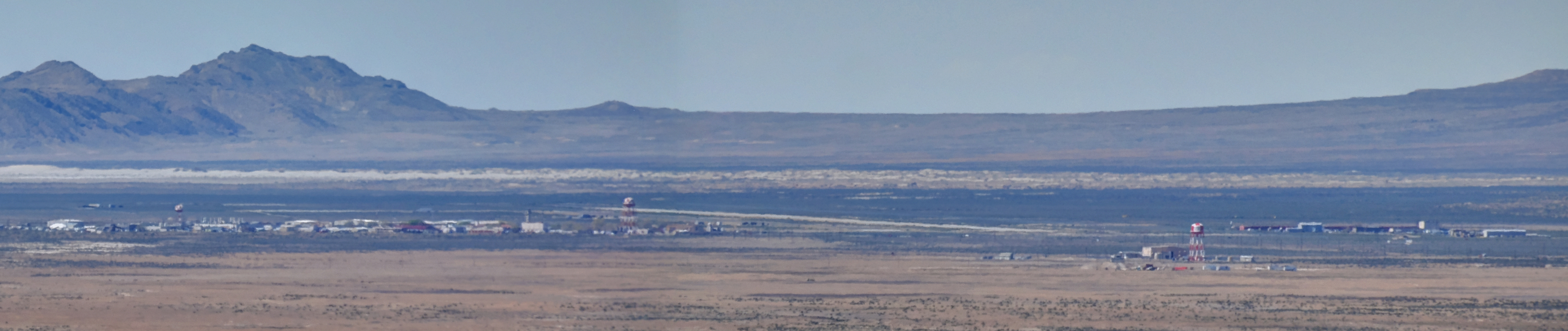
Skull Valley Indian Reservation
The Goshute call it Wepayuttax. The name, in their dialect, carries the weight of centuries spent surviving in one of the harshest landscapes in North America. Today, only fifteen to twenty people live on the Skull Valley Indian Reservation, a small patch of high desert in Tooele County, Utah, roughly fifty miles southwest of Salt Lake City. The 134 registered members of the Skull Valley Band of Goshute Indians represent one of the smallest federally recognized tribes in the country, their reservation an island of sovereignty surrounded by some of the most toxic facilities the federal government has ever created.
Survivors of the Wasteland
Spanish missionaries arrived in 1776, followed by fur trappers and the legendary Jedediah Smith. But the real devastation came with the Mormon settlers in 1847. White colonizers called the Goshute "diggers" and described them in dehumanizing terms. Mark Twain, passing through, dismissed them as "the wretchedest type of mankind." What the outsiders failed to understand was that the Goshute had mastered survival in a landscape that would kill the unprepared. Brigham Young requested that the federal government relocate all Native Americans to reservations "where white men do not dwell." The Mormons took the prime land near streams and canyons, pushing the Goshute into ever more desolate country. By 1853, Tooele had over 600 white settlers. Smallpox and measles swept through the Goshute population. Raids and reprisals left bodies on both sides.
A Toxic Embrace
The land the Goshute retained became an unintentional sacrifice zone. On nearly every side of the reservation, the federal government established facilities dealing in death. A hazardous waste landfill. The Deseret Chemical Depot, storing nerve agents among the most lethal substances ever created. The Intermountain Power Project, releasing airborne toxins. In March 1968, the Dugway sheep incident killed 6,000 sheep belonging to Skull Valley Goshute ranchers. The animals died from exposure to VX nerve agent being tested at the nearby proving ground. The Army never admitted fault, though a 1970 report concluded the evidence of nerve gas contamination was incontrovertible. The Goshute had survived Spanish slavers, Mormon encroachment, and federal neglect. Now they lived surrounded by chemical weapons and industrial waste.
The Nuclear Gambit
In 1987, Congress created the Office of Nuclear Waste Negotiator to find communities willing to store high-level radioactive waste. Letters went out to every federally recognized tribe, offering millions of dollars. Most refused. The Skull Valley Band, seeing few economic alternatives in their remote desert, applied for grants under the Nuclear Waste Policy Act. The money took tribal leaders on world tours of nuclear facilities from California to Japan, France to Sweden. By 1997, the Bureau of Indian Affairs had approved a lease for Private Fuel Storage to build a temporary repository on the reservation. For a decade, the proposal crawled through regulatory review while opposition mounted. Utah's governors objected. The Air Force worried about flight paths to the nearby test range. Environmental groups and 71 other tribes spoke out against it.
The Meltdown
The nuclear money tore the tiny tribe apart. Tribal chairman Leon Bear faced fraud charges for misappropriating Private Fuel Storage funds, ultimately pleading guilty to lesser charges. His uncle Lawrence Bear served as chairman, then Leon returned, then Lawrence again. A soft coup in 2001 saw three tribal members withdraw over $45,000 and attempt to transfer hundreds of thousands more to a fabricated organization. By 2006, the Salt Lake Tribune described the tribe as "in meltdown." The development office sat locked with mail piling up. Vice Chairman Lori Bear resigned, tired of working with what she called a "king" while being forced to sign blank checks. Leon Bear declared himself "chief for life." The BIA threatened intervention. When Private Fuel Storage finally terminated its license in 2012, the dream of nuclear prosperity died with it.
Endurance
Lawrence Bear died in 2010. His daughter Lori Bear Skiby was elected chairwoman in 2011 and established a formal federal court system in 2013. The tribe persists, as it always has. Flash floods still threaten, as they have since 1878. The 2013 Patch Springs Fire left the watershed scarred, and mudflows damaged the reservation's water system. Jersey barriers were overtopped by debris flows. But the Goshute have weathered worse. They survived centuries of displacement and discrimination. They outlasted the nuclear gamble. The reservation remains, a fragment of ancestral land in a valley named for the bones of those who came before, a testament to the stubborn persistence of a people who refused to disappear.
From the Air
The Skull Valley Indian Reservation lies at approximately 40.40N, 112.72W in the western Utah desert, about 50 miles southwest of Salt Lake City. From altitude, the valley appears as a long north-south trough between the Stansbury and Cedar Mountains. The reservation is difficult to distinguish from the surrounding BLM land, but the nearby Dugway Proving Ground and Deseret Chemical Depot are visible as large restricted areas to the south and west. Nearest airports include Salt Lake City International (KSLC) to the northeast and Wendover (KENV) to the west. Best viewed at 5,000-8,000 feet AGL. The stark, treeless desert terrain is characteristic of the Great Basin.