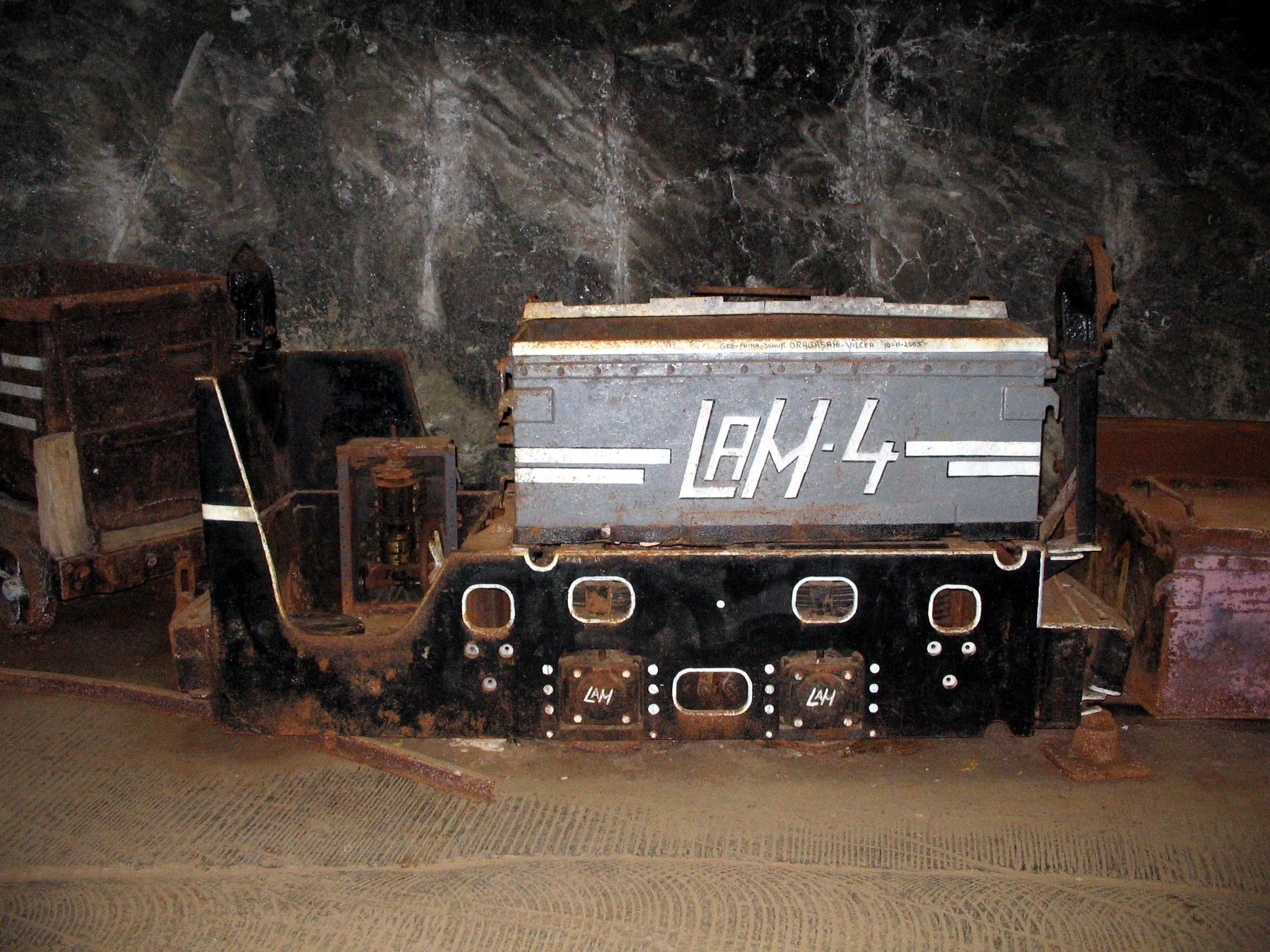
Slanic Mine
Somewhere beneath the hills of Prahova County, 100 kilometers north of Bucharest, there is a room carved entirely from salt where someone has set up ping-pong tables. Nearby, salt sculptures of the ancient Dacian king Decebal and the Roman emperor Trajan stare at each other across a chamber called Genesis Hall, continuing a rivalry that ended two millennia ago. Welcome to the Slanic mine, where three centuries of industrial extraction have left behind an underground space so vast -- 2.9 million cubic meters spread across 78,000 square meters -- that it has become a destination for tourists, athletes, and patients seeking relief from respiratory illness in air that never rises above 12 degrees Celsius.
Salt Beneath Empires
The story of Slanic's salt begins in 1685, when a Spatar -- a high-ranking Wallachian official -- purchased the estate with the intention of mining it. The first mine opened on Valea Verde in 1688, and additional operations at Baia Baciului followed between 1689 and 1691. In 1713, the Cantacuzino family donated the mines and the surrounding estate to the Coltea Monastery in Bucharest. The operation remained relatively modest until 1852, when Prince Barbu Stirbei of Wallachia met with Emperor Franz Joseph of Austria and requested an expert mining engineer. Carol Karacsony, the engineer dispatched to Slanic, studied the geology and proposed adopting the trapezoidal chamber profile method pioneered at Poland's Wieliczka Salt Mine. His approach gave Slanic its modern form. A mine called Sistematica opened on the western slope, followed by the Carol I mine in 1867 and the Mihai mine in 1912. Each generation dug deeper.
Cathedral Underground
The Unirea mine, the deepest and largest level, began operations in 1943 beneath the older Carol I and Mihai workings. Salt was removed in layers of 2.2 meters, cut from the ceiling downward, with the rock broken apart by controlled blasts and hauled to the surface by cage elevator. When extraction ceased in 1970, the miners left behind 14 chambers with trapezoidal profiles and walls angled at 60 degrees. The elevator shaft, designed without any metallic parts to prevent rust from corroding in the salt-laden air, once carried visitors from the surface to the mine floor in 90 seconds. After an elevator accident in 2014, minivans now spiral passengers up and down the access road instead. Wooden balconies ring the ceilings of the chambers, used by engineers who periodically inspect the stability of the salt walls above. Zones deemed uncertain are roped off -- a reminder that this is not a building designed for human comfort, but a void left by industrial removal.
Breathing Underground
Since 1970, the Slanic mine has drawn visitors who come not for the spectacle but for the air. The underground microclimate maintains a constant temperature of 12 degrees Celsius, atmospheric pressure of 730 mmHg, and humidity roughly ten percent lower than the surface. The air is rich in salt aerosols and free of the allergens, pollutants, and pollen that afflict the world above. Some believe these conditions benefit people with respiratory diseases, and one section of the mine is reserved for medical patients, particularly those with lung conditions, who come to rest in the salt-scrubbed atmosphere. Above the Unirea level, the Mihai mine -- the first in Romania to have electric lighting -- hosts a different kind of visitor. Since 1970, its six trapezoidal chambers have served as venues for national and international aeromodeling contests, the stable air and vast enclosed space providing ideal conditions for remote-controlled flight.
The Flood and the Fix
In the autumn of 1994, disaster arrived as water. Groundwater and rain infiltrated both mine levels, dissolving the salt walls and flooding the Unirea chambers. The aggressive flow carved enormous cavities through the structure, and specialists who assessed the damage recommended closing the mine entirely. Eugen Scrob, a researcher at the national mining institute, refused to accept the verdict. Working with the Slanic miners, he developed an experimental method to stabilize the collapsing chambers. Over four years, the team regulated the stream bed that was channeling water into the mine, monitored the shifting ground through constant drilling, and pumped massive quantities of concrete into the cavities and along the shaft walls. The entire effort cost over 20 billion old Romanian lei -- roughly 2 million new lei -- paid entirely by the mine itself, with no government funding. On July 31, 1998, the drained and reinforced mine reopened to the public, its salt walls still standing, still cool, still breathing that particular air.
From the Air
The Slanic mine is located at 45.236N, 25.943E in Prahova County, Romania, approximately 100 km north of Bucharest in the Sub-Carpathian hills. From altitude, the town of Slanic is visible in a valley surrounded by forested hills. The nearest major airport is Bucharest Henri Coanda International Airport (LROP), about 100 km to the south. Brasov-Ghimbav International Airport (LRBV) is approximately 80 km to the northwest. The terrain is hilly and forested, part of the transition zone between the Wallachian Plain and the Southern Carpathians. Weather is continental; summer offers good visibility, while autumn and winter can bring fog in the valleys.