Slave Island
In 2023, Sri Lanka's Prime Minister instructed government agencies to stop using the name "Slave Island" and to call this Colombo neighborhood by its official name: Kompagngna Veediya. The directive acknowledged what the old name had always broadcast in plain English - that this was where the Portuguese colonial administration held enslaved people, most of them seized from the Swahili coast and Portuguese East Africa. Some of those captives eventually returned to Africa. Others remained, and their descendants, known as Sri Lankan Kaffirs, are scattered across the island today. The name change cannot undo that history, but it shifts whose story the neighborhood tells. For centuries, the name centered the institution. Now, perhaps, it can center the people.
The Names This Place Has Carried
Every colonial power gave this neighborhood a different name, each one revealing what they saw when they looked at it. Under Portuguese rule, it was the holding area for enslaved Africans brought across the Indian Ocean - a place defined by captivity. The Dutch called it Javanam Quarters, or Javanese Quarter, reflecting the Southeast Asian communities they settled here to serve the Dutch East India Company's operations. Kampong Kertel and Kompanna Veediya - Company Roads - followed, linking the district to the commercial machinery of empire. The British coined "Slave Island," not because they were the ones who enslaved people here, but because the earlier cruelty was the most notable thing they saw. Each name is a colonial fingerprint. The 2023 decision to standardize the name as Kompagngna Veediya in all three official languages represents an attempt to let the neighborhood define itself.
A Quarter for Everyone and No One
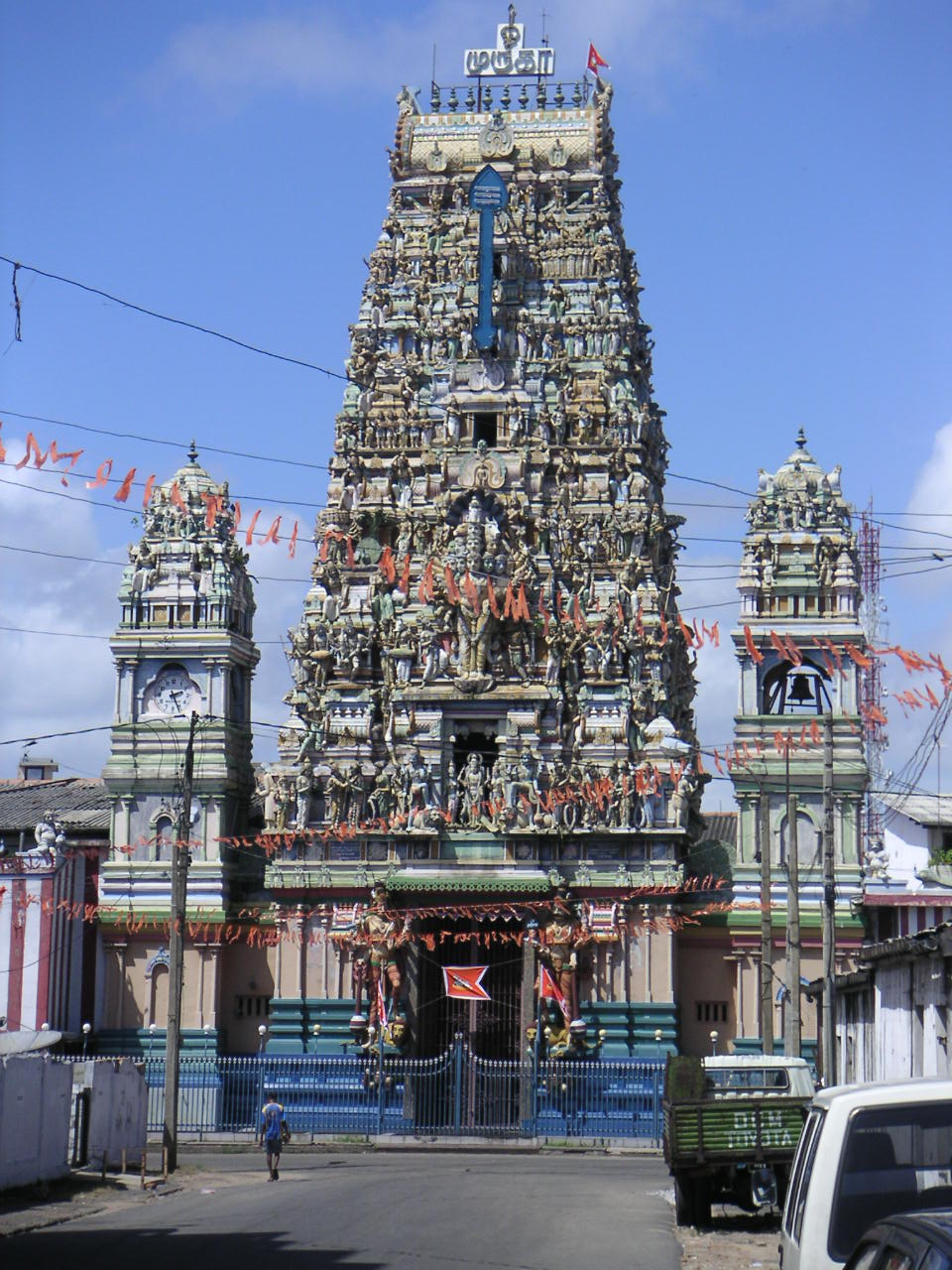
Outsiders have long called Kompagngna Veediya a Malay neighborhood, and Sri Lankan Malays are indeed among its largest communities. But the label has always been reductive. Walk through Company Roads today and you encounter mosques, Buddhist temples, Hindu kovils, and Christian churches within blocks of one another. The Seema Malakaya of the Gangarama Temple rises from the waters of Beira Lake, a modernist meditation hall surrounded by the honking traffic of a commercial district. Sri Lankan Muslims, Sinhalese, Burghers, and smaller communities of Bengali, Afghan, Marwari, Burmese, and Chinese descent have all called this neighborhood home at various points during and after the colonial period. The diversity is not accidental - this was the quarter where the colonial administration housed the people it brought from across Asia and Africa, and their descendants built lives that outlasted the empires that displaced them.
Independence Planned in a Shophouse
Among the buildings threatened by redevelopment are the shophouse-style structures on Justice Akbar Mawatha. These unremarkable-looking commercial buildings are said to be where D.R. Wijewardene, D.S. Senanayake, and Oliver Goonetilleke met to discuss the constitutional reforms that led to Sri Lanka's independence in 1948. The irony is pointed: the neighborhood named for enslaved people may have been where the nation's freedom was planned. But most of these buildings are not protected. Despite their architectural and historic value, they have been poorly maintained, and high-rise development is consuming the area block by block. The Global Press Journal reported residents expressing mixed emotions - pride in their community, frustration at neglect, resignation at displacement. What replaces the shophouses will be taller and newer. Whether it will carry any memory of what stood there before is another question.
Beira Lake and the Living City
At the neighborhood's heart lies Beira Lake, a body of water that once formed part of the fort's defensive system and now serves as Colombo's most prominent urban lake. Its esplanade draws walkers, joggers, and families seeking relief from the city's equatorial heat. Street food stalls line the commercial streets nearby, offering lamprais, kottu roti, and Malay-influenced dishes that reflect the neighborhood's layered heritage. Hotels and shopping centers have multiplied along the main roads, signs of the same commercial pressure that threatens the historic buildings. Kompagngna Veediya sits just south of the Fort district, connected to Colombo's administrative and financial heart by geography and by the same colonial history that shaped both neighborhoods. The Rifle Barracks and the Sri Lanka Electrical and Mechanical Engineers maintain a military presence here, another echo of the area's centuries-long entanglement with the machinery of state power.
From the Air
Located at 6.927°N, 79.849°E, immediately south of Colombo's Fort district. From the air, Beira Lake is the dominant landmark - a large body of water in the middle of dense urban development. The neighborhood sits between the Fort's harbor area to the north and the residential districts stretching south. Bandaranaike International Airport (VCBI) lies 30 km north. Ratmalana Airport (VCCC) is 12 km south. Best viewed at 2,000-4,000 ft. Weather is tropical year-round. The Gangarama Temple's Seema Malakaya on the lake is visible as a distinctive structure on the water.