Sleepy Hollow
Sleepy Hollow, New York, had a perfectly good name - North Tarrytown - until 1996, when residents voted to rename the village after Washington Irving's 1820 story 'The Legend of Sleepy Hollow.' It was a practical decision: tourists kept coming to see the village of the Headless Horseman, and they kept ending up in nearby Tarrytown instead. Now the village owns its legend. Halloween brings 30,000 visitors for haunted hayrides, cemetery tours, and Great Jack O'Lantern Blazes. The Old Dutch Church where Ichabod Crane was supposedly chased by the horseman still stands. Sleepy Hollow Cemetery holds Washington Irving himself, along with Andrew Carnegie, William Rockefeller, and other Gilded Age magnates. The village has monetized a literary ghost story more successfully than any place since Transylvania, though the horseman remains, thankfully, fictional.
The Story
Washington Irving's 'The Legend of Sleepy Hollow' appeared in 1820 in 'The Sketch Book of Geoffrey Crayon, Gent.' The tale follows Ichabod Crane, a superstitious Connecticut schoolmaster teaching in the Dutch settlement of Tarry Town. Competing for the hand of Katrina Van Tassel against local bully Brom Bones, Ichabod is chased one night by a spectral horseman carrying his own head. The horse and rider pursue Ichabod toward the old church bridge, where ghosts supposedly cannot pass. Ichabod is never seen again; a smashed pumpkin is found nearby. Irving drew on local Dutch folklore and his own wanderings around Tarrytown. The story became instantly famous.
The Place
Irving knew the area intimately. He lived at Sunnyside, his estate on the Hudson River just south of what is now Sleepy Hollow. The Old Dutch Church of Sleepy Hollow (1685) is the oldest church in New York and appears in the story. The bridge where Ichabod met the horseman is traditionally identified as a crossing near the church, though the original wooden bridge is long gone. Sleepy Hollow Cemetery, adjacent to the church, was established in 1849 partly due to the area's literary fame. Irving chose to be buried there himself, creating layers of literary pilgrimage.
The Cemetery
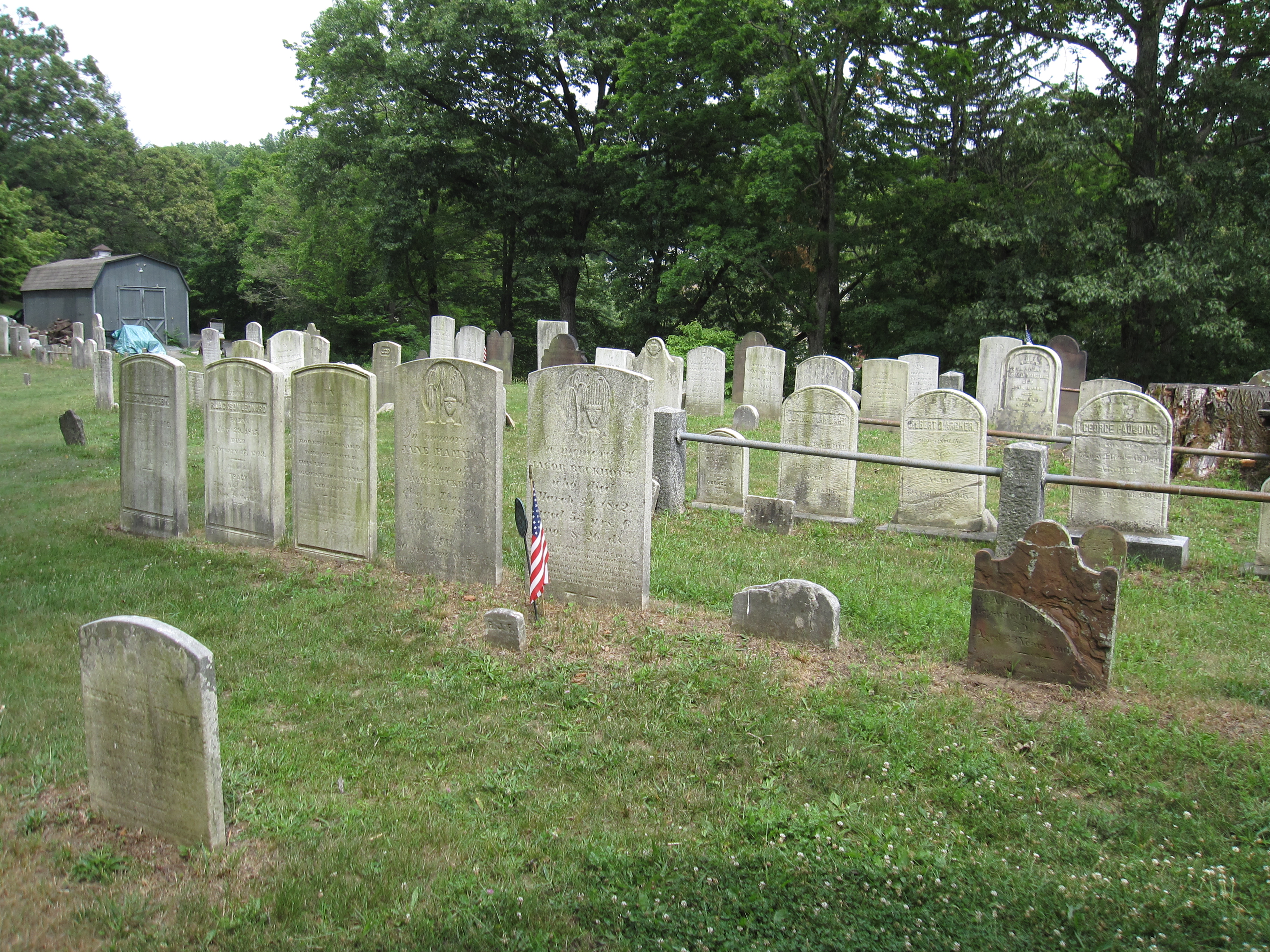
Sleepy Hollow Cemetery became fashionable in the 19th century as part of the rural cemetery movement. Its location - already famous from Irving's story - made it desirable. The roll call of burials reads like a Gilded Age Who's Who: Andrew Carnegie (steel), William Rockefeller (oil), Walter Chrysler (automobiles), Brooke Astor (philanthropy), and Samuel Gompers (labor). Washington Irving's grave, marked by a modest headstone, receives the most visitors. The cemetery sprawls across 90 acres of wooded hillside with views of the Hudson; it's one of the most beautiful burial grounds in America, and also one of the most haunted, at least in reputation.
The Industry
Sleepy Hollow has made Halloween a core industry. The Great Jack O'Lantern Blaze (held at nearby Van Cortlandt Manor) displays thousands of illuminated jack o'lanterns in elaborate arrangements. Horseman's Hollow transforms the Philipsburg Manor grounds into a haunted trail. Cemetery tours offer nighttime walks with actors and storytellers. The month of October brings 30,000+ visitors. The 1999 Tim Burton film 'Sleepy Hollow' (mostly filmed elsewhere) renewed interest. The village has successfully branded itself as America's Halloween capital, turning a 200-year-old short story into year-round tourism dollars.
Visiting Sleepy Hollow
Sleepy Hollow is located on the east bank of the Hudson River, about 30 miles north of New York City. The Old Dutch Church and Sleepy Hollow Cemetery are adjacent and walkable from the village center. Washington Irving's Sunnyside estate is two miles south. Philipsburg Manor, a restored Dutch farm, interprets colonial history. October events require advance tickets and sell out quickly. The village is accessible by Metro-North train from Grand Central Terminal. Non-Halloween visits offer quieter exploration of the literary and historic sites. The Hudson River scenery is beautiful year-round. Westchester County Airport (HPN) is the nearest airport; JFK and LaGuardia are accessible from New York City.
From the Air
Located at 41.09°N, 73.86°W on the east bank of the Hudson River, about 30 miles north of Manhattan. From altitude, Sleepy Hollow is visible as a small village on the wooded Hudson River shore. The wide Hudson flows past, with the Palisades and Tappan Zee (now Governor Mario M. Cuomo) Bridge visible to the south. Sleepy Hollow Cemetery's green expanse is visible on the hillside. The village blends into the continuous development of Westchester County. The proximity to New York City that brings Halloween tourists is evident.