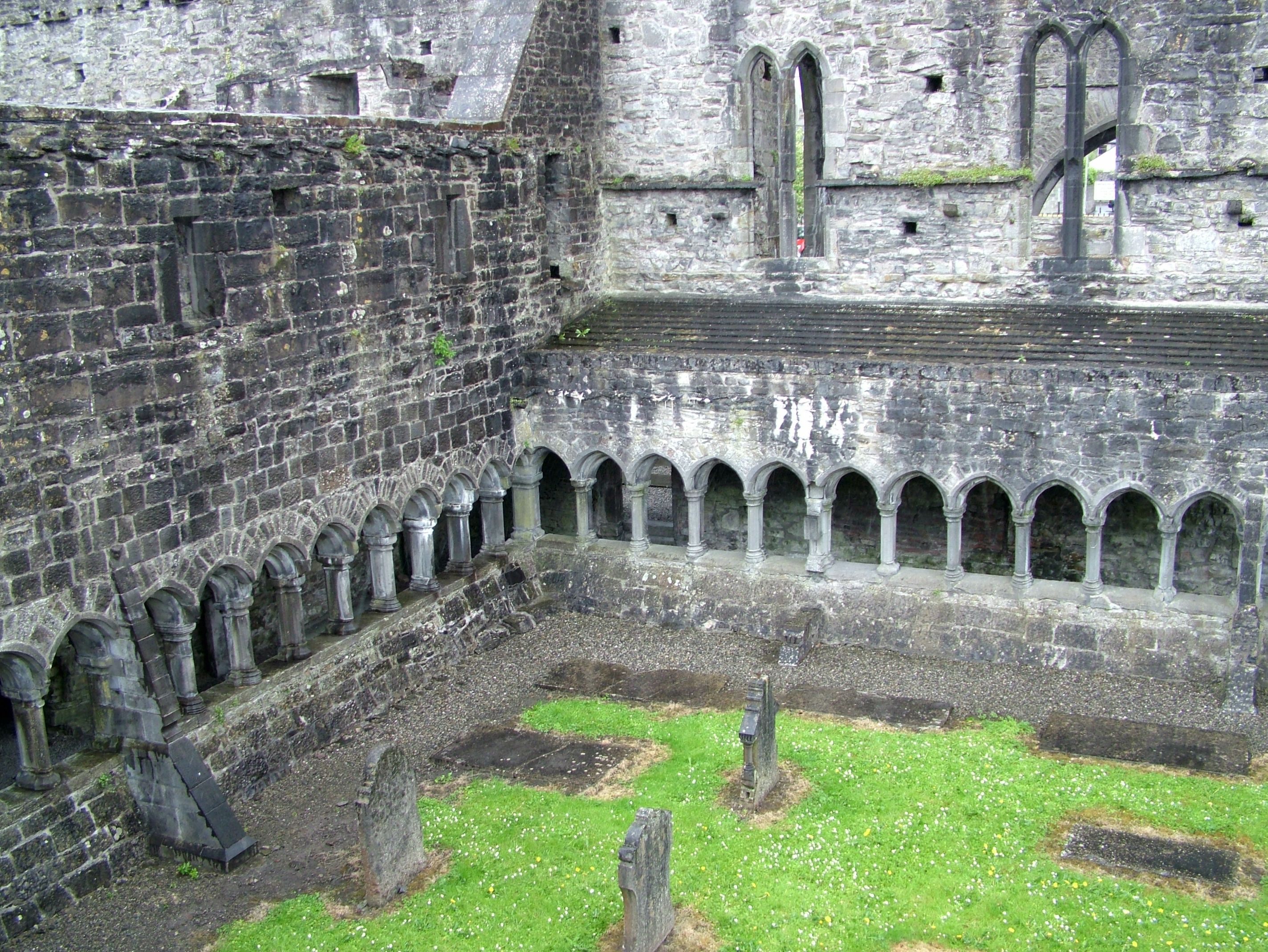
Sligo Abbey
Maurice FitzGerald built the friary to atone for a death he may have caused. In 1253, the Norman lord -- who had served as Justiciar of Ireland -- founded a Dominican house in Sligo, allegedly to provide monks who would pray for the soul of Richard Marshal, 3rd Earl of Pembroke, whom FitzGerald was rumored to have killed. The Dominicans were an odd choice for perpetual prayer; their specialty was preaching, not contemplation. But FitzGerald endowed the house with lands and built it substantially, and the friars stayed for centuries -- through fire, rebellion, papal schism, and exile -- long outlasting whatever guilt had brought them there.
Three Popes and a Fire
In 1414, an accidental fire gutted the abbey. With no funds for rebuilding, the friars turned to the pope for help -- except that in 1414, three men claimed the title simultaneously. Benedict XIII held court in Avignon, Gregory XII in Rome, and John XXIII in Pisa. Since England supported John, the Sligo Dominicans addressed their plea to him, reaching the pontiff at the Council of Constance. John responded with an apostolic letter granting ten years of indulgences to anyone who visited the church on the feast of the Assumption or Saint Patrick's Day and contributed to its restoration. The strategy worked. By 1416, Prior Brian MacDonagh, son of the tanist of Tirerrill, had rebuilt the friary. Twenty friars lived there at the time.
Siege Timber and Stolen Screens
The abbey's walls bear witness to centuries of conflict. When Henry VIII's dissolution of the monasteries threatened the West of Ireland in the 1560s, the local O'Connor Sligo chief secured a letter from Queen Elizabeth exempting the friary -- on condition the friars become secular priests. It was a pragmatic survival. But the reprieve did not last. During Tyrone's Rebellion in 1595, Richard Bingham, the English president of Connaught, stationed six companies of troops and horses inside the abbey while besieging nearby Sligo Castle. His men dismantled the rood screen and stripped other timbers to build a siege tower. The attack on the castle failed, but the damage to the abbey endured.
Exile and Return
The worst blow came in 1642, when Sir Frederick Hamilton attacked and burned the convent during the Irish Confederate Wars. Some friars were killed. Then in 1697, the Banishment Act ordered all bishops and regular clergy out of Ireland by May 1698. Led by Prior Patrick McDonogh, the Sligo Dominicans sailed for Spain, leaving the abbey empty. Yet they came back. In the 18th century, friars quietly returned, though they found the buildings crumbling. Father Lawrence Connellan, arriving from Louvain in 1760, saw the ruins were beyond repair and moved the community to High Street. By 1846, the Dominicans had built the neo-Gothic Holy Cross Church nearby -- proof that exile could scatter but not extinguish a 600-year-old community.
Stone and Memory
Today the roofless ruins stand on Abbey Street, the barrel-vaulted cloister walk still intact, its arcade framing patches of Sligo sky. The late Gothic east window rises in delicate tracery. Carved tomb monuments line the walls -- the O'Craian canopy tomb, the O'Connor mural showing a man in armour and a woman kneeling in prayer. The abbey grounds served as a cemetery for generations, and the buildings were quarried for reusable stone until Evelyn Ashley, who had inherited the property from Lord Palmerston, vested the site in the Board of Works in 1893. His son completed the transfer in 1913. The Board cleared away the ivy and trees that had colonized the walls, revealing what fire and siege and exile had left behind.
From the Air
Located at 54.27°N, 8.47°W in the heart of Sligo town. The abbey ruins are visible from low altitude near the Garavogue River. Nearest airport: Sligo Airport (EISG), approximately 8 km to the west. The ruined cloister and tower are identifiable landmarks when approaching from the northwest.