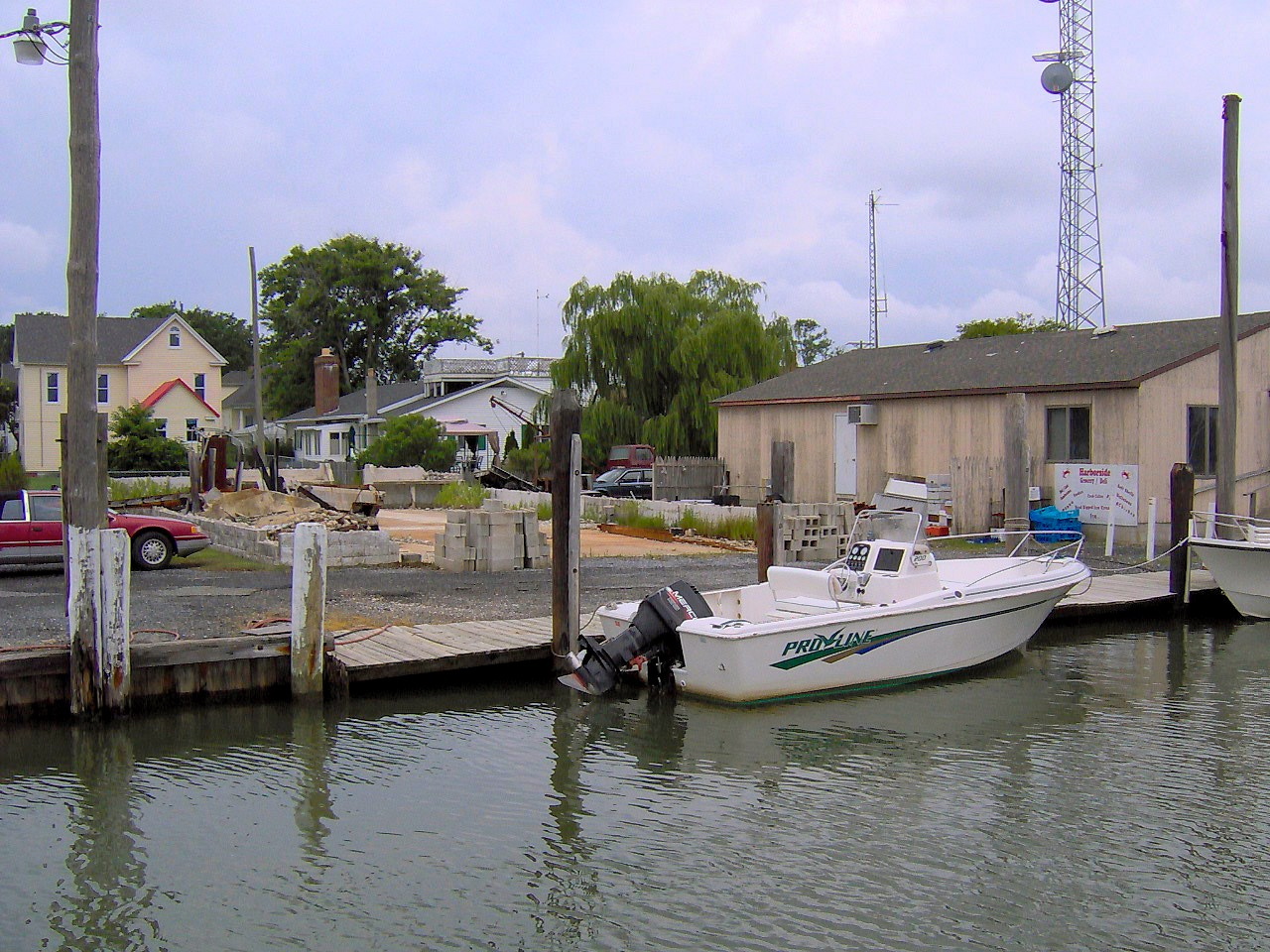
Smith Island, Maryland
There are no bridges, no airports, and almost no cars. To reach Smith Island, you board a ferry in Crisfield, Maryland, and motor twelve miles west across the Tangier Sound, watching the mainland dissolve behind you until the low-lying marshes appear, barely breaking the surface of the Chesapeake Bay. Three tiny villages -- Ewell, Rhodes Point, and Tylerton -- spread across a handful of habitable ridges surrounded by thousands of acres of tidal wetland, and the people who live here still speak with an accent that linguists trace directly to seventeenth-century Cornwall and Dorset. In the early 1900s, eight hundred people called this place home. By the 2010 Census, that number had fallen to 276. Smith Island is disappearing, both its land and its way of life, and the watermen who remain know it.
Roots in Salt and Marsh
British, Welsh, and Cornish settlers arrived in the 1600s and quickly realized the only sustainable livelihood would come from the water. Generations of Smith Islanders became watermen, harvesting blue crabs, oysters, and fish from the Chesapeake. In the late nineteenth century, the island's oyster beds were so productive that watermen shipped their catch by railroad across the country. Disputes over those beds fueled fierce rivalries with neighboring Tangier Island, Virginia, and in 1877, twenty-three thousand acres of rich oyster grounds were ceded from Maryland to Virginia, a loss that still stings. The 1940 Maryland Guide documented the economic conflicts between the two islands and federal agencies that stretched across decades. Through it all, Smith Islanders developed a dialect so distinctive that linguists compare it to the Ocracoke Brogue of North Carolina's Outer Banks, though it more closely resembles the accent on nearby Tangier Island. Both dialects preserve vowel sounds and speech patterns that have otherwise vanished from American English.
A Cake Worth Competing For
Beginning in the 1800s, Smith Island women sent multi-layered cakes with their watermen on the autumn oyster harvest. The cakes needed to survive days aboard a working boat, so bakers switched from buttercream to fudge frosting, which lasted far longer. Over time, the number of layers became a point of pride. A proper Smith Island cake stacks eight to twelve pencil-thin layers of yellow cake with chocolate fudge between each one, the thinner the layers the greater the skill. Other flavors exist -- coconut, fig, strawberry, lemon, orange -- but yellow cake with chocolate fudge remains the standard. The cake anchors a local fundraising tradition called a cake walk, played like musical chairs, where donated cakes serve as prizes. Before each round, the prize cake is cut in half and displayed to prospective players, who pay to participate. A poorly stacked cake attracts fewer players and raises less money, so perfection matters. On April 24, 2008, Smith Island cake became the officially designated state dessert of Maryland.
The Water Rises, the People Leave
Smith Island has lost more than 3,300 acres of wetlands over the past century and a half, a slow erasure driven by erosion, subsidence, and rising sea levels. The island's highest ground barely clears a few feet above the Chesapeake, and major storms accelerate the damage. After Hurricane Sandy struck in 2012, the Maryland Department of Housing and Community Development offered buyouts to landowners. Most refused. The population tells its own story: 777 residents in 1930, 453 in 1990, 276 in 2010. Young people leave for jobs and schools on the mainland. The median household income hovers around twenty-six thousand dollars, and nearly sixty-eight percent of residents over sixty-five live below the poverty line. Few motor vehicles exist on the island, limited to Ewell and the connected Rhodes Point. In Tylerton, accessible from the other two villages only by boat, golf carts and bicycles handle what little land transportation is needed.
Island Time
What keeps Smith Island from becoming a museum piece is the stubbornness of the people who stay. The watermen still rise before dawn to work their crab pots in the Tangier Sound. The women still bake Smith Island cakes, not for tourists but for each other, a dessert that needs no holiday. The Island Belle, a former passenger ferry listed on the National Register of Historic Places in 1979, is remembered as the lifeline that connected these communities to the mainland for decades. The Martin National Wildlife Refuge occupies the northern portion of the island, and the southernmost marshes extend into Virginia's Accomack County, a reminder that political boundaries mean little when the land itself is mostly water. Guided heritage tours now bring visitors from Crisfield to experience the island's traditions: crab harvesting demonstrations, storytelling, and cake baking. But the real experience is simpler than any tour. It is the silence. No traffic noise, no construction, no sirens. Just the wind across the marsh grass, the slap of water against pilings, and the occasional hum of an outboard motor heading out to check the pots.
From the Air
Smith Island sits at 37.98N, 76.03W in the middle of the Chesapeake Bay, roughly 12nm west of Crisfield, Maryland. From the air, the island appears as a sprawl of marsh and tidal channels with three small clusters of buildings barely visible above the waterline. Best viewed at 1,000-2,000 feet AGL approaching from the east over Tangier Sound. The three villages of Ewell, Rhodes Point, and Tylerton are connected by narrow channels. The island has no airport. Nearest airports are Crisfield Municipal (W41) approximately 12nm east and Salisbury-Ocean City Wicomico Regional (KSBY) approximately 38nm northeast. Watch for low-altitude bird activity over the Martin National Wildlife Refuge on the island's north end.