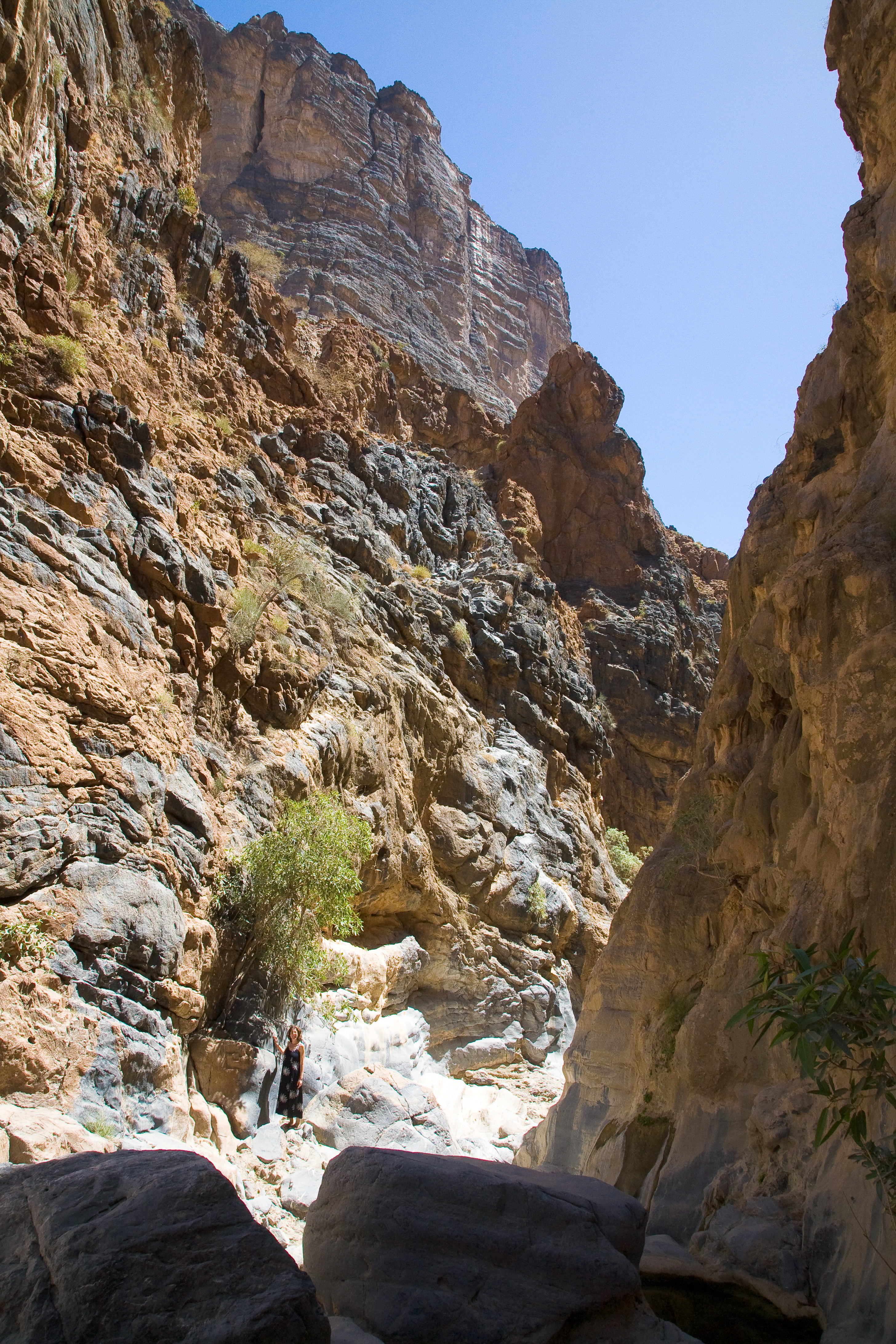
Snake Gorge
On a clear day, Snake Gorge looks like paradise carved from rock. Turquoise pools collect at the bottom of narrow cliff walls. Natural water slides, polished smooth by centuries of seasonal flow, connect one swimming hole to the next. Hikers jump from small ledges into water so clear they can see the bottom. On a rainy day, this same gorge becomes a concrete pipe for a wall of churning water that arrives with almost no warning. In 1996, a group of hikers drowned here. The desert teaches the same lesson over and over: beauty and danger share the same address.
The Wadi's Two Faces
Snake Gorge, also known as Wadi Bimah, cuts through the Hajar Mountains in the Ad Dakhiliyah region of Oman. For most of the year, the gorge offers a spectacular hiking route through narrow canyon walls, with pools deep enough for swimming and natural rock formations that funnel water into slides. The stone has been shaped by water over millennia into smooth, curved surfaces that feel sculpted by intention rather than erosion. Small cliffs at varying heights provide jumping points into pools below. The gorge draws hikers, canyoneers, and families looking for a rare thing in Oman's interior: water you can swim in.
When the Water Comes
Flash floods in wadis are not gradual. Rain can fall miles upstream, invisible from the gorge floor, and arrive as a sudden surge that fills the narrow canyon in minutes. The same stone walls that make the gorge beautiful make escape difficult: they are steep, smooth, and offer few handholds. In 1996, hikers who had entered during fair weather were caught by a flood and drowned. In 2014, eleven tourists from Dubai were trapped when rains hit. They survived by climbing onto rocks and waiting for two hours as water surged around them, though they lost their vehicle in the process. The Royal Oman Police and the Public Authority for Civil Defence and Ambulance issue regular weather warnings, but the gorge continues to attract visitors who underestimate how quickly conditions can change.
Reading the Canyon
Experienced desert hikers watch for signs that most visitors miss: the color of the sky upstream, the sound of distant thunder amplified through the canyon, a sudden change in the water's clarity from turquoise to brown. They know that in a wadi system, the danger is not always where the rain falls. A storm 20 kilometers away can send a flash flood racing through a bone-dry gorge with devastating speed. The narrow canyon walls that make Snake Gorge photogenic are exactly what make flash floods so dangerous: they concentrate water into a confined space with no room for it to spread. A gentle stream becomes a torrent, and a swimming pool becomes a hydraulic trap.
Worth the Risk
Despite its dangers, or perhaps because of them, Snake Gorge remains one of the most popular hiking destinations in Oman. The landscape rewards those who treat it with respect. The stone colors shift from gray to amber to rust as the light changes through the day. Pools of standing water reflect the canyon walls like mirrors. The silence in the gorge, broken only by the sound of water trickling over stone, creates a stillness that feels ancient and earned. For those who check the weather, carry the right equipment, and understand that this landscape operates on its own schedule, Snake Gorge offers something rare: a place where the raw geology of the Hajar Mountains is not just visible but immersive, surrounding you on all sides with stone that has been shaped by the same water you are walking through.
From the Air
Located at 23.21N, 57.39E in the Hajar Mountains of Oman's Ad Dakhiliyah region. The gorge is a narrow wadi canyon, visible from altitude as a dark crevice in the mountain terrain. Nearest major airport is Muscat International (OOMS), approximately 150 km northeast. Mountain terrain with peaks exceeding 2,000 m in the vicinity. Exercise caution for turbulence and limited emergency landing options.