Snoqualmie
The mist rises from Snoqualmie Falls even on the clearest days, climbing through the forest canopy and vanishing into the sky above. For the Snoqualmie Tribe, this is the place where Moon the Transformer created the first man and woman, where prayers are carried to the Creator on the spray that rises from the basin below. For the engineers who arrived in the 1890s, it was something else entirely: a 268-foot drop representing nearly unlimited hydroelectric potential. They built the world's first completely underground power plant into the rock at the base of the falls, buried the turbines in the stone, and wired Seattle for light. Both visions of the falls persist. The tribal concessions stand where visitors gather at the overlook; the power plant still generates electricity from the same water that carries ancestral prayers.
A Falls That Thunders
More than 1.5 million visitors come to Snoqualmie Falls each year, making it the most-visited natural attraction in Washington State. Two viewing areas offer different perspectives: the upper deck provides the classic panorama, while a steep trail descends to a lower boardwalk where the spray can soak you on high-water days. The Snoqualmie River's flow varies dramatically with the seasons. During the rainy months from November through March, water can cascade across the entire 100-foot-wide precipice, creating a wall of white that generates its own wind. By late summer, the flow narrows to reveal more of the rock face - still impressive, but quieter, more contemplative.
Sacred and Industrial
The Snoqualmie Tribe has occupied this valley continuously for millennia. The falls remain central to their spiritual practice, the place where creation began and where prayer still travels upward. In 1999, the tribe regained ownership of the land surrounding the falls after a long legal battle, and they now operate the concessions and gift shop that serve the steady stream of visitors. The juxtaposition feels uniquely Northwestern: a sacred site where indigenous culture meets tourist infrastructure, where the power plant shares the river with ceremony. The tribe has worked to balance access with preservation, maintaining the falls as both a spiritual center and an economic engine.
Power From the Deep
Plant 1 of the Snoqualmie Falls Hydroelectric Plant went operational in 1899, generating power for Seattle when electricity was still a novelty. The engineers faced a problem: there was no good location for a conventional powerhouse. Their solution was audacious - they carved 270 feet into solid rock at the base of the falls, creating an underground cathedral for turbines. A second plant followed in 1910, built downstream. Together they still generate power for Puget Sound Energy, though their output is modest by modern standards. The falls predate the dams that transformed the Columbia; they generate power without impounding the river, letting the water fall freely and the salmon run.
Gateway Town
Snoqualmie incorporated in 1903, a logging town and railroad stop that served the early timber industry. When the first transcontinental railroad link to Puget Sound was announced, speculators built a competing line from Seattle as far as Snoqualmie before abandoning their plans. The railroad pivoted to tourism instead, marketing the falls as a destination for day-trippers from the city. That impulse never faded. Today Snoqualmie sits on I-90, thirty miles from Seattle, easily reached for a morning waterfall visit before continuing to the ski slopes at the pass. The Northwest Railway Museum preserves the old depot; on summer weekends, steam trains still run the historic grade. The town has learned to live with its tourist identity, small enough to feel quiet once the crowds depart.
From the Air
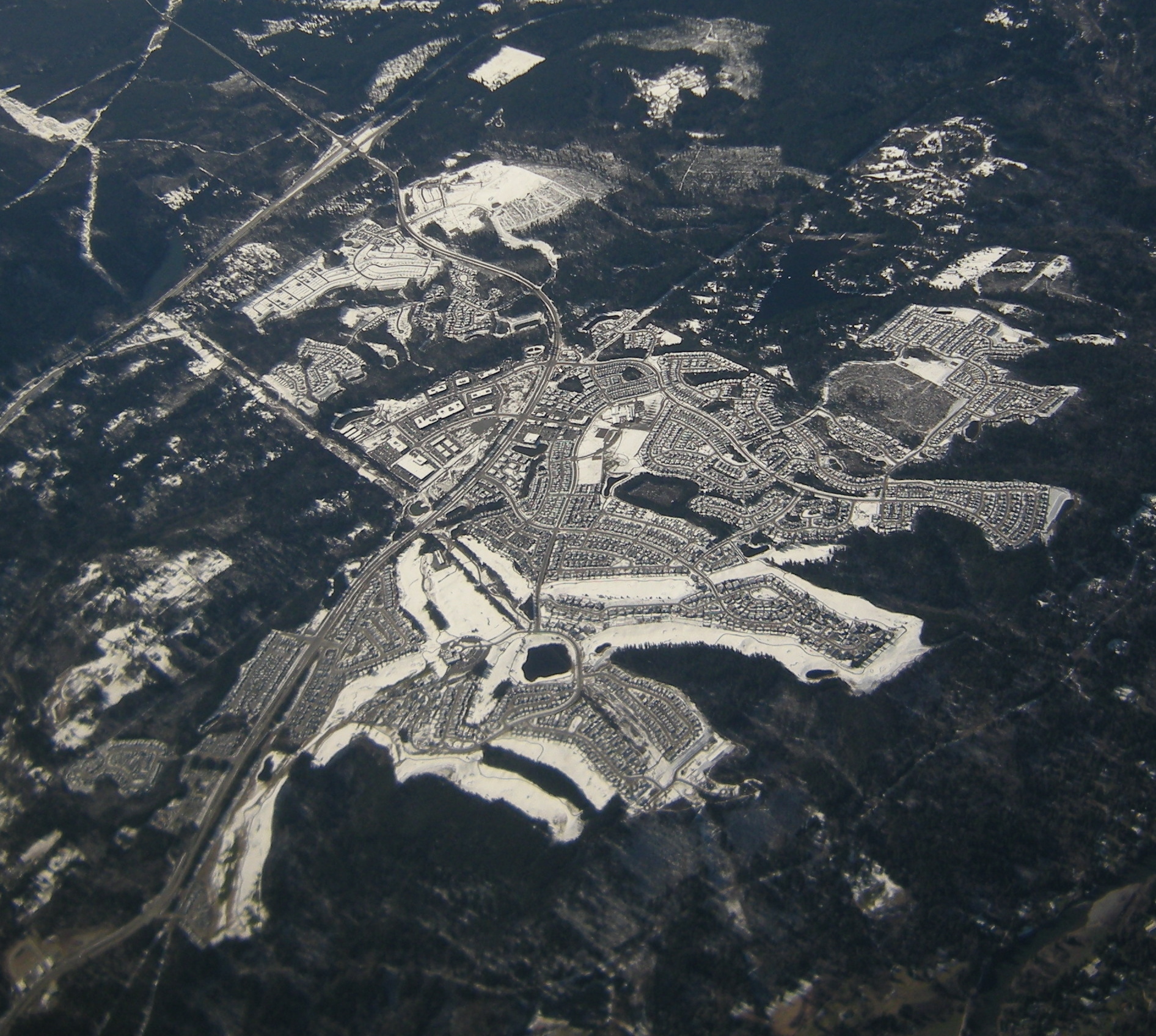
Located at 47.53N, 121.83W in King County, Washington. Snoqualmie Falls (268 ft) is visible from the air as a distinctive break in the Snoqualmie River, approximately 5nm west of the Cascade foothills. The falls generate significant mist on high-water days. Nearby airports: Snoqualmie Valley Airport (93S, private, 1,250 ft grass), Harvey Field (S43, public, 2,660 ft paved), Seattle-Tacoma International (KSEA, 35nm west). I-90 passes through the valley en route to Snoqualmie Pass (3,022 ft). The area experiences typical Puget Sound weather: low clouds, rain, and reduced visibility common, especially in fall and winter months. Mountain effects can create turbulence and rapid weather changes.