Soares dos Reis National Museum
The palace is called the Carrancas, which translates roughly to "the scowlers" -- a nickname earned by the perpetually disapproving Moraes e Castro family who once lived there. That a building associated with frowning became the home of Portugal's first national museum, a collection built from the spoils of civil war and the generosity of a British wine exporter, is the kind of irony Porto wears comfortably. The Soares dos Reis National Museum has been accumulating Portuguese art since 1833, and its story is inseparable from the political turbulence that created it.
Born from Civil War
In 1833, King Peter IV founded the Museum Portuense in the Convent of Santo Antonio in central Porto. The collection was not assembled through careful curation. It was seized. Peter IV had just defeated his brother Miguel I in a bitter civil war over the Portuguese succession, and the museum's initial holdings came from two sources: religious art confiscated from convents that had supported the absolutist cause, and works expropriated from Miguel's followers. The museum was, in effect, a trophy case for the winning side -- though the art it gathered was genuinely significant, representing centuries of Portuguese religious painting and sculpture that might otherwise have been dispersed or destroyed.
The Wine Merchant's Collection
During the 19th century, the museum grew through acquisitions both deliberate and fortuitous. The most remarkable came in 1850 with the absorption of the Museu Allen, the private collection of John Francis Allen, a British port wine exporter. Allen had assembled a substantial collection of art in Porto, the kind of cultural accumulation that the port wine trade's international connections made possible. His museum became a branch of the national museum and remained so until 1905, its works eventually folding into the main collection. The British influence on Porto's cultural life ran deeper than wine; it extended into the art collections that documented the city's identity.
The Sculptor Who Gave It a Name
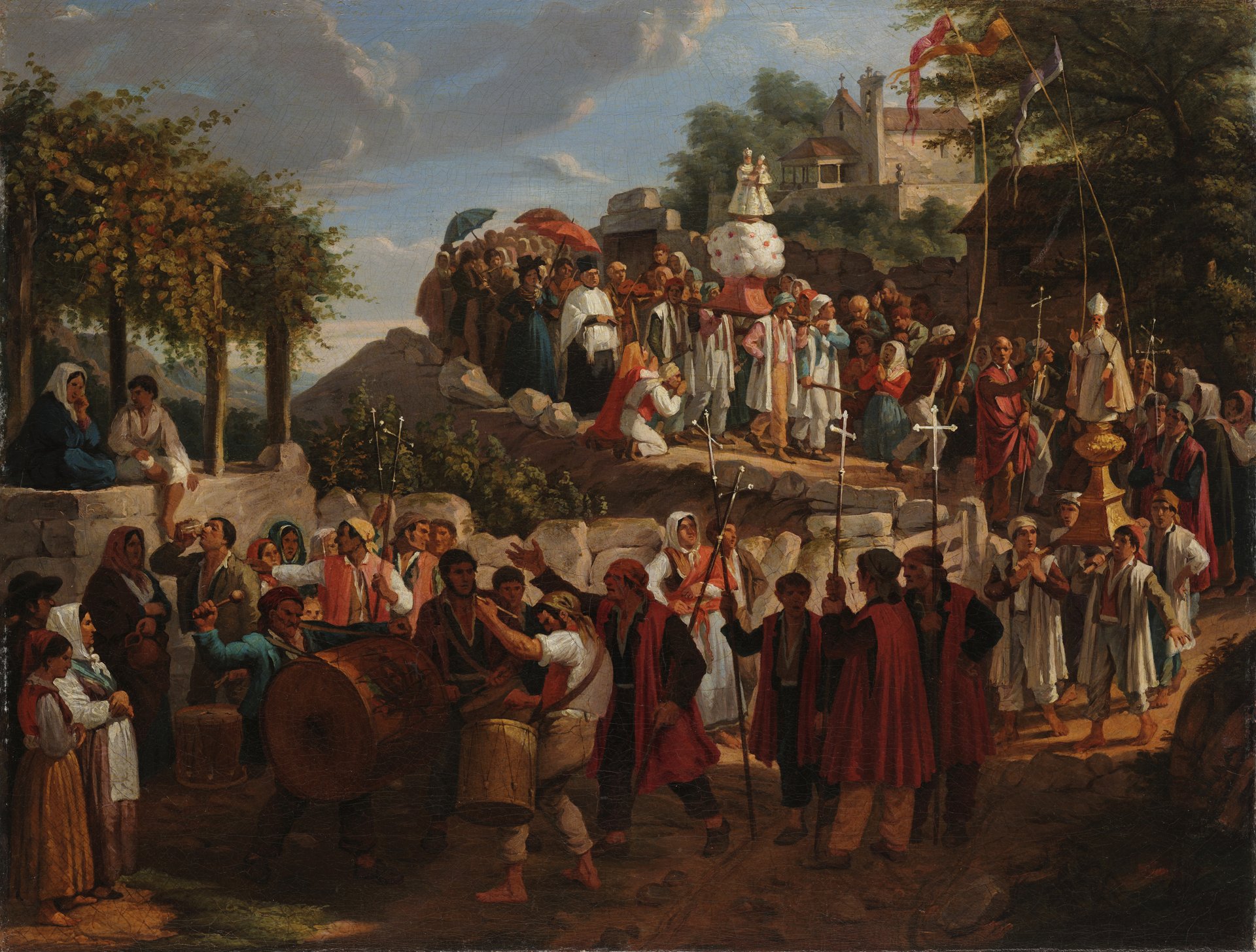
In 1911, the museum acquired the works of Antonio Soares dos Reis and took his name. Soares dos Reis was Portugal's most celebrated sculptor, a 19th-century artist whose work defined Portuguese sculpture in the way that Rodin defined French. The collection spans Portuguese art of the 19th and 20th centuries, with paintings by Domingos Sequeira, Vieira Portuense, Henrique Pousao, and Aurelia de Souza among many others. The sculptors represented include not only Soares dos Reis but Antonio Teixeira Lopes and Augusto Santo. The breadth of the collection makes it the definitive survey of Portuguese artistic achievement across two centuries, a national record housed in a regional city that has always insisted on its cultural independence from Lisbon.
The Palace of the Scowlers
In 1942, the museum moved from its original cramped quarters in central Porto to the Carrancas Palace, the former residence of the Moraes e Castro family. The large building offered the space the growing collection demanded, and over the decades it has been expanded and modernized under a project by the architect Fernando Tavora, one of the founders of the Porto School of architecture. The palace sits in the civil parish that bears one of Porto's longest names -- Cedofeita, Santo Ildefonso, Se, Miragaia, Sao Nicolau e Vitoria -- in the heart of a city that has always taken its art as seriously as its wine. The scowlers are gone, but their house endures, filled with the art that a civil war, a wine merchant, and a sculptor left behind.
From the Air
Located at 41.148N, 8.622W in central Porto, west of the historic center near the Douro River. Francisco Sa Carneiro Airport (LPPR/OPO) is 10km northwest. The museum's Carrancas Palace is not individually distinguishable from altitude, but Porto's dense historic center, Douro bridges, and Ribeira waterfront provide orientation. Best viewed at 2,000-3,000 feet for city context. Oceanic climate with mild temperatures and frequent cloud cover.