Socotra
Scratch the bark of a dragon blood tree and it bleeds red. The sap oozes out thick and dark, the color of old wine, and for centuries traders along the Indian Ocean believed it was actual dragon's blood — a substance prized by Roman gladiators as a wound sealant, by medieval alchemists as an ingredient in varnish, and by Socotri tradition as a mark of the spot where Cain killed Abel. The tree itself looks nothing like any tree you have seen. Its crown fans outward in a dense, mushroom-shaped canopy, an evolutionary answer to Socotra's brutal aridity: every branch angles to funnel precious morning dew toward the trunk and roots. It is a tree that has been solving a problem for twenty million years, and the solution it arrived at looks like something from another planet.
An Ark Adrift
Socotra separated from the Arabian mainland roughly six million years ago, and from Africa well before that. The result is a living laboratory of evolution in isolation — the same force that shaped the Galapagos, but older and drier. Of the archipelago's more than 940 known plant species, around 300 are endemic. The desert rose grows here with a swollen, elephantine trunk that stores water through months without rain. The cucumber tree, the only member of the cucumber family to grow as a tree, clings to limestone cliffs. And the dragon blood tree, Dracaena cinnabari, clusters in groves on the Dixam Plateau, its umbrella canopies forming a silhouette unlike any forest on Earth. The strangeness extends to the fauna: 19 of the island's 22 reptile species are found nowhere else, and eight bird species — including the Socotra starling, the Socotra sunbird, and the Socotra bunting — are exclusive to the archipelago.
The Granite Backbone
The Hagghier Mountains rise to nearly 1,500 meters in Socotra's interior, catching moisture from the southwest monsoon and feeding pockets of green forest amid the prevailing limestone austerity. Frankincense grows on the higher slopes alongside Socotran aloe and wild pomegranate, while the lower coastal plains are dominated by the spiny, drought-hardened shrubland of Croton socotranus. Between these extremes lies a limestone plateau riddled with caves — the Hoq Cave, decorated with stalactites and crystal formations, extends deep into the rock. On the coast, white sand beaches at Qalansiyah and Shouab face turquoise water sheltering coral reefs where barracuda, dolphins, and manta rays patrol. During monsoon season, from June through August, winds reaching sixty miles per hour lash the southern shores, making the island accessible primarily between October and May.
Forty Thousand Islanders
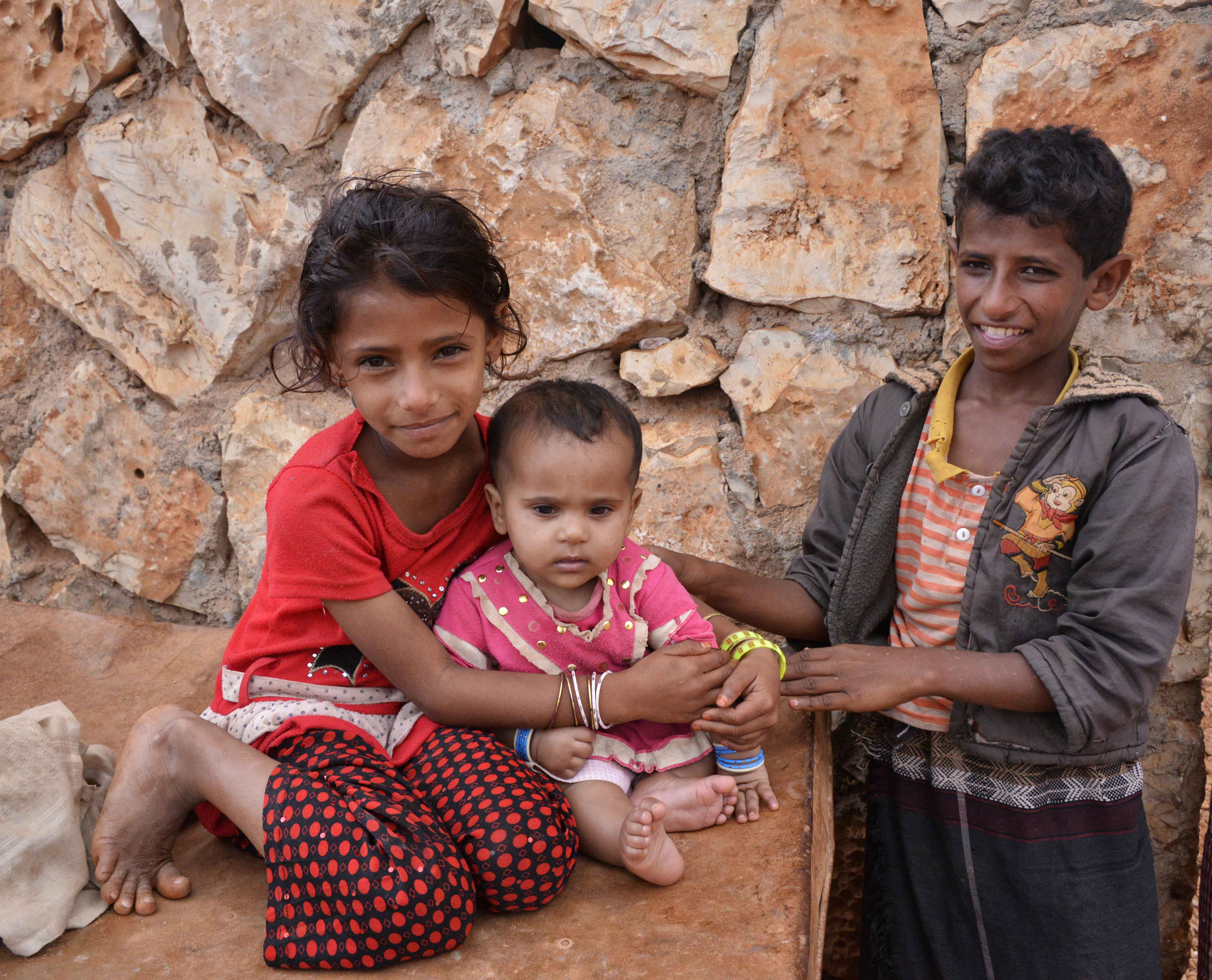
Socotra is not an uninhabited nature reserve. More than 40,000 people live on the archipelago, most of them in Hadibo, the main town on the north coast. They speak Socotri, an unwritten South Semitic language with roots older than Arabic, though Arabic serves as the official language. Life here moves at a pace dictated by monsoon cycles and fishing seasons. Local restaurants serve fresh-caught fish with flat bread and rice. Camping on the beaches — guided by a driver who doubles as cook — remains the primary way to experience the island's interior. Tourism arrived only in 1998, and infrastructure remains minimal: a handful of hotels in Hadibo, two small hospitals, and pharmacies that frequently run short of medicine. The archipelago earned UNESCO World Heritage status in 2008, recognizing its extraordinary biodiversity.
Between Empires
Socotra's strategic position near the Horn of Africa has drawn outside powers for millennia. Ancient Greeks knew it as Dioskouridou, and Indian Ocean traders used the island as a waypoint on routes between Arabia, India, and East Africa. Formally a territory of Yemen, the archipelago has not been under the Yemeni government's effective control since 2018, when forces aligned with the UAE-backed Southern Transitional Council established a military presence. Commercial flights from mainland Yemen through Mukalla are the only route recognized by the Yemeni government; direct flights from Abu Dhabi, operated by Air Arabia, function without Yemeni authorization. The geopolitical complexity mirrors the island's ecological fragility — introduced goats overgraze endemic vegetation, climate change threatens the monsoon patterns that sustain the island's water supply, and the very isolation that created Socotra's biological uniqueness also makes it vulnerable to disruption.
An Alien Horizon
From the air, Socotra's strangeness is unmistakable. The dragon blood tree groves on the Dixam Plateau form dark clusters against pale limestone, their canopies so densely packed they resemble an alien forest rendered in miniature. The turquoise lagoon at Detwah curves against white sand below the western mountains. Inland, the Hagghier range rises sharply, its granite peaks occasionally wreathed in cloud while the coastal lowlands bake under relentless sun. It is a landscape that feels genuinely prehistoric — not in the romantic sense of the word, but in the literal one. Many of the species here are relicts of floras that vanished from the mainland millions of years ago, stranded by continental drift and preserved by isolation. Walking among the dragon blood trees at sunset, when the red bark catches the last light and the canopies darken against a cooling sky, you understand why the ancients believed this place held the blood of dragons.
From the Air
Socotra lies at 12.51°N, 53.92°E in the Indian Ocean, roughly 240 km east of the Horn of Africa and 380 km south of the Arabian Peninsula. The Hagghier Mountains reach nearly 1,500 meters. Socotra Airport (OYSQ) near Hadibo is the only airfield. From 5,000–8,000 feet AGL, the dragon blood tree groves on the Dixam Plateau are visible as dark clusters against pale limestone, and the turquoise Detwah lagoon is prominent on the western coast. Monsoon winds from June through August can produce severe turbulence; best visibility October through May.