Sohr Damb
The name translates simply: Red Mound. Sohr Damb rises from the arid terrain of Khuzdar District in central Balochistan, its reddish soil the compressed residue of nearly six thousand years of human habitation. Since 2001, the German Archaeological Institute and Pakistan's Department of Archaeology and Museums have been systematically excavating the site, peeling back layers that span from approximately 3800 BC to 2300 BC -- a window into the cultures that preceded, paralleled, and eventually merged with the great Indus Valley Civilization.
Four Periods, Four Worlds
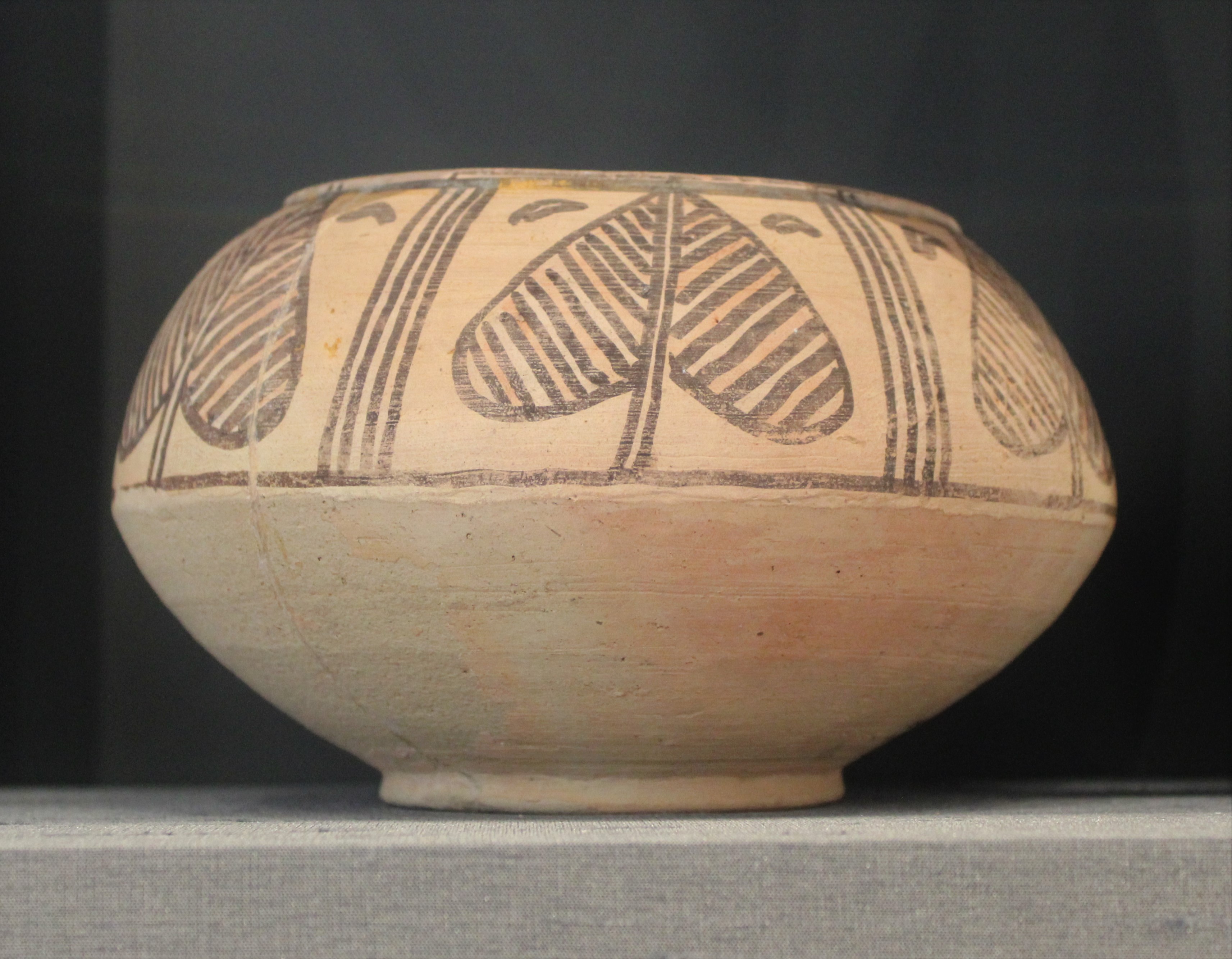
Sohr Damb's excavated layers divide into four periods. The oldest, Period I, belongs to cultural complexes known as Togau, Kili Ghul Mohammad, and Kechi Beg, dated roughly between 4000 and 3200 BC. Archaeologists found 16 skeletons in 11 burials, including one tomb containing more than 12 bodies and 60 complete pottery vessels. All burial chambers held fractional remains deposited after death, suggesting complex funerary practices. Period II, dated between 3100 and 2700 BC, saw the emergence of the Nal culture, with its distinctive buff-colored pottery painted in black with geometric and figurative motifs, often accented in turquoise, yellow, and red. By Period III, the settlement had reached its full extent of 4.5 hectares. Period IV, dated to roughly 2500 to 2300 BC, represents the final occupation, with pottery resembling Kulli-Harappan types that blend indigenous and Indus Civilization influences.
The Colors of Nal Pottery
The pottery of Sohr Damb is what makes the site extraordinary. The Nal tradition produced wheel-turned vessels decorated with polychrome designs of remarkable sophistication -- complex geometric patterns interlocking with figurative scenes of animals and daily life, rendered in up to four colors. This tradition is distinct from both the earlier Togau ware it replaced and the later Kulli pottery that succeeded it. Scholars have drawn parallels between Nal ceramics and those of Mundigak in Afghanistan, as well as the Sialk III horizon in Iran, suggesting cultural connections that reached far west across the Iranian Plateau. The decoration appears derived from wood sculpture traditions, with the geometric motifs retaining the angular precision of carved rather than painted forms.
What They Ate, What They Grew
Faunal and botanical analysis from Sohr Damb reveals a settled agricultural community. From the earliest period, residents cultivated wheat and both hulled and naked barley. Over time, crops indigenous to the Indian subcontinent -- sesame and millet -- became more popular, reflecting either trade connections or shifting agricultural knowledge. The sesame sample from Period III is the oldest stratified record of this crop found anywhere, a small fact with large implications for understanding when and where sesame cultivation began. Sheep and goats were the primary domesticated animals, and wild mammals accounted for only five percent of bone remains -- evidence of a community that relied on herding rather than hunting. Dogs were kept. Wild and cultivated fruits including fig, jujube, dwarf palm, and grape vine rounded out the diet.
Before the Great Cities
Sohr Damb occupies a critical position in the chronology of South Asian civilization. It is stratigraphically earlier than the Kulli culture phase that followed, and the Nal pottery tradition it represents is now understood as belonging to its own ceramic lineage rather than being a subset of the Kulli tradition, as was once believed. The exact timing of the transition between Periods II and III remains controversial, with scholars debating whether it occurred in the mid-third millennium or late third millennium BC. This seemingly technical dispute has implications for the chronology of both Shahr-e Sokhta in Iran and the Indus Civilization as a whole. Silver grave goods found at the site -- documented by Paul Yule of Heidelberg University in 2013 -- point to wealth and long-distance trade even in this remote Balochistan setting.
From the Air
Sohr Damb is located at approximately 27.69N, 66.31E in Khuzdar District, Balochistan province. The site appears as a low reddish mound in an arid landscape of scrub and seasonal watercourses. From altitude, the terrain is dry and hilly, characteristic of central Balochistan. The nearest town is Nal (after which the Nal culture is named). The nearest significant airport is in Khuzdar. Best viewed at lower altitudes to distinguish the archaeological mound from surrounding terrain.