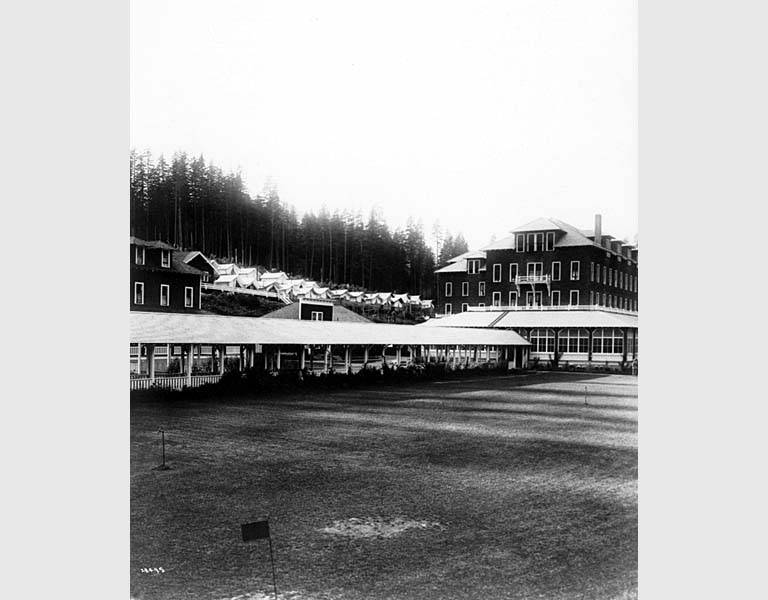
Sol Duc Hot Springs
The water rises from the earth already warm. In the Sol Duc River valley, deep within Olympic National Park, geothermal springs push heated water to the surface through cracks in the ancient rock. Native American tribes knew about these springs long before settlers arrived, valuing them for their therapeutic properties. When word finally reached the outside world in the 1880s, it was only a matter of time before someone built a resort around them.
The Pacific Coast's Grandest Retreat
In 1912, an elaborate resort opened in the Sol Duc valley, and its promoters did not deal in understatement. They called it "the most noted pleasure and health resort on the Pacific Coast," a bold claim for a facility nestled in one of the most remote valleys on the Olympic Peninsula. Getting there required commitment: roads were rough, distances were long, and the surrounding forest was dense enough to swallow sound. But the springs themselves were genuine, and the resort that grew around them offered soaking pools, hot tubs, and a swimming pool fed by geothermally heated water. The valley's wild beauty provided the backdrop. The Sol Duc River, carving its way through old-growth forest, gave the place a setting no architect could have designed.
Waters That Heal
The therapeutic reputation of the Sol Duc springs was not invented by resort marketers. Indigenous peoples of the Olympic Peninsula had long used these waters, and the tradition of soaking in naturally heated mineral pools is ancient across cultures worldwide. The springs emerge at temperatures warm enough to soothe tired muscles without scalding, and the mineral content of the water adds its own character. Today's resort channels the spring water into multiple pools maintained at different temperatures, allowing visitors to find their preferred level of heat. A swimming pool rounds out the offerings. The experience is simultaneously modern in its amenities and primal in its appeal: the simple pleasure of sitting in warm water while rain falls through old-growth canopy overhead.
The Valley Beyond the Pools
Sol Duc Hot Springs sits in a valley carved by the Sol Duc River, one of the major waterways draining the western slopes of the Olympic Mountains. The surrounding forest is a classic Pacific Northwest old-growth landscape of towering conifers, dense understory, and abundant rainfall. Nearby, the undeveloped Olympic Hot Springs offers a more rustic alternative for those willing to hike to reach it. The Sol Duc valley also connects to a broader network of trails within Olympic National Park, making the hot springs a natural stopping point for hikers and backpackers exploring the park's interior. The resort operates seasonally, its rhythms tied to the access roads and weather patterns that govern life throughout the Olympic Peninsula.
From the Air
Located at 47.97N, 123.86W in the Sol Duc valley of Olympic National Park. The resort is a small development in a narrow forested valley, largely hidden under tree canopy from above. The Sol Duc River is the primary visual landmark. Nearest airport is William R. Fairchild International Airport (KCLM) in Port Angeles, about 30 miles east. Best viewed by following the Sol Duc River valley at 2,000-3,000 ft AGL.