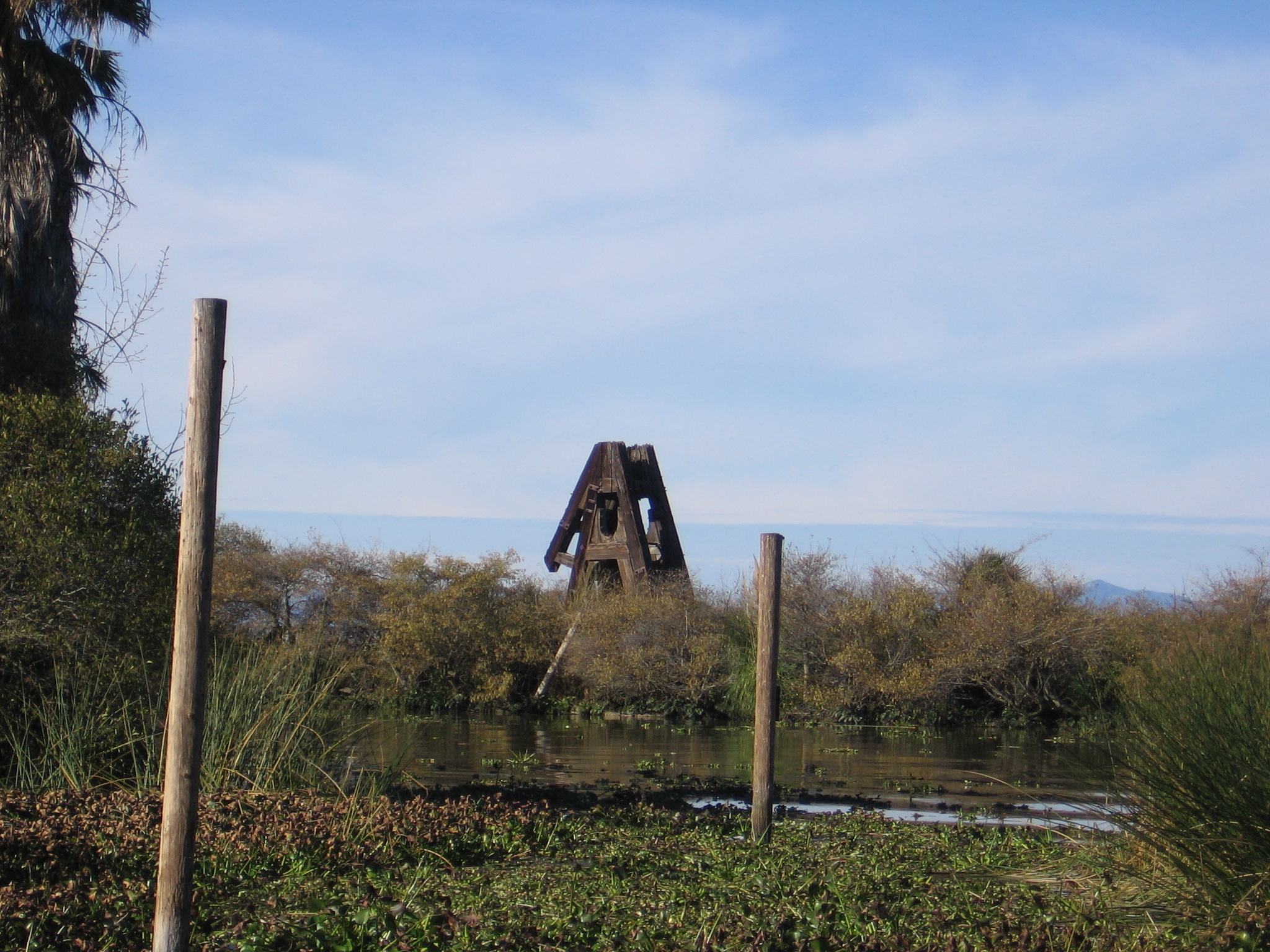
The Boat That Carried Trains
Imagine a boat large enough to swallow a locomotive and forty-eight freight cars whole. The Solano was exactly that -- 425 feet long, 116 feet wide, with four parallel railroad tracks running the length of her deck. When she launched in 1879, no ferry on Earth matched her size. For the next half century, she crossed the Carquinez Strait between Benicia and Port Costa as many as forty-six times a day, carrying the transcontinental railroad across the one gap it could not bridge. She was not elegant. She was not fast. But she was the hinge on which the entire connection between Sacramento and San Francisco Bay turned, and without her, the trains simply stopped.
An Engineer's Audacious Answer
The problem was geographic. The Central Pacific Railroad needed to move trains from Sacramento to the San Francisco Bay Area, but the Carquinez Strait -- where the Sacramento and San Joaquin Rivers squeeze through a narrow passage into Suisun Bay -- stood in the way. In 1869, the transcontinental railroad's original route ran 120 miles from Sacramento to Oakland via Altamont Pass and Niles Canyon, a winding, mountainous path that added time and expense. Arthur Brown, the railroad's superintendent of bridges and buildings, proposed something unusual: instead of building a bridge across the strait, he would build a boat that functioned like one.
Brown designed the Solano as a floating bridge, reinforcing her hull with four wooden Pratt trusses running lengthwise under the deck -- the same structural technique used in railroad bridges. Two massive walking beam steam engines, each producing 2,000 horsepower, drove independently operated paddle wheels on either side. The independent wheels gave her the maneuverability to handle currents of eight miles per hour in the strait. Pilot rooms at both ends meant she never needed to turn around.
Trial by Fanfare
The Solano was built in Oakland near the end of Long Wharf and named for the county in which Benicia sits. On November 24, 1879, she set out on her maiden trial from Meiggs Wharf with seventy-five guests aboard, including railroad magnate Charles Crocker. The party circled Alcatraz Island and then steamed north to Benicia, where a military band played and a twenty-six-gun salute boomed across the water. She managed only eight miles per hour that day, though she was capable of twelve.
Her arrival changed the geography of California railroading overnight. The transcontinental route was rerouted to a new, more level 92-mile course from Sacramento to Benicia. Trains rolled onto the Solano at one shore and off at the other, and the old Altamont Pass route became secondary. By December 1879, the ferry was running regular service, and the Carquinez Strait -- the gap that had defined the limits of the railroad -- was no longer a gap at all.
Twenty-Five Minutes, Sixteen Men
The operation was a marvel of choreography. A passenger train of ten cars would arrive at the Benicia slip, where it was uncoupled in the middle during a one-minute pause. The locomotive pulled the forward half onto one set of tracks aboard the ferry, while a switching engine pushed the rear half onto another. The entire loading, crossing, unloading, and station stop took twenty-five minutes -- managed by two watches of sixteen men each working around the clock.
By 1904, the Solano was making thirty-six to forty-six crossings every twenty-four hours, moving approximately 115,000 freight cars and 56,000 passenger cars per year. She ran continuously -- twenty-four hours a day, every day -- pausing only for occasional drydock maintenance. In 1914, the railroad built her a sister ship, the Contra Costa, thirteen feet longer and the new record holder for largest rail ferry in the world. Together, the two vessels handled the traffic until even their combined capacity was not enough.
Scuttled into Silence
By 1927, the ferries had maxed out. The Southern Pacific Railroad, which had absorbed the Central Pacific's operations, authorized construction of a railroad drawbridge from Benicia to Martinez in May 1928. The bridge opened on October 15, 1930, and after fifty-one years of continuous service -- from December 1, 1879, to that final day -- the Solano was decommissioned. The Contra Costa joined her in retirement.
Neither ferry received a dignified end. Both were dismantled and sold for scrap. But the Solano was not entirely erased. Her hull was towed to the San Joaquin River near Antioch and sunk to serve as a breakwater. The A-frame of her walking beam engine still protrudes from the water there, rusting quietly among the reeds -- the last visible piece of the boat that carried trains. The Contra Costa met a similar fate, scuttled in a cove near Vallejo beside the California Maritime Academy. The railroad bridge that replaced them still carries Union Pacific and Amtrak trains today, a concrete answer to the problem that Arthur Brown solved with wood, steam, and sheer scale.
From the Air
The Carquinez Strait crossing is located at approximately 38.02N, 121.81W, between Benicia on the north shore and Port Costa/Martinez on the south. The modern Benicia-Martinez railroad bridge is clearly visible and marks the approximate route the Solano traveled. The remains of the Solano's hull lie in the San Joaquin River near Antioch (38.02N, 121.80W), though they are difficult to spot from altitude. Buchanan Field (KCCR) is approximately 12 nm southwest. Travis AFB (KSUU) lies about 10 nm northeast. Best viewed at 2,000-3,000 ft AGL to appreciate the narrow strait and the bridge that finally replaced the ferry.