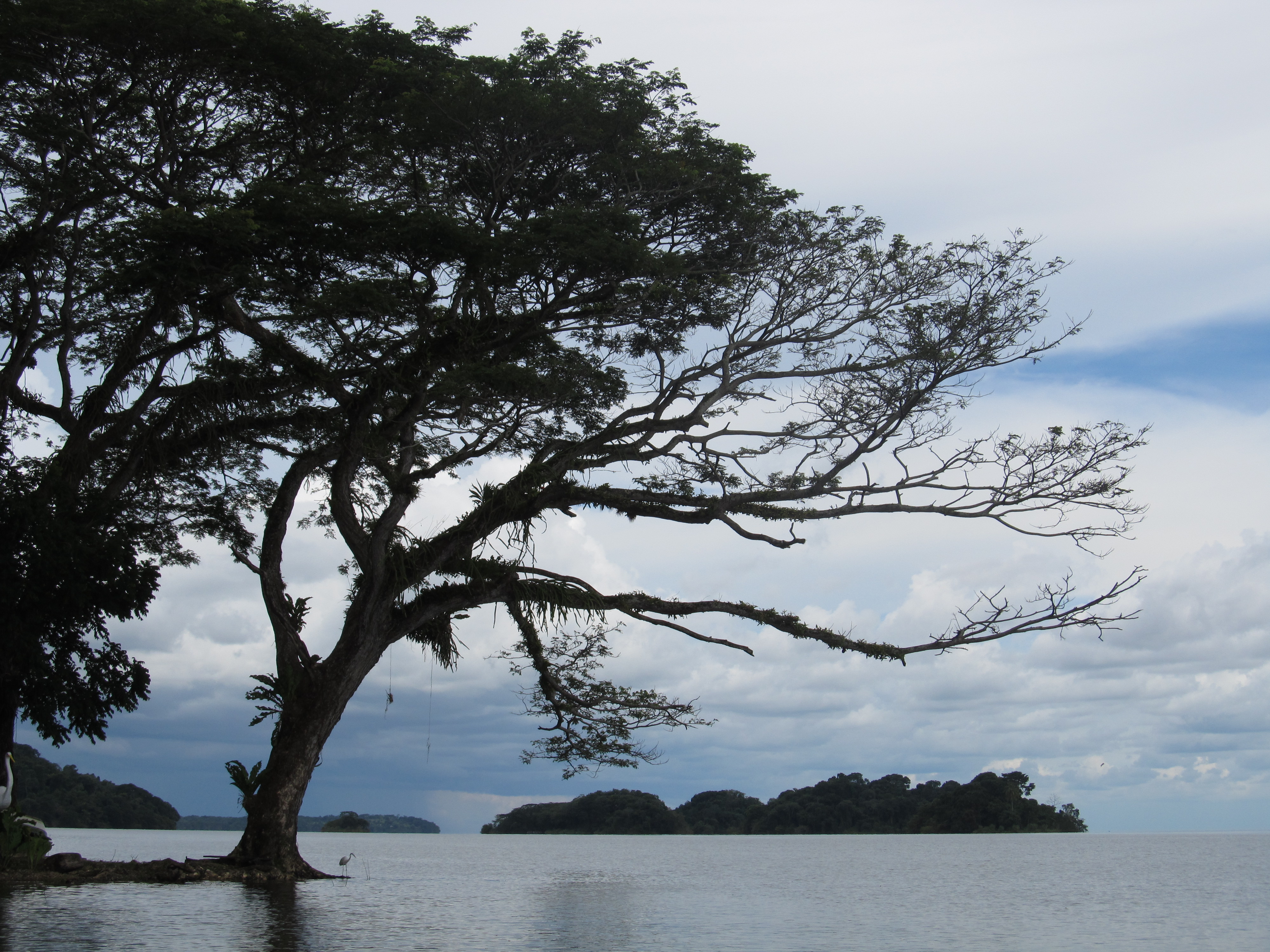
Solentiname Islands
Ernesto Cardenal was a Trappist monk, a Marxist, a poet, and eventually Nicaragua's Minister of Culture. In the 1960s, he arrived at these islands in the southeastern corner of Lake Nicaragua and built a church called Nuestra Senora de Solentiname. Then he taught the local campesinos to paint. The primitivist art movement that followed put Solentiname on the cultural map of Latin America, but the archipelago itself remained exactly what it had always been: 36 islands at the far edge of the country's largest lake, reachable only by boat, where the grocery store is a single pulperia on Isla Mancarron and the traffic is entirely on foot.
Thirty-Six Islands, Five Inhabited
The Solentiname Archipelago sits in the south of Lake Nicaragua, known locally as Cocibolca, near the town of San Carlos in the Rio San Juan region. Of the 36 islands, only five have permanent residents. Mancarron and San Fernando are the largest, and between them account for most of the archipelago's small population. There are no movie theaters, no supermarkets, no paved roads. The islands are what remains when you strip away the infrastructure that most places consider essential. What fills the gap is water, birdsong, and the unhurried rhythm of farming communities that have been here for generations. Petroglyphs carved into stone on several islands hint at a much longer human presence, though the details of who made them and when remain largely mysterious.
The Poet's Church
On Mancarron, Cardenal's church still stands, a charming and colorful building whose walls reflect the misa campesina, the peasant's mass he championed. The liturgy Cardenal developed here blurred the line between Catholic worship and communal discussion. Farmers would interpret the Gospels in their own words, connecting scripture to their daily lives of planting, fishing, and survival. Cardenal himself occasionally returns to preach, though catching one of his visits requires either planning or luck. The art colony he founded grew from these same gatherings. Local painters, many of them self-taught, developed a distinctive primitivist style depicting island life in vivid color: birds in the trees, fishermen on the lake, the church itself glowing against tropical greenery. Their work found galleries in Managua and beyond, turning an archipelago that most Nicaraguans had never visited into a symbol of creative resistance.
Getting There Is the Point
The only way onto the islands is by boat from San Carlos, and the schedule reflects the pace of life here. Collective boats depart San Carlos for Solentiname on Tuesdays and Fridays at 1 PM, returning those same days at 4:30 AM. A private charter runs about a hundred dollars a day. Visitors looking for a ride sometimes find islanders running errands in San Carlos willing to take them along. Between the islands, transport is also by boat, and since public service is minimal, moving around costs money unless you can assemble a small group. Once on land, there is no motorized traffic. You walk wherever you need to go. The remoteness is not an obstacle to overcome but the defining feature of the experience. Solentiname existed for centuries as a waypoint on the Ruta del Transito, the route that crossed the American continent before the Panama Canal made it obsolete. Now the islands have no transit role at all, and that isolation is precisely what draws the painters, the poets, and the travelers who find their way here.
Lake, Sharks, and Stillness
Lake Nicaragua once held a population of bull sharks that swam upriver from the Caribbean through the Rio San Juan, one of the few freshwater shark populations in the world. Unsustainable hunting has all but exterminated them, and pollution now poses a greater concern for anyone swimming in the lake's waters. The ecosystem around Solentiname retains pockets of intact nature, though farming has shaped the landscape on the inhabited islands for generations. The balance between wildness and cultivation gives the archipelago its character. Small museums on the main islands document both the natural history and the artistic tradition. Accommodations are basic: hospedajes and cabins, some for as little as five or six dollars a night. Most visitors eat at their hotel, though a couple of small ventas sell limited supplies. The islands do not cater to tourists so much as tolerate them, offering simplicity as both a limitation and a gift.
From the Air
Located at 11.18N, 85.03W in the southeastern corner of Lake Nicaragua. The archipelago is visible from altitude as a cluster of green islands near the lake's southern shore, close to where the Rio San Juan begins its course toward the Caribbean. The nearest town is San Carlos, at the lake's southeastern tip. The nearest airport is San Carlos Airport (MNSC). Lake Nicaragua itself is a massive inland body of water, easily identifiable from cruising altitude.