Somaliland
Somaliland holds elections, prints currency, issues passports, and maintains a police force. Its capital, Hargeisa, has museums, universities, and a cosmopolitan street life. In 2010, an incumbent president lost a close vote and peacefully handed power to his successor - a democratic milestone many recognized nations have failed to achieve. And yet, as of early 2026, only Israel has formally recognized Somaliland as an independent country. To the rest of the world, this territory on the Horn of Africa remains an "autonomous region of Somalia," a designation that most Somalilanders regard as both inaccurate and unjust. It is perhaps the most functional country that does not officially exist.
Five Days of Union, Decades of Regret
The story of Somaliland's independence is really two stories. The first began in 1960, when the British protectorate of Somaliland gained its independence and, just five days later, voluntarily entered into a union with the former Italian colony of Somalia to the south. The merger was driven by pan-Somali idealism - a belief that all Somali-speaking peoples belonged in one nation. But the union proved deeply unequal. Power concentrated in Mogadishu. Northern grievances mounted. Under the dictatorship of Mohamed Siad Barre, marginalization turned to persecution, and in 1988 a vicious civil war engulfed the north. The Somali National Movement, a rebel group rooted in Somaliland's dominant Isaaq clan, fought Barre's forces in a conflict that left Hargeisa devastated. By 1991, when Barre's regime collapsed and Somalia fractured entirely, Somaliland's leaders made a different choice. Rather than compete for power in a broken state, they declared their own independence, reclaiming the sovereignty they had surrendered just three decades earlier.
Building a Country from Scratch
What Somaliland achieved after 1991 is remarkable not because it was smooth but because it happened at all. With no international aid, no diplomatic recognition, and the wreckage of war visible everywhere - tank shells along major roads, blast marks on hillsides, bombed-out buildings in city centers - the new government began the slow work of institution-building. Clan elders played a central role, mediating disputes through the traditional Xeer legal system alongside Islamic Sharia and governmental law. A constitution was drafted and approved by referendum in 2001. Parliamentary and presidential elections followed. The system is imperfect - unemployment is estimated at a staggering eighty percent, and the economy survives largely on remittances from the diaspora abroad. But the contrast with Somalia to the south, which has endured decades of state collapse, warlordism, and Islamist insurgency, is stark. Somaliland's peace is real, and its people have built it themselves.
Hargeisa and Beyond
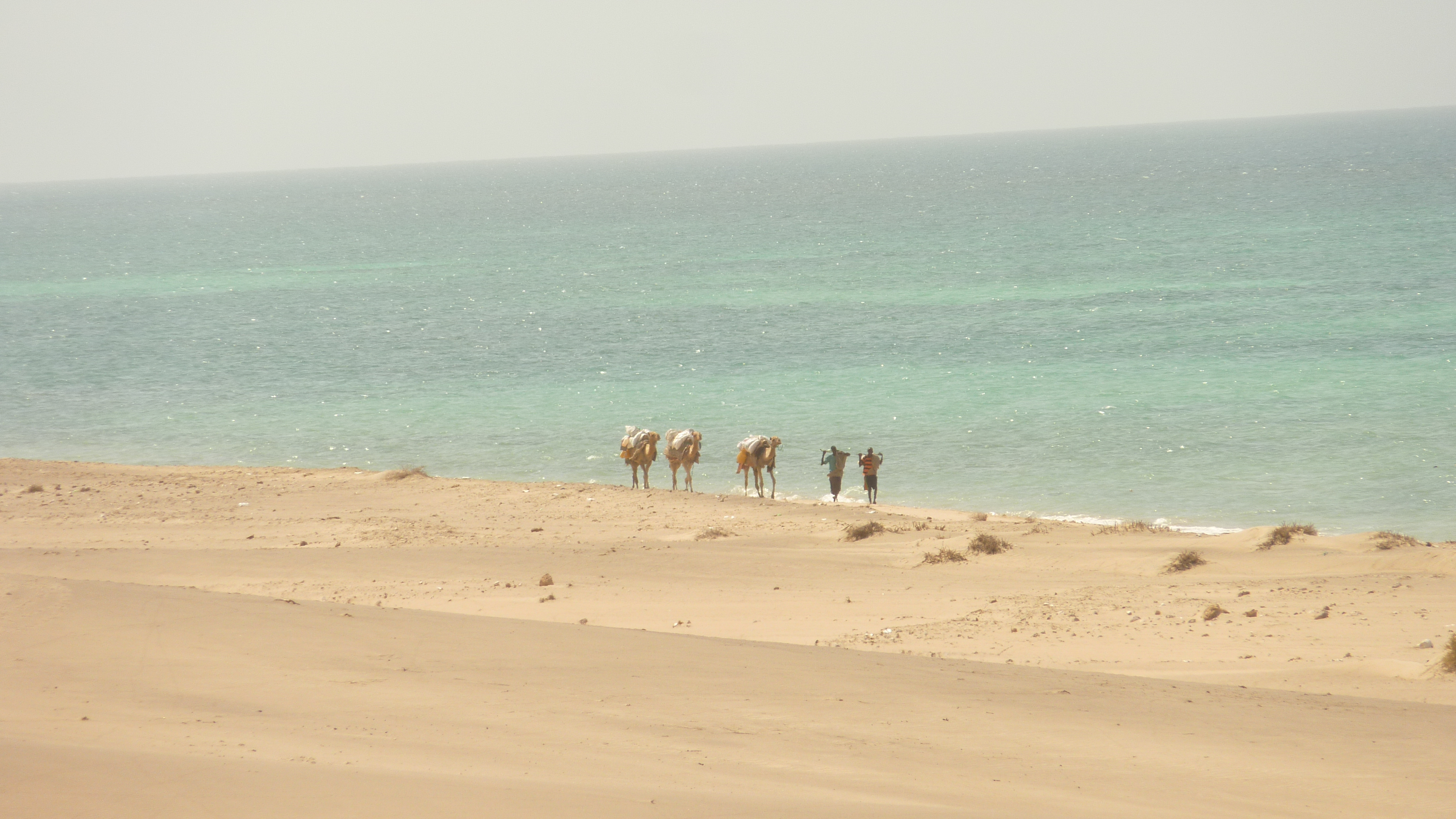
Hargeisa, the capital, is the entry point for most visitors and the country's undeniable center of gravity. It is considered perhaps the safest city in the entire Horn of Africa region - cosmopolitan, with a rich history and a growing cultural infrastructure including the state-of-the-art National Museum of Somaliland, inaugurated in 2024. About sixty kilometers outside the city lies Laas Geel, one of the finest examples of prehistoric cave art on the African continent, with paintings estimated to be between 5,000 and 11,000 years old, depicting cattle, wild animals, and human figures in vivid polychrome. The government limits access to protect the site, so advance arrangements are essential. Beyond Hargeisa, the port city of Berbera is the economic lifeline - nicknamed "beach city" and serving as Somaliland's connection to international shipping routes and the Gulf states. Zeila, near the Djibouti border, offers a historic coastline. For visitors exercising caution and respect, Somaliland provides access to a part of Africa most travelers never see.
The Recognition Paradox
Somaliland's quest for international recognition defines its politics and shapes daily life. Without sovereignty, Somalilanders cannot travel easily - their passports are accepted by few countries. Foreign investment is limited because international financial institutions require dealings with recognized states. Aid flows primarily through Somalia's federal government, which claims Somaliland as its territory. The paradox is sharp: Somaliland has achieved what the international community constantly demands of troubled states - democratic governance, peaceful transitions of power, functioning security forces, a free press - and has been rewarded with continued nonrecognition. The African Union, wary of setting a precedent for the continent's many secessionist movements, has been reluctant to act. High unemployment and growing frustration at being an unrecognized island of stability in a volatile region create real pressures. Somaliland endures because its people have chosen stability over recognition, pragmatism over grievance. But the patience required to build a country the world refuses to acknowledge is not inexhaustible.
From the Air
Located at 9.55N, 44.06E on the Horn of Africa, occupying the former territory of British Somaliland. From altitude, the terrain varies dramatically: the coastal plain along the Gulf of Aden gives way to a rugged escarpment rising to a high plateau. Hargeisa, the capital, sits at elevation in the interior - look for a sprawling city in a valley surrounded by arid hills. Berbera on the coast is a major port visible as an urban area on the Gulf of Aden shoreline. The landscape is predominantly arid to semi-arid, with seasonal vegetation. Hargeisa Egal International Airport (HGEA) serves the capital; Berbera International Airport (HCMB) offers an alternative. The twin hills of Naasa Hablood outside Hargeisa are a distinctive natural landmark. Roads connecting major cities are visible as pale lines across brown terrain. Best viewed at 5,000-10,000 feet for the contrast between coastal lowlands and the interior plateau.